
Sri Mahamariamman Temple
Last updated: October 2026
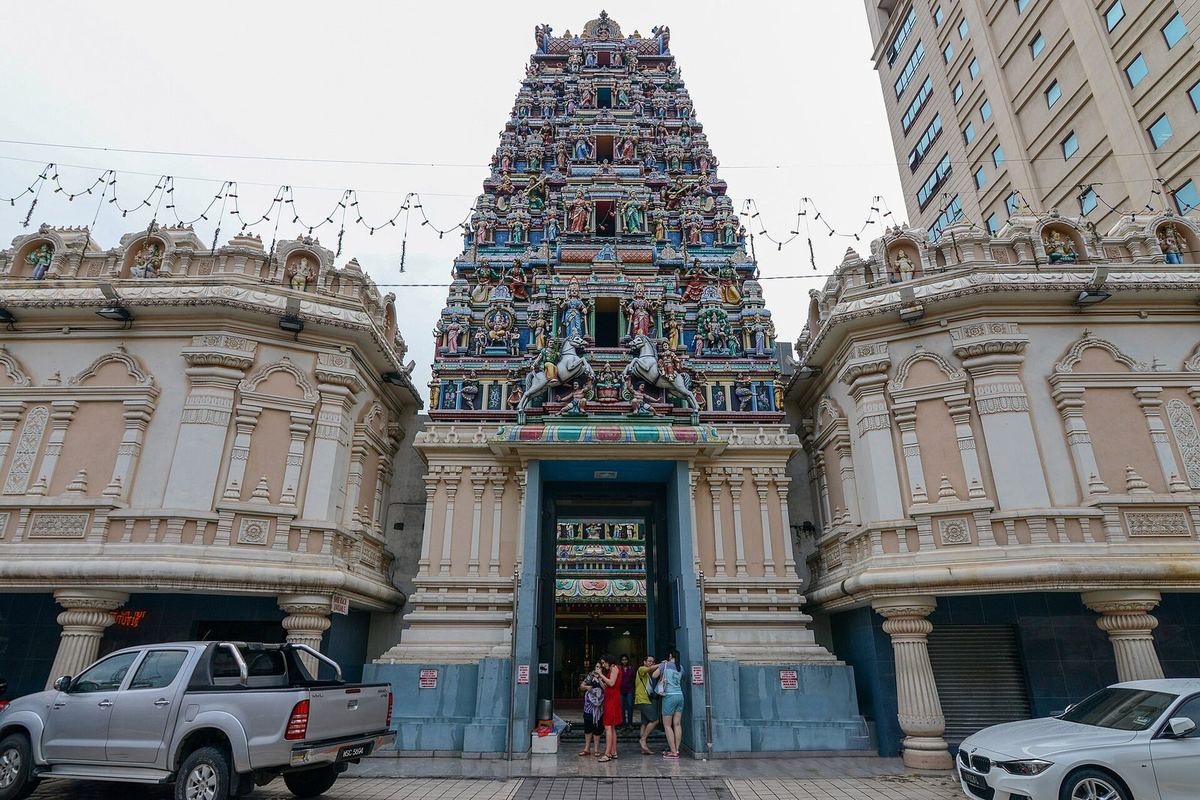
Sri Mahamariamman Temple, on Jalan Tun H S Lee at the edge of Chinatown, is the oldest Hindu temple in Kuala Lumpur and often described as the oldest functioning Hindu temple in Malaysia. Founded in 1873 and dedicated to the mother goddess Mariamman, it is best known for its five-tiered gopuram (gateway tower) covered with 228 brightly painted sculptures of Hindu gods, and for the silver chariot that leads the Thaipusam procession to Batu Caves each year. It is a busy working temple, free to enter, and sits a few steps from Petaling Street and the Sin Sze Si Ya Temple, so it fits easily into a Chinatown walk.
This guide covers the temple's history, what to look for, the Thaipusam chariot, opening hours (checked October 2026), etiquette and how to get there.
| Address | 163 Jalan Tun H S Lee, Chinatown |
|---|---|
| Details | Daily from 6 am; closes about 8:30–9:30 pm Free (small shoe-storage fee) |
| Opening hours | Daily 6 am – about 8:30 pm |
| Area | Chinatown |
| Typical visit | About 30 min |
| Listed in | Kuala Lumpur Attractions |
| Take me here | |
| Verified | Verified October 2026 |
History of Sri Mahamariamman Temple
The temple was founded in 1873 by K. Thamboosamy Pillay (1850 to 1902), a Singapore-born Tamil businessman who became the leader of Kuala Lumpur's Indian community. He made his money in tin mining, contracting and property, was a Justice of the Peace and member of the Sanitary Board, and helped found the Victoria Institution school. He also founded the Hindu shrine at Batu Caves, which is why the two temples are still linked today.
At first the temple was a private shrine for the Pillay family, near the site of the Kuala Lumpur railway station. In 1885 it moved to its present plot on what is now Jalan Tun H S Lee, then on the edge of the growing Chinese town. The first building was a simple attap (thatched) hut; in 1887 it was replaced with a brick structure. The temple opened to the public in the late 1920s. It is run by the Sri Maha Mariamman Temple Devasthanam, which manages several temples, including the Sri Subramaniar Swamy Temple at Batu Caves, and acts as a channel for Hindu religious consultation with the government.
The temple you see today dates from a major rebuilding: the main building was completed in 1968 and the gopuram in 1972, and the temple was consecrated in 1973, its centenary year.
Mariamman herself is a form of the great goddess Mahadevi, widely worshipped in rural South India and associated with bringing rain and protecting against diseases such as smallpox and cholera. Tamil migrants brought her worship to Malaya, and temples to her are found across Malaysia.
What to See at Sri Mahamariamman Temple
The gopuram
The five-tiered gateway tower over the entrance is 22.9 metres (75 feet) high and carries 228 sculpted figures of deities, guardians and scenes from Hindu mythology, made by craftsmen led by the sculptor S. T. Muniappa from Tamil Nadu. Stand on the opposite pavement of Jalan Tun H S Lee to see it in full. The tower marks the threshold between the everyday world outside and the sacred space within.
Inside the temple
The main shrine houses Sri Mahamariamman, with smaller shrines to other deities around the hall. Look up at the painted ceilings and the carved columns, and at the decorative tiles, some of them Italian and Spanish, on the walls. Oil lamps, flowers and incense fill the hall, and priests carry out puja (prayers) through the day; the early morning and evening pujas, with music and bells, are the most atmospheric.
The silver chariot
The temple keeps a silver chariot, introduced in 1983, that is said to be the tallest of its kind in Malaysia. It stands 6.5 metres high, used about 350 kg of silver, carries 240 bells and cost RM350,000 to build. It comes out once a year, for Thaipusam.
Thaipusam at Sri Mahamariamman Temple
Thaipusam, in the Tamil month of Thai (January or February), is the temple's biggest event. On the eve of the festival, the image of Lord Murugan is placed on the silver chariot, which leaves the temple late at night and is pulled through the city streets to Batu Caves, about 15 km away, in a procession that takes many hours and is followed by thousands of devotees. Roads around Chinatown and along the route are closed while it passes, and the chariot later makes the return journey to the temple.
Sri Mahamariamman Temple Opening Hours and Admission
- Hours: daily from 6 am. Closing time is about 8:30 pm from Sunday to Thursday, 9:30 pm on Friday and 9 pm on Saturday; festival days may differ.
- Admission: free; donations are welcome.
- Shoes: remove them at the entrance. A counter by the gate looks after them for a small fee.
- Time needed: about 30 minutes, longer if you stay for a puja.
How to Get to Sri Mahamariamman Temple
- LRT/MRT: Pasar Seni station (Kelana Jaya line and MRT Kajang line) is about a three-minute walk.
- On foot: Petaling Street, Kwai Chai Hong, the Guan Di Temple and Sin Sze Si Ya Temple are all within five minutes, and Central Market is just across the road from Pasar Seni.
- Monorail and LRT: Maharajalela monorail and Plaza Rakyat LRT stations are both about ten minutes away.
- Grab or taxi: ask for "Sri Mahamariamman Temple, Jalan Tun H S Lee". Parking in Chinatown is limited, so public transport is easier.
Tips for Visiting
- Dress modestly, with shoulders and knees covered.
- Do not touch the deities or offerings, and keep to the sides when a puja is under way.
- Photography of the gopuram from the street is fine; inside, look for signs and ask before photographing worshippers or priests.
- Across the street is the Guan Di Temple, and two blocks away is Sin Sze Si Ya, giving you Hindu and Taoist temples within a few minutes of each other.
- For food, the banana-leaf and vegetarian restaurants of Brickfields are a short ride away, and Chinatown's hawker stalls are on the doorstep.
Sri Mahamariamman Temple Location
Nearby
- Kwai Chai Hong — Night view, 0.1 km away
- Petaling St Laundry — Laundry, 0.1 km away
- Guan Di Temple — Temple, 0.1 km away
- Madras Lane Hawkers — Hawker food, 0.1 km away
- Petaling Street (Chinatown) — Attraction, 0.2 km away
- Central Market (Pasar Seni) — Local products, 0.2 km away
Plan a route with opening times using the Where2Go trip planner.
Frequently Asked Questions
Is Sri Mahamariamman Temple free to visit?
Yes. Entry is free. You remove your shoes at the entrance, and the shoe counter charges a small fee to look after them.
What are the opening hours of Sri Mahamariamman Temple?
It opens daily at 6 am and closes at about 8:30 pm from Sunday to Thursday, 9:30 pm on Friday and 9 pm on Saturday. Festival days may differ.
How old is Sri Mahamariamman Temple?
It was founded in 1873 by K. Thamboosamy Pillay and moved to its present site in 1885. The current building and gopuram date from 1968 to 1972.
How tall is the gopuram?
The five-tiered gopuram is 22.9 metres (75 feet) high and is decorated with 228 sculpted figures of Hindu deities.
What is the connection with Thaipusam and Batu Caves?
On the eve of Thaipusam the temple's silver chariot carries Lord Murugan in a procession from the temple to Batu Caves, about 15 km away. Both temples are run by the same Devasthanam board.
What is the nearest station to Sri Mahamariamman Temple?
Pasar Seni LRT/MRT station is about a three-minute walk away, next to Central Market.