
Petaling Street (Chinatown), Kuala Lumpur
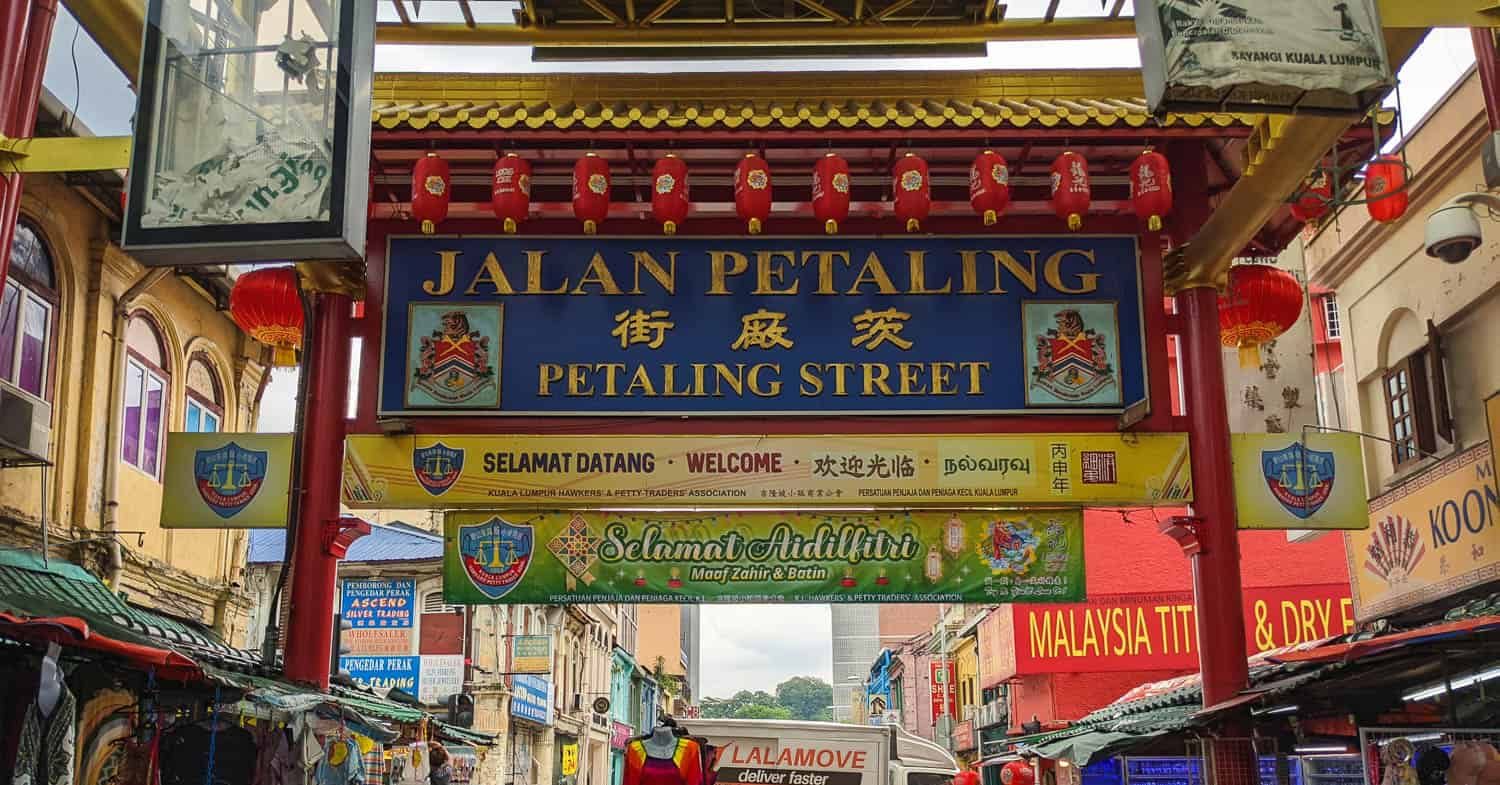
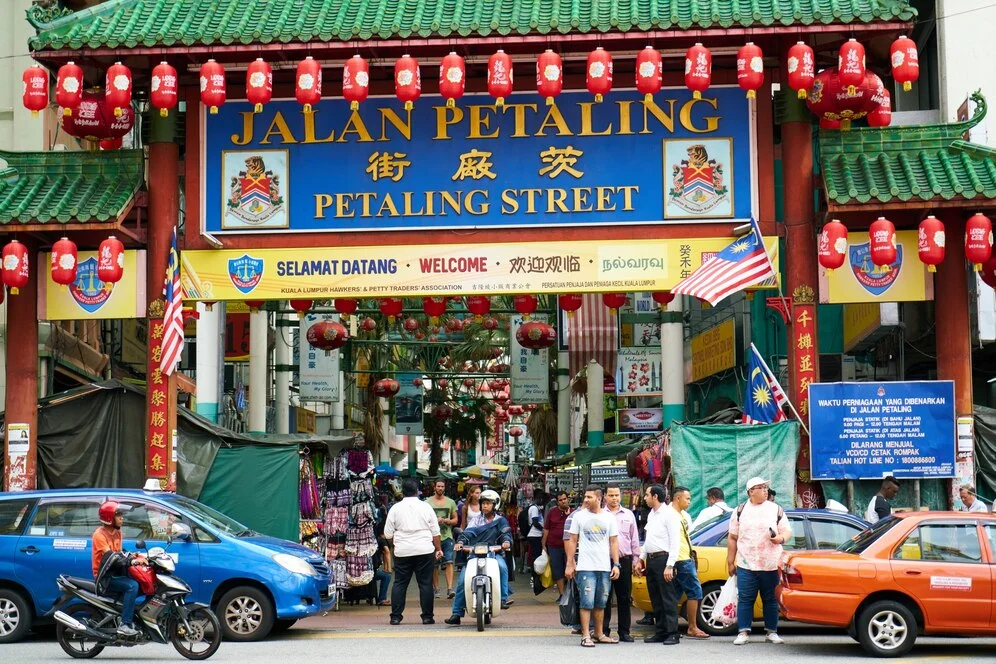
Petaling Street (Jalan Petaling) is the covered market street at the heart of Kuala Lumpur's Chinatown, entered through ornate Chinese-style gateways hung with red lanterns. By day and into the night its stalls sell clothes, bags, watches, sunglasses and souvenirs, while the lanes around it hold old coffee shops, roast meat shops, herbal tea stalls and some of the city's best-known street food. It is also one of the oldest parts of Kuala Lumpur: the street grew up in the 19th century around a tapioca mill run by the town's Chinese leader, Yap Ah Loy.
This guide covers the history of Petaling Street, what to see, buy and eat, opening times, bargaining tips, how to get there and what else is nearby.
| Address | Jalan Petaling, Chinatown, 50000 Kuala Lumpur |
|---|---|
| Hours | Street open 24 hours; stalls trade from late morning until late evening (busiest after 5 pm) |
| Closed | No closed days |
| Entry | Free |
| Nearest transit | Pasar Seni LRT/MRT and Merdeka MRT (about 5 minutes on foot) |
| Take me here | |
| Verified | Verified October 2026 |
History of Petaling Street
Kuala Lumpur began in the mid-19th century as a tin-mining settlement where the Klang and Gombak rivers meet, and the area south-east of the confluence became the home of its Chinese miners and traders. During the Selangor Civil War (the Klang War) of the 1860s and 1870s, many tin mines were flooded and abandoned. Yap Ah Loy, the Kapitan Cina (headman of the Chinese community) and one of the most important figures in the town's early history, looked for other work for the miners, and opened a tapioca mill on this street to process cassava grown locally.
That mill gave the street its Cantonese name, Chee Cheong Kai, meaning "Starch Factory Street", which older residents still use. Over the following decades the street filled with shophouses, traders and coffee shops, and the surrounding area became the city's Chinatown. Its night market grew into one of Kuala Lumpur's best-known sights.
In 2003 the street was given an RM11 million facelift: it was pedestrianised, covered with a long green roof, and two large Chinese gateways were built at either end, turning it into the covered market seen today. More recently, the area has become part of Warisan KL, the heritage-led urban renewal programme launched by Prime Minister Anwar Ibrahim in April 2025 to restore ten historic landmarks in the old city. Kuala Lumpur City Hall has announced that the ageing roof will be replaced, a second phase of improvements is under way on the former Pasar Karat site, and the neighbouring alley Jalan Sang Guna, with shophouse facades from the 1890s, was restored by Think City and reopened in January 2026 with new paving, murals and storytelling panels. Expect some works in progress.
What to See and Buy on Petaling Street
The market
The stalls along the covered stretch sell T-shirts, bags, shoes, watches, sunglasses, phone accessories, toys and souvenirs such as fridge magnets and keyrings, alongside dried fruit, sweets and snacks. Many "designer" items are copies; buy them for what they are and do not expect a warranty. For genuine Malaysian crafts, batik and pewter, Central Market is a better choice and only a few minutes away.
Street food and old coffee shops
Petaling Street and the lanes around it are as much about food as shopping. Look for:
- Roasted chestnut sellers stir-frying chestnuts in big woks of hot sand.
- Air mata kucing, the cooling drink of dried longan, monk fruit and winter melon sold from a stall on the street.
- Hokkien mee and asam laksa, plus Cantonese-style roast duck and char siu from the roast meat shops.
- Old coffee shops (kopitiam) serving kopi, toast and dim sum, and the hawker stalls of nearby Madras Lane.
Most of the food in the immediate area is Chinese and generally non-halal; for halal options, the Indian and Malay restaurants around Jalan Tun HS Lee, Central Market and Masjid Jamek are close by.
Heritage around the street
- Kwai Chai Hong: a restored back lane close by, with murals of old Chinatown life and QR codes that tell the stories of former residents.
- Sri Mahamariamman Temple: on Jalan Tun HS Lee, one of the oldest and richest Hindu temples in Kuala Lumpur.
- Sin Sze Si Ya Temple and the Guan Di Temple: two historic Chinese temples a few minutes' walk away.
- Jalan Sang Guna (Madras Lane): the newly restored alley linking Jalan Tun HS Lee with the Petaling Street area.
- Central Market (Pasar Seni): the 1937 Art Deco market hall, now full of craft shops, about five minutes west.
Opening Times and How Long to Spend
- Hours: the street is public and open 24 hours. Stalls open from late morning and trade until late evening; the market is busiest from late afternoon into the night.
- Entry: free.
- Time needed: an hour to walk the market; two to three hours if you add food stops, Kwai Chai Hong and the nearby temples.
How to Get to Petaling Street
- Pasar Seni LRT/MRT: on the Kelana Jaya Line and MRT Kajang Line, about five minutes on foot via Central Market.
- Merdeka MRT: Kajang Line, about five minutes to the southern end of the street.
- Plaza Rakyat LRT: on the Ampang and Sri Petaling lines, a short walk to the east side of Chinatown.
- Masjid Jamek LRT: about ten minutes north.
- Bus: the free GOKL city bus stops around Chinatown.
- Grab or taxi: ask for Jalan Petaling. Driving is not recommended: the streets are narrow and parking is scarce.
Tips for Visiting
- Bargain politely on unbranded goods. Start well below the asking price, agree a figure before you hand over money, and walk away if the price does not feel right.
- Keep bags zipped and valuables out of sight in the evening crowds.
- Late afternoon to early evening is the best time: the stalls are all open, it is cooler, and you can stay on for dinner.
- The covered street gives some shelter from afternoon rain, so it works as a wet-weather stop.
- Bring cash for street food and small purchases.
- Dress lightly for the heat, but cover shoulders and knees and remove shoes if you visit the Sri Mahamariamman Temple or other places of worship nearby.
Location
Photos
Frequently Asked Questions
What time does Petaling Street open?
The street itself is open 24 hours. Stalls open from late morning and trade until late evening, and the market is busiest from late afternoon into the night.
Why is Petaling Street called Chee Cheong Kai?
Chee Cheong Kai means "Starch Factory Street" in Cantonese. The name comes from the tapioca mill that Yap Ah Loy, the Kapitan Cina of early Kuala Lumpur, opened on the street in the 19th century.
Can you bargain at Petaling Street?
Yes. Bargaining is expected on unbranded goods. Start well below the asking price and agree a price before paying. Treat designer-label items as copies.
What is the nearest station to Petaling Street?
Pasar Seni LRT/MRT and Merdeka MRT stations are each about a five-minute walk. Plaza Rakyat and Masjid Jamek LRT stations are also within walking distance.
What should I eat on Petaling Street?
Try roasted chestnuts, the air mata kucing longan drink, Hokkien mee, asam laksa and roast duck or char siu, and visit one of the old coffee shops. Most food in the immediate area is non-halal.