
Central Market (Pasar Seni), Kuala Lumpur
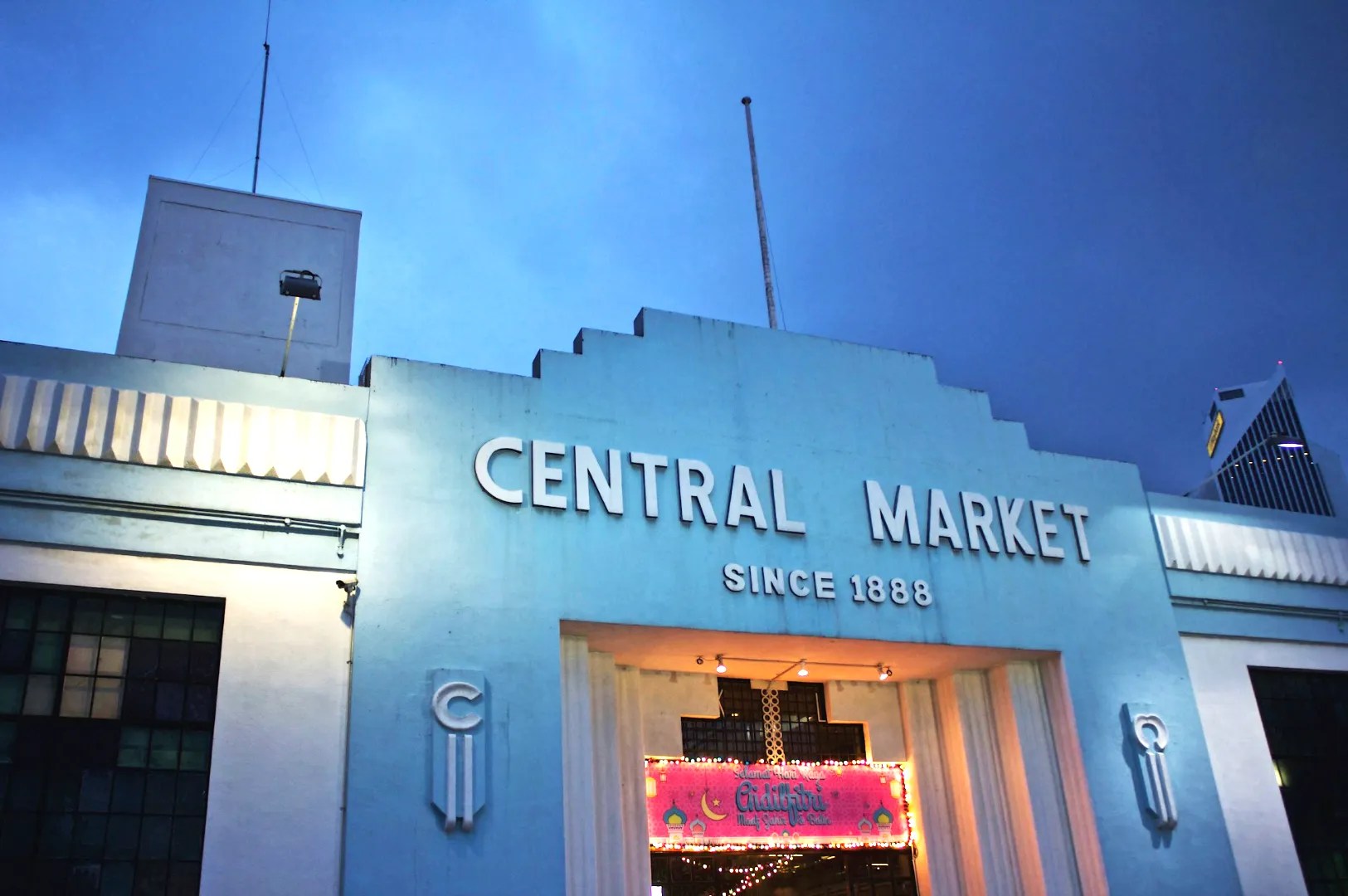
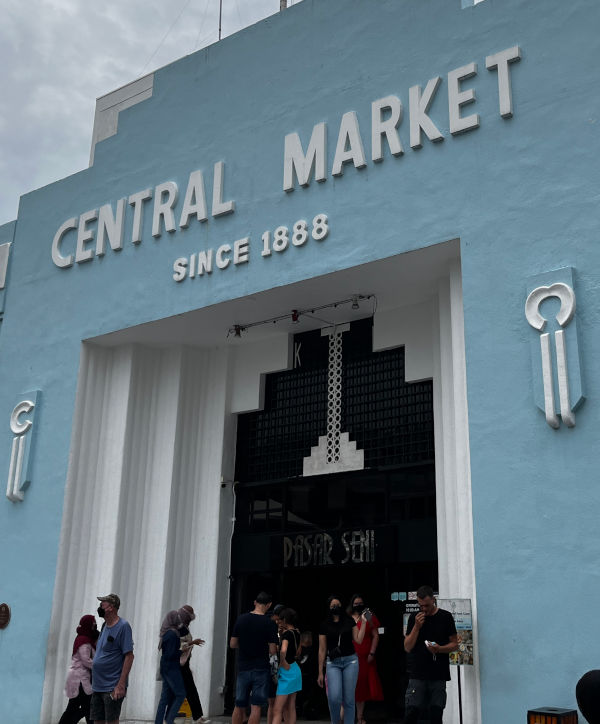
Central Market (Pasar Seni) is Kuala Lumpur's best-known arts and crafts market, housed in a pale blue Art Deco hall on Jalan Hang Kasturi, between the Klang River and Chinatown. It began in 1888 as the town's wet market, moved into its present building in 1937, and was saved from demolition in the 1980s to reopen as a centre for Malaysian art and handicrafts. Today it holds batik, songket, pewter, woodcarving, art galleries and souvenir shops, with food stalls in the covered Kasturi Walk outside. Entry is free.
This guide covers the market's history, what to see and buy, workshops, opening hours, how to get there and tips, checked in October 2026.
| Address | Jalan Hang Kasturi, 50050 Kuala Lumpur |
|---|---|
| Hours | Daily 10 am – 10 pm (some stalls close earlier) |
| Entry | Free |
| What to buy | Batik, pewter, handicrafts, art, souvenirs |
| Nearest transit | Pasar Seni MRT / LRT station (2-minute walk) |
| Take me here | |
| Official site | centralmarket.com.my |
| Verified | Verified October 2026 |
History of Central Market
Central Market was established by the British colonial administration in 1888 as a wet market for the people of Kuala Lumpur and the tin miners who had built the town. It moved here from the old Market Square (now Medan Pasar), and the site was expanded several times, in 1889, 1895, 1920 and 1921, as the town grew.
The building you see today was designed in 1936 by the architect T. Y. Lee and completed in 1937. The contract was won by Brizary & Co. of Singapore for $249,000, but the cost rose to about $330,000 once the extra Art Deco detailing was added. The design uses the style's typical stepped, ziggurat-like forms, strong vertical lines and geometric ornament on the facade. At around 123.7 by 60.8 metres, it was the largest single interior space in Kuala Lumpur when it opened.
The hall served as the city's main wet market until the late 1970s. As Kuala Lumpur modernised, it was slated for demolition, but the Malaysian Heritage Society (Badan Warisan Malaysia) campaigned to save it. It was renovated for adaptive reuse between October 1985 and April 1986, inspired partly by London's Covent Garden, and was relaunched in 1986 as Pasar Budaya (cultural market), though everyone calls it Pasar Seni, the "art market". The building was air-conditioned and the stalls rebuilt to look like rows of pre-war shophouses.
In 2004 the Kha Seng Group took a 60-year lease on the market, and it is managed by Central Market Sdn Bhd. The Central Market Annexe, in a former cinema building, reopened in 2006 with art galleries and a theatre space, and Kasturi Walk, the covered pedestrian street along the market's side with a roof shaped like a wau bulan (moon kite), was added in the early 2010s. In 2018 the market recorded about 4.2 million visitors, roughly half of them from overseas.
What to See and Buy at Central Market
Crafts and souvenirs
The main hall is arranged in themed sections reflecting Kuala Lumpur's Malay, Chinese and Indian communities. Look for:
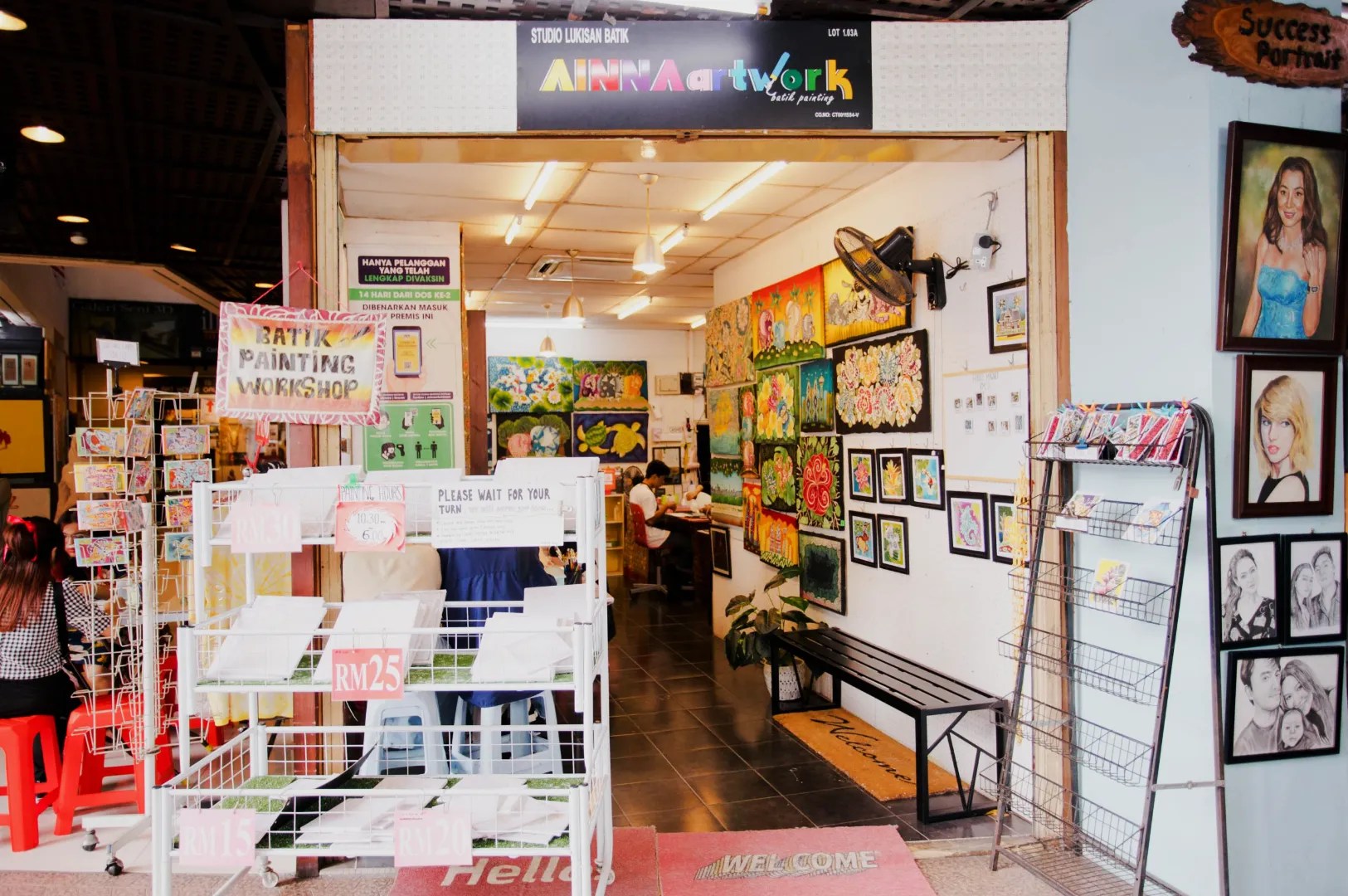
- Batik: hand-drawn and block-printed fabric by the metre, sarongs, scarves and shirts.
- Songket and textiles: gold-thread woven cloth, plus other Malaysian and Indian textiles.
- Pewter, woodcarving and kites: Selangor pewter, carved wooden items, wau kites and wayang kulit shadow puppets.
- Souvenirs and snacks: fridge magnets, keyrings, T-shirts, Malaysian coffee, tea and biscuits.
- Art: paintings, prints and portrait artists, including the Art House Gallery.
Workshops and experiences
You can try DIY batik painting, where you colour in a pre-waxed design to take home, as well as henna drawing and having a personalised Chinese seal carved. There is also traditional massage and foot reflexology on site. The Annexe has the Illusion 3D Art Museum and the KL Story Exhibition Gallery about the city's past.
Kasturi Walk and events
Kasturi Walk, the covered street on the Jalan Hang Kasturi side, has stalls selling clothing and souvenirs and street-food carts selling drinks and snacks. The market also hosts regular events such as weekend markets, food fairs and arts programmes; check the official website for the current calendar.
Opening Hours, Prices and How Long to Spend
- Hours: daily 10 am to 10 pm according to the official website, though some individual shops close earlier in the evening.
- Entry: free. Workshops and the Illusion 3D Art Museum charge separately.
- Prices: generally fixed in the indoor shops, though it does no harm to ask for a discount when buying several items. Some bargaining is normal at the Kasturi Walk stalls.
- Time needed: about an hour to browse; two hours or more with a batik workshop or a meal.
- Contact: 1-300-22-8688.
How to Get to Central Market
- LRT/MRT: Pasar Seni station, on the Kelana Jaya LRT Line and the MRT Kajang Line, is about a two-minute walk across the road.
- Masjid Jamek LRT: around 10 minutes on foot along the river.
- Bus: the free GOKL city buses and many RapidKL routes stop at the Pasar Seni hub nearby.
- Grab or taxi: ask for "Central Market, Jalan Hang Kasturi".
- Driving: there is a car park at the market, but Chinatown traffic is heavy; public transport is easier.
Tips for Visiting
- Weekday mornings are the quietest. Weekend afternoons are busiest, especially on Kasturi Walk.
- The main hall is air-conditioned, which makes it a good refuge from the midday heat or an afternoon storm.
- Combine it with Petaling Street and Kwai Chai Hong, a few minutes east, and the Sri Mahamariamman Temple and Sin Sze Si Ya Temple in Chinatown. Merdeka Square and the River of Life at Masjid Jamek are about 10 minutes north.
- For better-quality batik and songket, compare a few shops and ask whether pieces are hand-drawn (batik tulis) or printed.
- There are food stalls and restaurants inside and around the market, and plenty more in Chinatown.
Location
Photos
Nearby
- Kwai Chai Hong — 5-minute walk east into Chinatown
- Petaling Street — 3-minute walk south for street market shopping
- Merdeka Square — 8-minute walk north along Jalan Hang Kasturi
Frequently Asked Questions
What are Central Market Kuala Lumpur opening hours?
The official website lists daily hours of 10 am to 10 pm. Some individual shops and stalls close earlier in the evening.
Is Central Market free to enter?
Yes. Entry to Central Market is free. Workshops such as batik painting and the Illusion 3D Art Museum charge separately.
Why is Central Market called Pasar Seni?
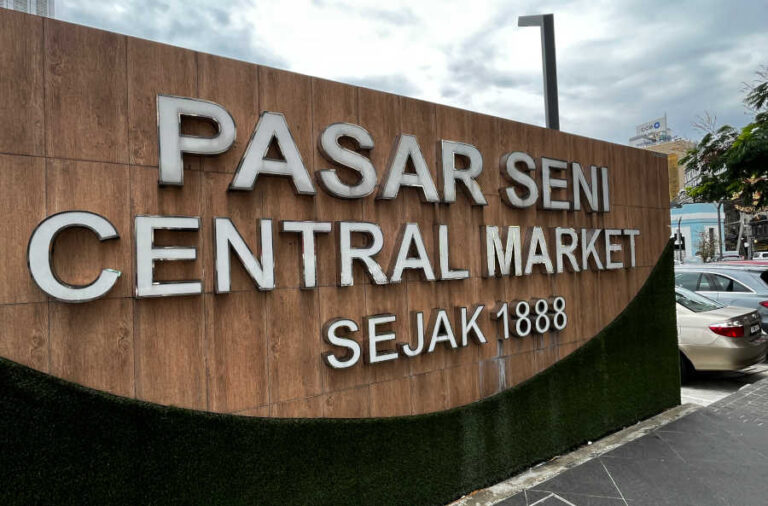
Pasar Seni means "art market". After it stopped being a wet market, the building reopened in 1986 as a centre for Malaysian arts and crafts, and the name stuck.
How old is Central Market?
The market was founded in 1888 as a wet market. The current Art Deco building was designed by T. Y. Lee and completed in 1937.
What is the nearest station to Central Market?
Pasar Seni station, served by the Kelana Jaya LRT Line and the MRT Kajang Line, is about a two-minute walk away.
Can you bargain at Central Market?
Prices in the indoor shops are mostly fixed, though you can ask for a discount on bigger purchases. Bargaining is more common at the Kasturi Walk stalls.