
Batu Caves, Kuala Lumpur
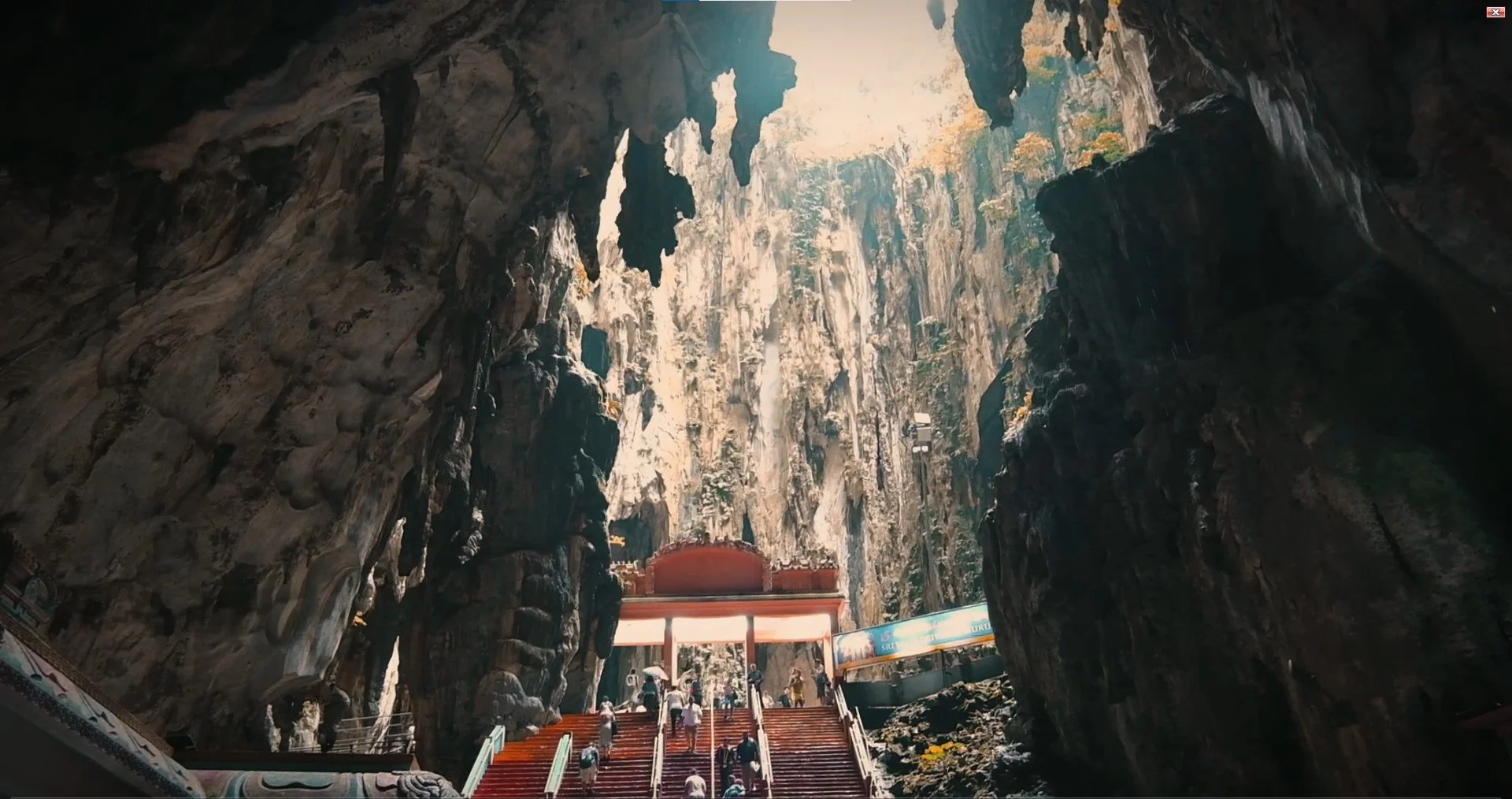
Batu Caves is a limestone hill on the northern edge of Kuala Lumpur, in Gombak, Selangor, about 13 km from the city centre. Inside its largest cavern is a Hindu temple to Lord Murugan, reached by 272 steps painted in bright colours and guarded by a 42.7-metre golden statue of the god, the tallest statue in Malaysia. It is the most important Hindu shrine outside India for many Tamils, the focus of the Thaipusam festival, and one of the most visited sights around the city. The main Temple Cave is free, there is a train station at the gate, and a visit takes between one and three hours.
This guide covers the history and geology, what to see in each cave, prices and hours, how to get there, the dress code and tips for the climb.
| Location | Batu Caves, 68100 Gombak, Selangor (13 km north of KL city centre) |
|---|---|
| Hours | Daily 6 am – 9 pm (staircase access 6 am – 8:30 pm) |
| Entry | Free — Temple Cave has no entrance fee |
| Other caves | Ramayana Cave RM5 | Cave Villa RM15 (non-Malaysian) / RM7 (Malaysian) |
| Steps | 272 steps to Temple Cave |
| Dress code | Cover shoulders and knees. Sarongs available at the foot of the stairs. |
| Nearest transit | KTM Komuter — Batu Caves station (30 min from KL Sentral, RM2.60) |
| Take me here | |
| Verified | Verified October 2026 |
History of Batu Caves
The limestone that forms the hill is more than 400 million years old, although the caves themselves formed much later, as rainwater seeping through the rock slowly dissolved it. The complex has around 20 caves, with stalactites, stalagmites, flowstone and cave pearls. The indigenous Temuan people used the caves as shelters, and from the 1860s Chinese settlers dug bat guano from the cave floors to sell as fertiliser to vegetable farms. The American naturalist William Hornaday visited and described the caves in 1878, which helped bring them to wider attention.
The caves became a Hindu site through K. Thamboosamy Pillay, a Tamil trader and community leader in Kuala Lumpur who also founded the Sri Mahamariamman Temple in the city. Struck by the resemblance of the cave mouth to the "vel", the spear carried by Murugan, he established a shrine to the god in the main cave. The temple was completed in 1891, and the first Thaipusam festival was held there in 1892. Pilgrims at first climbed wooden steps, installed in 1920; in 1940 these were replaced by the 272 concrete steps used today.
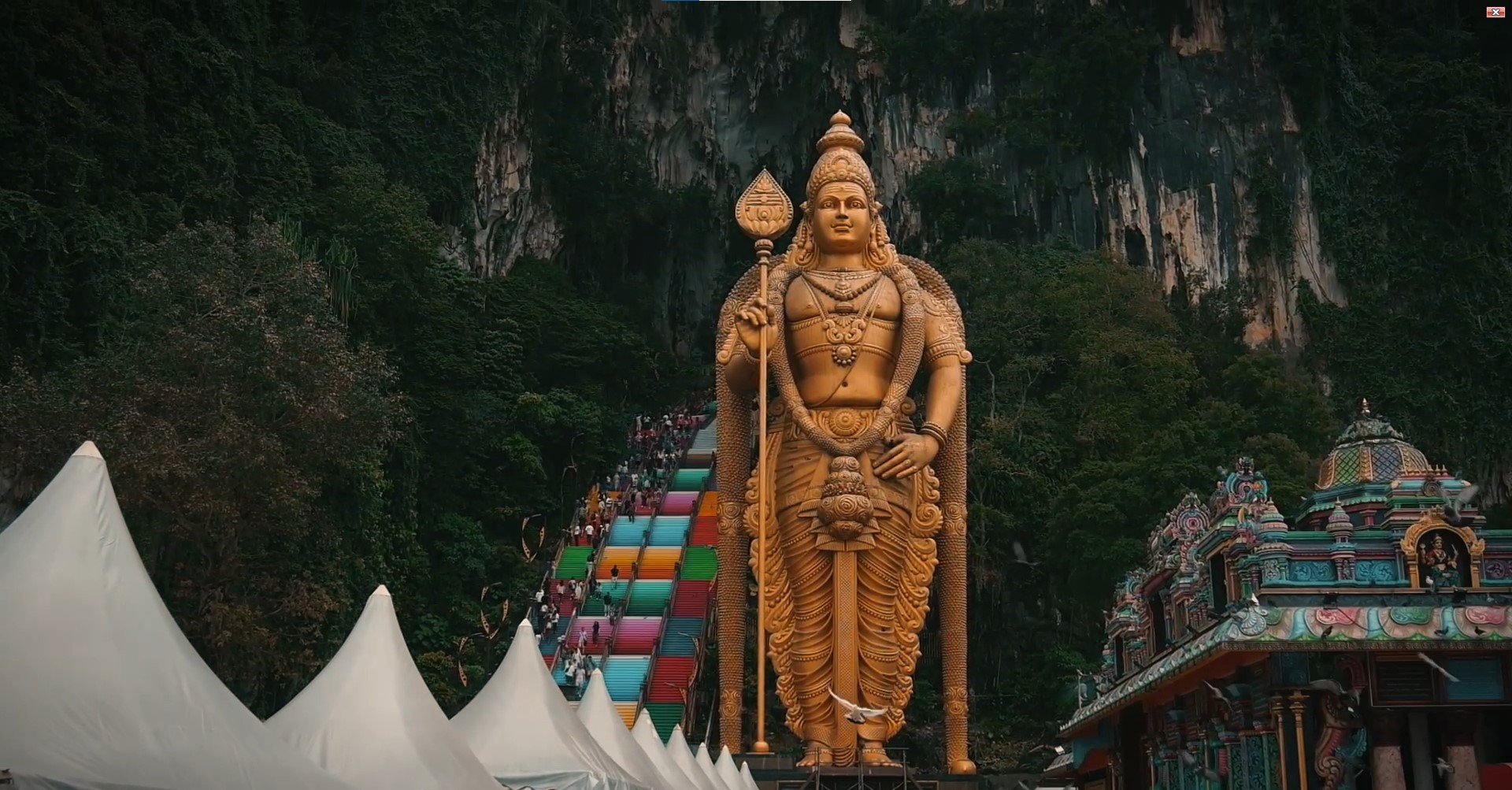
The golden statue of Murugan at the foot of the stairs was unveiled on 29 January 2006, during Thaipusam. It stands 42.7 metres (140 feet) tall, took about three years to build with artisans from India, and used around 1,550 cubic metres of concrete, 350 tonnes of steel and 300 litres of gold paint, at a cost of about RM2.5 million. In August 2018 the temple repainted the 272 steps in bands of colour, which turned the staircase into one of the most photographed scenes in Malaysia. The temple is managed by the Sri Maha Mariamman Temple Devasthanam, the same body that runs the Sri Mahamariamman Temple in Chinatown, which in 2024 announced plans for an escalator up the hill and a multipurpose hall; check the current state of works when you visit.
The hill is also an important natural site. It supports 269 recorded species of vascular plants, 21 species of bats and the trapdoor spider Liphistius batuensis, one of the rarest spiders in the world, found only in these caves.
What to See at Batu Caves
Temple Cave (free)
At the top of the 272 steps, the Temple Cave (also called Cathedral Cave) is a huge chamber with a high vaulted ceiling. Shrines to Murugan and other deities stand inside, and at the far end a second, higher chamber opens to the sky, so shafts of light fall into the cave in the morning. Priests perform puja at the shrines through the day, and macaques wander through the cave. Donations are welcome but entry is free.
The Murugan statue and the steps
The golden statue beside the stairs is the classic photo, best taken from the open plaza in front, ideally in early morning light. The climb takes 10 to 15 minutes at a steady pace; there are places to pause on the way, and the view back over the plaza improves as you go.
Ramayana Cave (RM5)
To the left of the main plaza, past a 15-metre green statue of the monkey god Hanuman, the Ramayana Cave is filled with colourful painted statues and dioramas telling the story of the Hindu epic the Ramayana. A walk through takes about 20 minutes.
Cave Villa (RM15 non-Malaysians, RM7 Malaysians)
Near the station entrance, Cave Villa combines two show caves lit with coloured lights, Hindu art and sculpture, a carp pond with a crooked bridge and glass tanks of snakes and other reptiles. It is a commercial attraction rather than a temple.
Dark Cave
A side passage off the main stairway leads to the Dark Cave, an undeveloped cave system protected for its wildlife. It was closed to visitors for several years from 2019; in 2025 the Malaysian Nature Society (MNS), which manages it, reopened it for guided educational tours and more strenuous adventure caving trips. Tours must be booked ahead through MNS, and fees apply.
Thaipusam
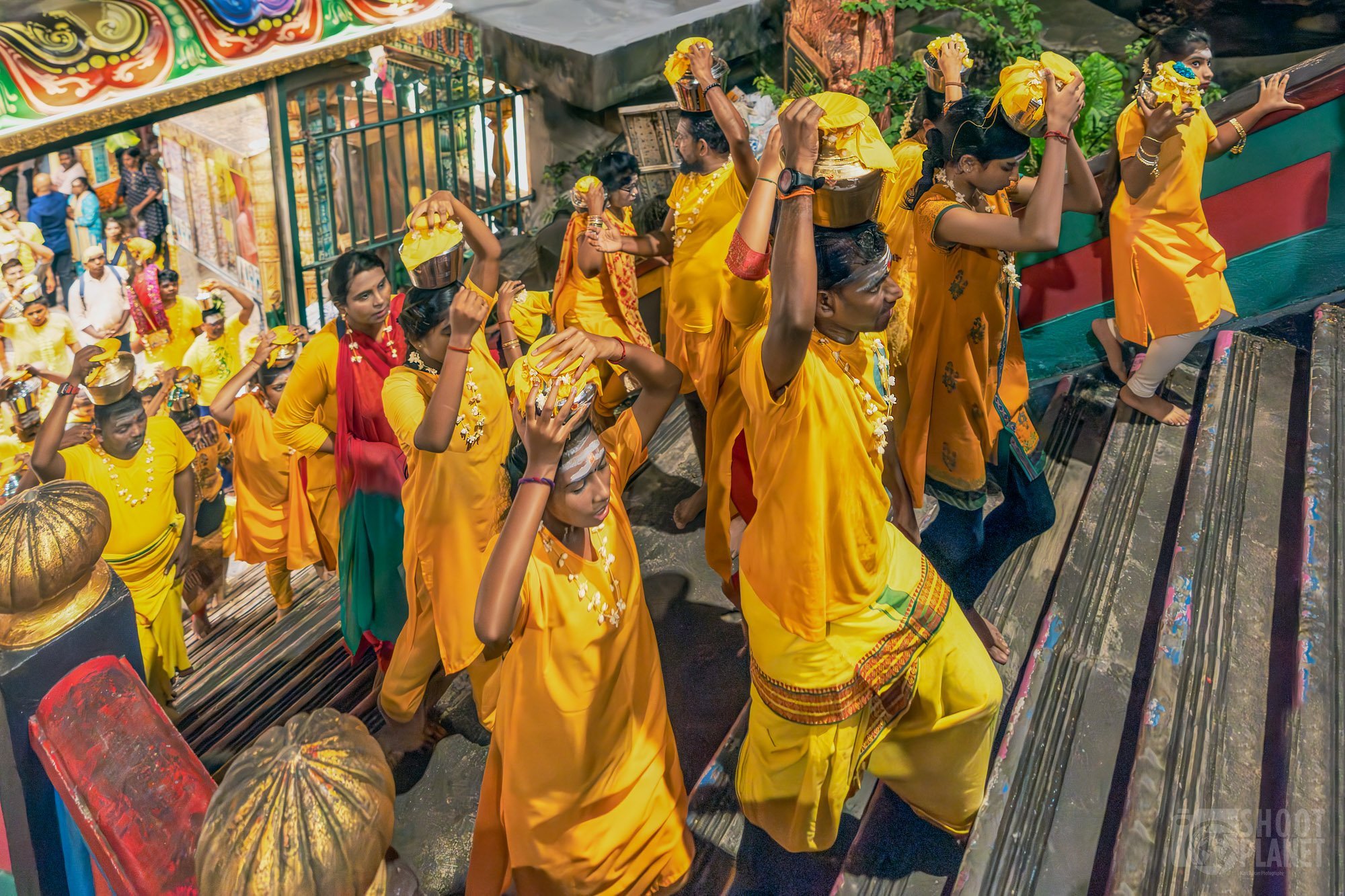
Thaipusam falls in the Tamil month of Thai (January or February) and draws well over a million devotees and visitors to Batu Caves. The night before, a silver chariot carrying Murugan's image leaves the Sri Mahamariamman Temple in Chinatown and is pulled to the caves. On the day, devotees fulfil vows by carrying milk pots up the steps or bearing kavadi, decorated frames that may be attached to the body with hooks and skewers. It is an extraordinary sight but extremely crowded; arrive before dawn and expect road closures.
Batu Caves Tickets, Opening Hours and How Long to Spend
- Hours: the complex is open daily from about 6 am to 9 pm; the staircase is usually accessible until around 8:30 pm.
- Temple Cave: free.
- Ramayana Cave: RM5.
- Cave Villa: RM15 for non-Malaysians, RM7 for Malaysians.
- Dark Cave: guided tours by advance booking with the Malaysian Nature Society; check their current fees and timetable.
- Time needed: about an hour for the steps and Temple Cave; 1.5 to 2 hours with Ramayana Cave and Cave Villa; half a day with a Dark Cave tour.
How to Get to Batu Caves
- KTM Komuter: Batu Caves station is the end of the Batu Caves to Pulau Sebang line and sits right beside the temple complex. Trains from KL Sentral take about 30 minutes and cost about RM2.60 each way; they run roughly every 15 to 30 minutes. You can also board at Bank Negara, Kuala Lumpur or Putra stations.
- Grab or taxi: about 25 to 40 minutes from the city centre depending on traffic, typically RM15 to RM25 each way.
- Bus: city buses also serve Batu Caves, but the train is simpler and avoids traffic.
- Car: there is a paid car park beside the complex; it fills quickly at weekends and is closed off during Thaipusam.
Tips for Visiting Batu Caves
- Dress code: this is a place of worship. Shoulders and knees must be covered; no short shorts or short skirts. Sarongs are available at the foot of the stairs if you need to cover up.
- Go early: arrive before 9 am for cooler air, softer light and fewer tour groups; late afternoon is the next best time.
- Monkeys: the long-tailed macaques on the steps snatch food, drinks and plastic bags. Keep snacks out of sight, do not feed them and hold on to sunglasses and phones.
- The climb: it is steep and hot. Bring water, wear shoes with grip (the steps can be slippery after rain) and take your time. There is currently no lift, so visitors with limited mobility can enjoy the statue, plaza and Ramayana Cave at ground level.
- Shoes: remove them before entering the inner shrines in the Temple Cave.
- Food: the plaza has vegetarian South Indian restaurants and stalls serving thosai, banana-leaf rice and fresh coconut water.
- Combine with: the Royal Selangor Visitor Centre and Zoo Negara are both on the north-east side of the city, making an easy half-day loop by Grab.
Batu Caves Location
Photos
Frequently Asked Questions
Is Batu Caves free to enter?
Yes. The Temple Cave at the top of the 272 steps is free. The Ramayana Cave costs RM5, Cave Villa costs RM15 for non-Malaysians and RM7 for Malaysians, and Dark Cave tours are booked and paid for separately through the Malaysian Nature Society.
How many steps are there at Batu Caves?
There are 272 steps up to the Temple Cave. They were built in concrete in 1940 and repainted in rainbow colours in 2018. The climb takes about 10 to 15 minutes.
What is the dress code at Batu Caves?
Cover your shoulders and knees: no short shorts, short skirts or sleeveless tops. Sarongs are available at the foot of the stairs if you need to cover up.
How do I get to Batu Caves from KL Sentral?
Take the KTM Komuter train to Batu Caves station, the last stop on the line. The trip takes about 30 minutes and costs about RM2.60 each way, and the station is right beside the temple complex.
How tall is the Murugan statue at Batu Caves?
The golden statue of Lord Murugan is 42.7 metres (140 feet) tall, the tallest statue in Malaysia. It was unveiled during Thaipusam on 29 January 2006.
When is the best time to visit Batu Caves?
Early morning, before 9 am, is coolest and quietest. Visit during Thaipusam (January or February) for the festival, but expect huge crowds.