
Kwai Chai Hong, Kuala Lumpur
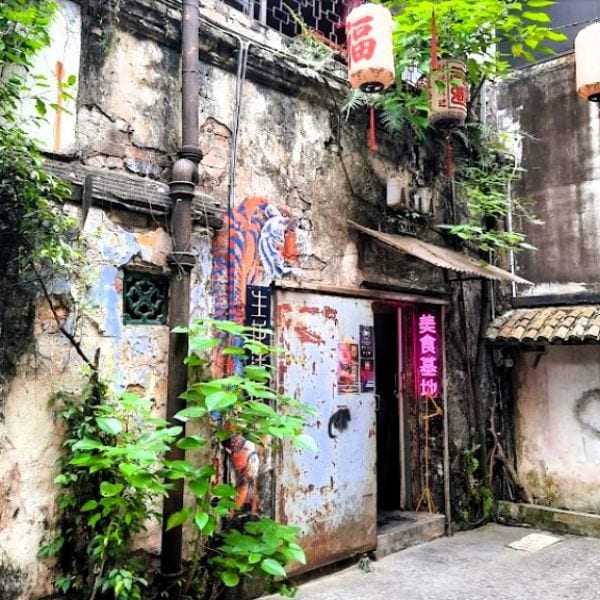
Kwai Chai Hong is a restored back lane in Kuala Lumpur's Chinatown, squeezed between the rear walls of the shophouses on Jalan Petaling (Petaling Street) and Lorong Panggung. Until 2018 it was a dark, neglected service alley. Today it is a free open-air gallery of murals showing everyday life in Chinatown in the 1960s, with an entrance arch, overhead lanterns, seasonal art installations and a handful of cafes and bars in the restored shophouses around it. It takes about 15 to 30 minutes to see, and it sits five minutes from Pasar Seni station, so it is easy to add to a walk around Petaling Street and Central Market.
This guide covers the lane's history and name, what the murals show, the yearly Chinese New Year displays, opening hours (checked October 2026), how to get there and tips for photos.
| Location | Lorong Panggung, off Petaling Street, Chinatown, 50000 Kuala Lumpur |
|---|---|
| Hours | Daily 9 am to midnight (official site; some listings show earlier closing) |
| Entry | Free |
| Time needed | 15–30 minutes |
| Nearest transit | Pasar Seni MRT / LRT (5-minute walk) |
| Take me here | |
| Official site | kwaichaihong.com |
| Verified | Verified October 2026 |
History of Kwai Chai Hong
Petaling Street grew up in the late 19th century around the tapioca mill opened by Kapitan Yap Ah Loy, which is why the street is still called Chee Cheong Kai ("starch factory street") in Cantonese. Behind its rows of pre-war shophouses ran narrow back lanes used for deliveries, drainage and rubbish. One of these, between Jalan Petaling and Lorong Panggung, became known as Kwai Chai Hong.
The name is Cantonese and is usually translated as "Little Ghost Lane" or "Little Demon Lane". The most widely repeated explanation is that "kwai chai" (little devils) was what older Chinese residents called the unruly children who used the dark lane as a playground. By the late 20th century the area had become run-down, and reports from the time of the restoration describe it as a place once associated with drug users, gangs and prostitution.
In 2018 a group of five local entrepreneurs, working through a space-management company they set up called Bai Chuan Management Sdn Bhd, took on the alley and the buildings around it. They put in more than RM1.5 million of their own money, supported by a grant from Think City, the urban-regeneration agency. "Project Kwai Chai Hong" restored ten shophouses (six facing Jalan Petaling and four on Lorong Panggung) and the lane between them, keeping the old walls, timber windows and back doors rather than rebuilding them. The restored lane was completed in April 2019 and officially launched at the end of that month by the Bukit Bintang MP, Fong Kui Lun.
Since then the lane has become one of Chinatown's best-known photo stops, and Bai Chuan has kept it busy with seasonal installations and food and drink tenants. It is privately managed rather than a public park, but entry has always been free.
The Kwai Chai Hong Murals
The heart of the project is a set of six murals painted on the back walls and facades of the restored shophouses by five Malaysian artists: Khek Shin Nam, Chan Kok Sing, Chok Fook Yong, Chew Weng Yeow and Wong Leck Min. Each artist worked in a different style, but all the paintings recreate scenes of the 1960s, when the block was a crowded residential and working neighbourhood. Look for:
- a barber cutting hair in the open air, as street barbers once did in the back lanes;
- shopkeepers using baskets and pulleys to lower goods from upstairs windows to customers below;
- children playing in the lane, a nod to the "little devils" of the name;
- wooden window blinds with hand-painted advertisements of the period;
- neighbourhood landmarks such as the Yan Keng Benevolent Dramatic Association building, home to a Cantonese opera society, and the Chin Woo Stadium on the hill above Chinatown.
Many of the paintings are interactive, with real objects such as chairs, shutters and pipes fixed to the wall so you can step into the scene. Each mural was given a QR code linking to short clips and soundtracks about life in the area; some codes have faded or stopped working over the years, so treat them as a bonus.
Seasonal Installations and Events
The lane is redecorated for major festivals, above all Chinese New Year, when it is one of KL's busiest photo spots. Recent examples:
- 2025, "Bountiful Blessings": a canopy of large fish-shaped lanterns based on the saying nian nian you yu ("abundance year after year"), on display until 16 February 2025.
- 2026, "Guardians of Legacy": lanterns painted with the 12 zodiac animals, with a horse more than seven feet tall as the centrepiece for the Year of the Horse, on display until 8 March 2026.
Smaller themed displays appear at other times of year. Check the lane's Instagram or Facebook (@kwaichaihong) for what is on during your visit.
Cafes and Bars
Several of the restored shophouses that back on to the lane house cafes, kopitiam-style eateries and resto-bars, some with entrances from the alley and others from Jalan Petaling or Lorong Panggung. Tenants change from time to time, so check current listings, but the lane works well as a stop for coffee by day or a drink in the evening. For cheap local food, the stalls and restaurants of Petaling Street and the Madras Lane hawkers near Jalan Tun H.S. Lee are only a few minutes away.
Opening Hours, Entry and How Long to Spend
- Hours: the official site lists daily 9 am to midnight. Some third-party listings show an earlier closing, so aim for daytime or early evening if you want to be sure.
- Entry: free; no ticket or booking needed.
- Time needed: 15 to 30 minutes for the murals, longer if you queue for photos at festival time or stop for a drink.
How to Get to Kwai Chai Hong
- MRT/LRT: Pasar Seni station (MRT Kajang Line and LRT Kelana Jaya Line) is about five minutes away. Use exit A, walk past Central Market along Jalan Hang Kasturi, then cut through to Jalan Petaling and Lorong Panggung.
- Monorail: Maharajalela station is about ten minutes' walk to the south.
- Grab or taxi: ask for Lorong Panggung or Jalan Panggung; cars cannot enter the lane itself.
- Parking: the official site recommends the car park on Jalan Balai Polis, about two minutes' walk away. Street parking in Chinatown is limited.
The entrance is easy to miss. Look for the arch and lanterns at the Lorong Panggung end, close to the junction with Jalan Petaling.
Tips for Visiting
- Weekday mornings, roughly 9 to 11 am, are the quietest time for photos. Weekend afternoons and the weeks around Chinese New Year are the busiest.
- After dark the lane is lit with warm lamps and lanterns, which gives a different look for photos.
- The surrounding shophouses are still in use. Keep noise down and do not climb on fixtures or block doorways.
- The lane is flat but narrow, with some uneven paving; it is manageable with a pushchair outside peak hours.
- Combine it with Petaling Street, Central Market, Sri Mahamariamman Temple and Guan Di Temple, all within about five minutes' walk.
Location
Photos
Nearby
- Central Market — 5-minute walk north on Jalan Hang Kasturi
- Yellow Brick Road Chinatown — cafe a short walk away on Jalan Tun H.S. Lee
- Petaling Street night market — same area, most active after 5 pm
Frequently Asked Questions
Is Kwai Chai Hong free to visit?
Yes. Kwai Chai Hong is free to enter and there is no ticket or booking. You only pay if you eat or drink at one of the cafes or bars around the lane.
What are Kwai Chai Hong opening hours?
The official site lists daily 9 am to midnight. Some listings show an earlier closing time, so daytime or early evening is the safest time to go.
What does Kwai Chai Hong mean?
It is Cantonese for "Little Ghost Lane" or "Little Demon Lane". The common explanation is that older residents called the mischievous children who played in the lane "kwai chai", or little devils.
When was Kwai Chai Hong restored?
Bai Chuan Management, a company formed by five local entrepreneurs, restored ten shophouses and the lane with a Think City grant in 2018 and 2019. It reopened in April 2019 with six murals by five Malaysian artists.
How do I get to Kwai Chai Hong?
Take the MRT or LRT to Pasar Seni and walk about five minutes past Central Market to Lorong Panggung, off Jalan Petaling. Maharajalela monorail station is about ten minutes on foot.