
Little India
Last updated: October 2026
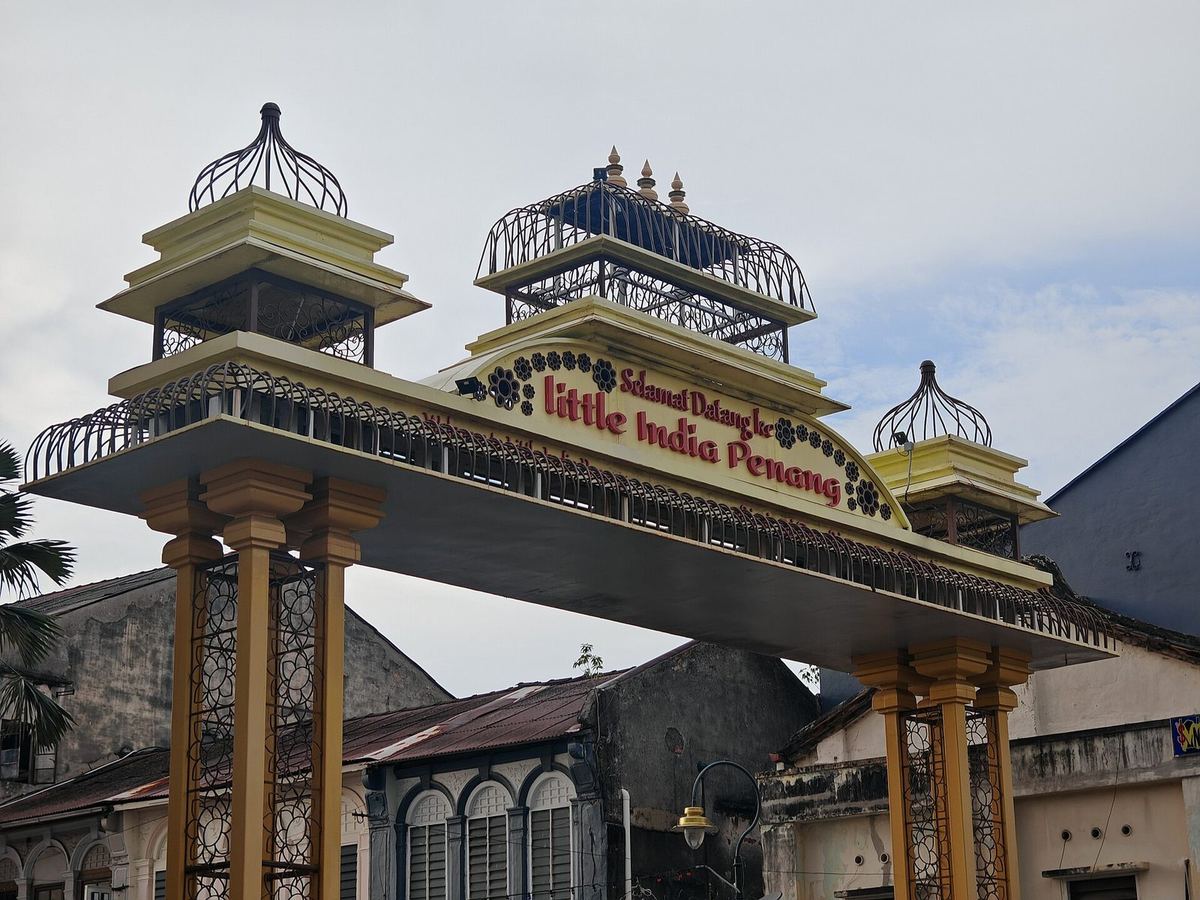
Little India is George Town's Indian quarter, a grid of old shophouse streets around Lebuh Pasar (Market Street), Lebuh Queen, Lebuh King and Lebuh Chulia in the middle of the UNESCO World Heritage Site. Spice merchants, sari and textile shops, goldsmiths, flower-garland sellers and banana-leaf restaurants fill the five-foot ways, Tamil film songs play from shopfronts, and the Sri Mahamariamman Temple, Penang's oldest Hindu temple, stands in the middle. The streets are free to wander at any time and make an easy walk between the city's main temples and mosques.
This guide covers the history of Little India, what to see, eat and buy, festivals, how to get there and tips for visiting (checked October 2026).
| Address | Lebuh Queen, Lebuh Pasar & Lebuh Chulia, George Town |
|---|---|
| Details | Streets open 24 hours; most shops open from morning to evening Free |
| Area | George Town |
| Typical visit | About 1 h |
| Listed in | Penang Attractions |
| Take me here | |
| Verified | Verified October 2026 |
History of Little India, Penang
Part of the Francis Light grid
The streets of Little India are among the very first laid out in George Town. They sit inside what is now called the "Francis Light Grid", the rectangle of streets bounded by Lebuh Leith, Lebuh Pantai (Beach Street), Lebuh Chulia and Jalan Masjid Kapitan Keling (formerly Pitt Street), planned in the first years after Light founded the British settlement in 1786. Names such as Market Street, King Street, Queen Street and Penang Street date from that period.
Chulias, Chettiars and later arrivals
Penang's growth as a free port in the late 18th and early 19th centuries drew traders from across Asia, including Tamil traders known as Chulias, who gave their name to Lebuh Chulia. Lebuh Chulia was once called Malabar Street, and in 1801 the Indian Muslim community leader Cauder Mohuddeen Merican completed the first Kapitan Keling Mosque on land granted beside it. Hindu traders, money-lenders and labourers followed: a shrine on Queen Street was in use by 1801 and became the Sri Mahamariamman Temple in 1833. Over time Malayalees, Telugus, Gujaratis and Punjabis joined the Tamil community, and shops spread along Queen Street, Market Street and Penang Street.
Each street developed its own character. Tamils called Market Street "Kadai Teru", the street of shops, and the British knew it as "Chola Place" or "Little Madras". Lebuh King was home to South Indian Muslim boatmen and stevedores and was known in Tamil as the street of boatmen. The largest wave of Indian migration came in the early 20th century, and by the 1930s Lebuh Chulia had small settlements and a busy Tamil theatre scene. In the 1940s and 1950s, spice and onion traders were so prominent that betel nuts and spices were spread out to dry in the street. The Japanese Occupation slowed trade, and in the late 1970s the area's streets were converted to one-way traffic, the pattern that remains today.
Little India today
Little India is part of the George Town core zone inscribed by UNESCO in 2008. It is still a working commercial district, with Indian Muslim and Hindu businesses alongside Chinese-owned shops, and is one of the busiest shopping streets in the old town before Deepavali. A local custom often cited as an example of the area's harmony is that many Muslim food sellers avoid selling beef out of respect for the Hindu temple nearby.
What to See in Little India
- Sri Mahamariamman Temple: on Lebuh Queen, with a gopuram (gateway tower) carrying 38 statues of deities. It is dedicated to the goddess Mahamariamman and was reconsecrated most recently in 2016. Visitors may enter outside prayer times; remove shoes at the door.
- Lebuh Pasar (Market Street): the main shopping street, lined with sari, silk and cotton textile shops, gold jewellers and shops selling Bollywood music and films.
- Lebuh Queen and Lebuh King: spice merchants, garland stalls, sweet shops and import-export businesses run by Tamil Muslim families; look for the sacks of chillies, turmeric and dried pulses outside the shops.
- Nagore Durgha Shrine: on Lebuh Chulia, a small Indian Muslim shrine modelled on the Nagore Dargah in Tamil Nadu.
- Kapitan Keling Mosque: one block west on Jalan Masjid Kapitan Keling, with its ochre-yellow domes and Mughal and Moorish arches. The prayer hall was heightened in a major 1930 renovation.
- The Street of Harmony: Jalan Masjid Kapitan Keling links the mosque with the Kuan Yin Teng Chinese temple, St George's Church and the Sri Mahamariamman Temple's rear entrance, places of four faiths within a few hundred metres.
Food in Little India
Little India is one of the best places in George Town for South Indian and Indian Muslim food. Look for banana-leaf rice and thali sets in the restaurants on Lebuh Pasar and Lebuh Penang, nasi kandar at the Indian Muslim shops near the Kapitan Keling Mosque, and roti canai, tosai, vadai and murukku from the small stalls and tea shops. Sweet shops on Lebuh Queen and Lebuh Pasar sell ladoo, jalebi and halwa, especially before Deepavali. Finish with teh tarik or a jigarthanda, the cold milk drink from Madurai, at one of the drinks stalls. Many restaurants are vegetarian or halal; check signs if you have dietary needs.
Festivals
- Deepavali (October or November): the weeks before the festival of lights are the busiest of the year, with extra stalls for clothes, sweets, kolam powder and oil lamps, and street decorations across the district.
- Thaipusam (January or February): chariot processions carrying Lord Murugan's vel (spear) wind through George Town towards the Waterfall Hilltop Temple. A golden chariot worth about RM3 million was introduced in 2017.
- Navarathri: nine nights of prayer at the Sri Mahamariamman Temple, ending with a procession of the goddess on a decorated chariot through the streets of Little India.
Visiting Little India: Hours, Price and Time Needed
Little India is a public district, open 24 hours and free to visit. Most shops open from mid-morning until early evening, while many restaurants open from breakfast until late. Allow about an hour for a walk with a stop at the temple, or longer if you plan to shop or eat.
How to Get There
- On foot: Little India sits between Lebuh Chulia, Lebuh Pantai and Jalan Masjid Kapitan Keling. It is about five minutes from the Pinang Peranakan Mansion and St George's Church, and ten minutes from Fort Cornwallis or Armenian Street.
- Bus: Rapid Penang routes from Komtar to Weld Quay pass along Lebuh Chulia, and the free CAT shuttle stops nearby.
- Grab or taxi: ask for Lebuh Pasar or the Sri Mahamariamman Temple; the one-way streets mean drivers may drop you on Lebuh Chulia.
- Parking: street parking is scarce, especially at weekends and before festivals.
Tips for Visiting
- Dress modestly if you plan to enter the temple or mosque: cover shoulders and knees, remove shoes, and follow any posted rules about photography.
- Go in the morning for the spice and flower shops at their freshest, or in the evening when restaurants are busy and the shop lights are on.
- Bargaining is acceptable in textile and souvenir shops but not in restaurants or sweet shops.
- Five-foot ways can be blocked by goods and are uneven, so wheelchair users and pushchairs may need to use the road edge with care.
- Several licensed money changers trade along Lebuh Chulia and Lebuh King, useful if you need cash for the many cash-only stalls.
Little India Location
Nearby
- Yasmin's Jigarthanda — Drinks, 0.1 km away
- Sri Mahamariamman Temple — Attraction, 0.1 km away
- Teraju Positif — Money changer, 0.1 km away
- Kanson Forex — Money changer, 0.1 km away
- M.S.K.M. Mohamed Haniffa Forex — Money changer, 0.1 km away
- M. Mohamed Kassim Forex — Money changer, 0.1 km away
Plan a route with opening times using the Where2Go trip planner.
Frequently Asked Questions
Where is Little India in Penang?
Little India is in central George Town, around Lebuh Pasar (Market Street), Lebuh Queen, Lebuh King and Lebuh Chulia, between Beach Street and Jalan Masjid Kapitan Keling, inside the UNESCO World Heritage Site.
Is Little India Penang free to visit?
Yes. It is a public district open 24 hours with no entry fee. Shops generally open from mid-morning to early evening, and restaurants from breakfast until late.
What is Little India Penang known for?
It is known for spice, textile and gold shops, garland stalls, South Indian and Indian Muslim restaurants, and the Sri Mahamariamman Temple, the oldest Hindu temple in Penang.
When is the best time to visit Little India?
The weeks before Deepavali (October or November) are the busiest and most colourful. For a quieter walk, go on a weekday morning.
How old is Little India in George Town?
Its streets were laid out in the first years after the British settlement of 1786, and Indian traders were established there by around 1801, when the first Kapitan Keling Mosque was completed and a Hindu shrine was in use on Queen Street.