
Sri Mahamariamman Temple, Penang
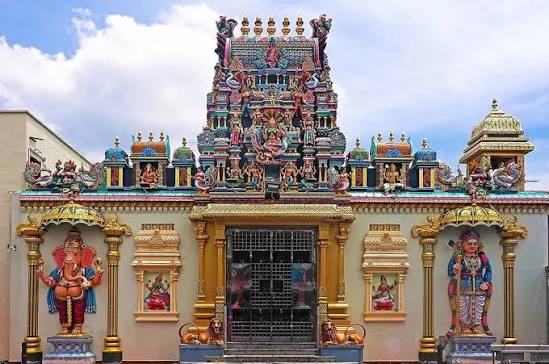
Sri Mahamariamman Temple, officially the Arulmigu Sri Mahamariamman Temple, is the oldest Hindu temple in Penang. It stands on Lebuh Queen (Queen Street) in the middle of George Town's Little India, with a rear entrance on Jalan Masjid Kapitan Keling, and is easy to spot by the gopuram over its entrance: a tower crowded with brightly painted figures of gods and goddesses. A shrine stood here by 1801, and the temple as a building dates from 1833. It is dedicated to Mahamariamman, the mother goddess worshipped by South Indian communities as a protector against disease, and it is still the starting point for some of Penang's biggest Hindu festivals.
This guide covers the temple's history, architecture and festivals, opening and puja times (checked October 2026), how to get there and etiquette for visitors.
| Address | Lebuh Queen (Queen Street), Little India, George Town; rear entrance on Jalan Masjid Kapitan Keling |
|---|---|
| Hours | Daily 6:30 am – 12 pm & 4:30 – 9 pm (pujas 7:30 am and 6:30 pm) |
| Price | Free |
| Dress code | Shoulders and knees covered; shoes off before entering |
| Take me here | |
| Verified | Verified October 2026 |
History of Sri Mahamariamman Temple
A shrine for the waterfront workers
In the early 1800s, the streets between the harbour and Pitt Street were home to a large community of Tamil labourers, including around 2,000 stevedores and other waterfront workers. The area was known in Tamil as Ellammuchanthi and in Malay as Simpang Lelong. In 1801 the British authorities granted land here to Betty Lingam Chetty, the Kapitan (headman) of the Tamil community, and a shrine to the goddess Mariamman was already standing that year, as the East India Company officer James Low later recorded in 1835.
In 1833 the shrine was enlarged into a proper temple, which is why 1833 is taken as its founding date. It was originally called the Sri Muthu Mariamman Temple. In 1906 it came under the Mohamedan and Hindu Endowments Board, the colonial body that managed religious endowments, which became the Hindu Endowments Board in 1967 and still administers the temple.
Renovations and consecrations
Hindu temples are reconsecrated after major works in a ceremony called kumbabishegam, and the temple's record of these gives a clear outline of its history:
- 1933: an extensive renovation, with the foundation stone laid by V. Natesam Pillay and consecration on 12 June.
- 1958: smaller repairs, followed by a modest consecration.
- 1980: a major restoration carried out by sculptors from Mahabalipuram near Chennai, consecrated on 14 December; the temple took its present name, Arulmigu Sri Mahamariamman, at this time.
- 1998: minor changes including new tiles and new images of deities, consecrated on 3 September.
- 2016: a comprehensive renovation, consecrated on 10 July.
Architecture and What to See
The temple is built in the South Indian Dravidian style, with the classic sequence of a sanctum, antechamber, hall and a path for walking around the shrine, plus a festival hall and flagpole.
- The gopuram: the entrance tower on Queen Street is 23.5 feet (about 7 metres) tall and carries 38 statues of gods and goddesses and four swans. The figures include four forms of the goddess, Meenatchi, Kamatchi, Visalatchi and Bhuvaneswari, and the tower is topped by five gold-plated kalasams (finials).
- The vimanam: the dome over the main sanctum rises 27.25 feet (about 8.3 metres) from a 12.5-foot square base, decorated with 20 statues of deities and 12 lions and crowned by a gold-plated kalasam.
- The main shrine: the sanctum holds the image of Sri Mahamariamman. The temple also has a precious image of Lord Ganesha made of panchaloha (an alloy of five metals) set with gold, silver, diamonds and emeralds, and an image of Lord Subramaniam (Murugan) that is carried out in processions.
- The zodiac ceiling: look up for the century-old wooden Raasi Kattam ceiling panel showing the 12 signs of the zodiac and the planets.
- Smaller shrines: around the main hall are shrines to Visveswarar, Visalatchi, Chandikeswarar, Bairavar, Thatchinamoorthy, Vishnu Durga and the Navagraham (nine planets).
Festivals at Sri Mahamariamman Temple
- Thaipusam (January or February): the temple is the starting point of Penang's Thaipusam procession. The golden chariot, built in 2017 at a cost of about RM3 million, is 4.3 metres tall and weighs 1.6 tonnes, and carries a golden vel (spear) from Queen Street to the Waterfall hilltop temple. The 80 kg Atta Kavadi has been carried from the temple to Waterfall since 1927.
- Chithra Pournami (April or May): a three-day festival in which Lord Subramaniam is taken in procession from Queen Street to Waterfall.
- Navarathri: nine nights of prayers celebrating the victory of the goddess over the demon Mahishasura, ending on Vijayadashami with a chariot procession through Little India.
- Other festivals: Maha Sivaratri (February or March), Aadi prayers (July and August) and Deepavali are also celebrated, and there are weekly Durga prayers on Tuesday afternoons.
Sri Mahamariamman Temple Opening Hours and Entry
- Hours: daily 6:30 am to 12 pm and 4:30 pm to 9 pm. The temple is closed in the early afternoon.
- Puja times: daily prayers are held at 7:30 am and 6:30 pm.
- Entry: free.
- Time needed: 20 to 30 minutes, longer if you stay for a puja.
- Contact: the temple is run by the Penang Hindu Endowments Board, Level 30, KOMTAR (04-650 5215).
How to Get to Sri Mahamariamman Temple
- On foot: the temple is in Little India, between Lebuh Queen and Jalan Masjid Kapitan Keling, a short walk from Kapitan Keling Mosque, Kuan Yin Teng and St George's Church.
- Bus: the free CAT shuttle and Rapid Penang buses run through the heritage zone, with stops along Jalan Masjid Kapitan Keling and Lebuh Chulia.
- Grab or taxi: ask for "Sri Mahamariamman Temple, Queen Street". Little India's streets are narrow and busy, so you may be dropped at the end of the block.
Tips for Visiting
- Take off your shoes before entering and leave them at the entrance.
- Dress modestly, with shoulders and knees covered.
- The evening puja at 6:30 pm, with bells, lamps and chanting, is the most atmospheric time to visit.
- Do not touch the deities or walk into areas reserved for priests, and ask before photographing worshippers or ceremonies.
- Little India around the temple is full of shops selling flowers, spices, saris and sweets, and has many South Indian banana-leaf and vegetarian restaurants for a meal.
- If you are in Penang for Thaipusam, check the procession schedule; the streets around the temple are packed and some roads close.
Sri Mahamariamman Temple Location
Sri Mahamariamman Temple FAQ
Is Sri Mahamariamman Temple the oldest Hindu temple in Penang?
Yes. A shrine stood on the site by 1801 and it was enlarged into a temple in 1833, making it the oldest Hindu temple in Penang.
What are the opening hours of Sri Mahamariamman Temple Penang?
It is open daily from 6:30 am to 12 pm and from 4:30 pm to 9 pm. Daily pujas are held at 7:30 am and 6:30 pm.
Is there an entrance fee?
No. Entry to Sri Mahamariamman Temple is free. Remove your shoes before entering and dress modestly.
Who is Mahamariamman?
Mahamariamman is a South Indian mother goddess associated with rain, protection and the warding off of disease. Her name combines "Mari" (power) and "amman" (mother).
What happens at the temple during Thaipusam?
The temple is the starting point of Penang's Thaipusam procession, when a golden chariot carrying a golden vel travels from Queen Street to the Waterfall hilltop temple, accompanied by devotees carrying kavadi.