
Kapitan Keling Mosque, Penang
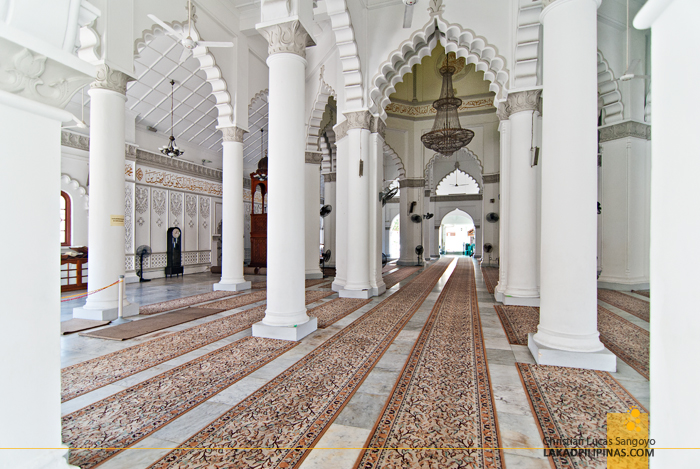
Kapitan Keling Mosque is the oldest and best-known Indian Muslim mosque in Penang, standing on Jalan Masjid Kapitan Keling (formerly Pitt Street) at the corner of Lebuh Buckingham, in the heart of George Town's UNESCO World Heritage Site. It was founded in 1801 by Cauder Mohuddeen, leader of the South Indian Muslim community, and later remodelled with the onion domes, turrets and tall minaret that make it one of the city's most photographed buildings. It is still a working mosque, but non-Muslim visitors are welcome outside prayer times.
This guide covers the mosque's history and architecture, what to look for, visiting hours and dress code (checked October 2026), how to get there and etiquette tips.
| Address | Jalan Masjid Kapitan Keling, George Town |
|---|---|
| Hours | Non-Muslim visiting: daily 11 am – 1 pm, 2 – 4:30 pm, 5 – 6 pm (Fri 2 – 6 pm only) |
| Price | Free (donations welcome) |
| Dress code | Arms and legs covered; women also cover their hair. Robes and headscarves lent free at the entrance. |
| Take me here | |
| Verified | Verified October 2026 |
History of Kapitan Keling Mosque
Cauder Mohuddeen and the 1801 land grant
Indian Muslim traders and workers, many of them Tamil Muslims known locally as Chulias, were among the earliest settlers of George Town after the British settlement was founded in 1786. In 1801 the Lieutenant Governor of Penang, Sir George Leith, appointed Cauder Mohuddeen (also spelt Cauder Mohideen) as Kapitan Keling, the official headman of the South Indian community. Cauder Mohuddeen had come from Porto Novo, about 50 km south of Pondicherry, where he had worked as a ship's foreman; as early as 1795 he had sat with the Kapitan Cina, Koh Lay Huan, on the settlement's first Committee of Assessors.
On 21 November 1801 Leith signed a land grant giving Cauder Mohuddeen a plot of about 18 acres (around 7.2 hectares) on the south side of Malabar Street, today's Lebuh Chulia, to build a mosque. The grant stated that the land could not be sold or transferred and would return to the East India Company if it stopped being used for religious purposes. Over the next two years Cauder Mohuddeen brought builders, stone and bricks from South India, and the first mosque was finished around 1803.
From a South Indian mosque to a Mughal landmark
The first building looked very different from today's. It was a squarish, single-storey structure with a sloping roof, in the style of the mosques of Tamil Nadu, with small stepped minarets, oil-lamp niches, heavy stucco mouldings and lattice work, a well on the southern side and its entrance facing Lebuh Chulia. Extensions were added during the 19th century as the community grew. Cauder Mohuddeen died in 1834 and was buried near the mosque.
Early in the 20th century the Muslim and Hindu Endowments Board, which managed the mosque's endowment, had it remodelled by British architects in what is often called the British Mughal Revival or Indo-Saracenic style. Completed around 1916, this work added the Mughal-style domes and turrets, the tall minaret and a madrasah (religious school). In the 1930s the mosque was remodelled again because the earlier design was considered impractical: the central prayer hall was raised to about double its height, and ventilation and natural light were improved, giving the building its present form.
The most recent major restoration took place around 2003, funded by a government grant of about RM5 million, during which the mosque was closed for about a year. The work, by Azza Associates Architects and HY Consultant, tackled water seepage and drainage, and added a covered walkway, a women's ablution area and calligraphy inside the main dome. The mosque is administered by the Penang Islamic Religious Council and lies within the George Town World Heritage Site inscribed by UNESCO in 2008.
What to See at Kapitan Keling Mosque
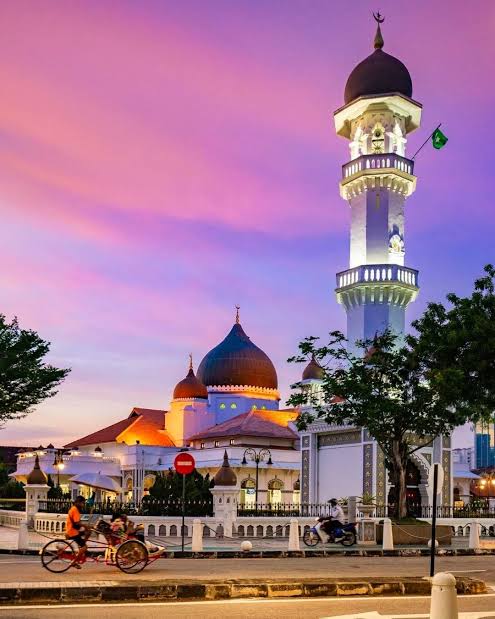
- The exterior: the ochre-yellow walls, black onion domes and slender corner turrets are best seen from Jalan Masjid Kapitan Keling and from the garden in front of the mosque.
- The minaret: the tall minaret stands apart from the main building near the corner of Lebuh Buckingham. It was used for the call to prayer and is a landmark of the street.
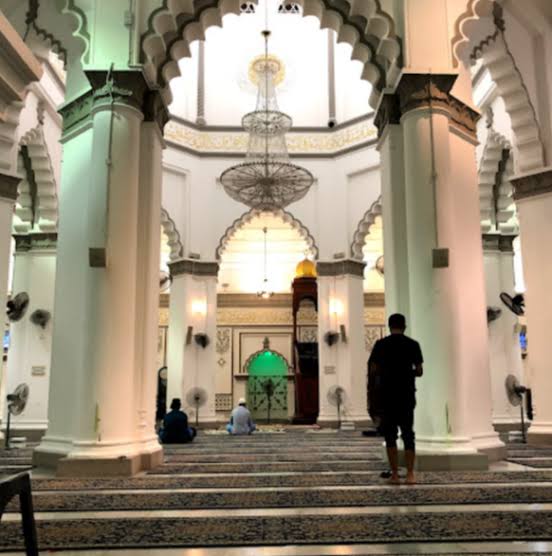
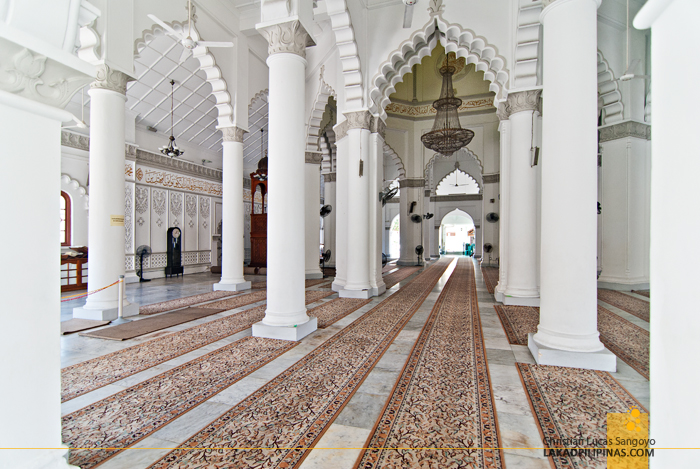
- The prayer hall: inside, aisles of white horseshoe arches run across a white marble floor under a high ceiling, with chandeliers hanging below the central dome. Decoration is geometric and calligraphic, since Islamic tradition avoids human and animal images. Non-Muslim visitors view the hall from the area set aside for them; the prayer space itself is for Muslims.
- The Islamic information centre: the mosque has an Islamic information centre for visitors who want to learn more about the faith and the building.
- The Street of Harmony: the mosque is one of several places of worship on Jalan Masjid Kapitan Keling, a short walk from Kuan Yin Teng, St George's Church and Sri Mahamariamman Temple. Many heritage walks start or end here.
Kapitan Keling Mosque Visiting Hours and Dress Code
- Non-Muslim visiting hours: daily 11 am to 1 pm, 2 pm to 4:30 pm and 5 pm to 6 pm. On Fridays, non-Muslims can visit only from 2 pm to 6 pm because of the midday congregational prayer.
- Ramadan and festivals: visiting times can change during Ramadan and on Hari Raya; check at the entrance.
- Entry: free. Donations are welcome, in cash or by Touch 'n Go.
- Dress code: cover your arms and legs; women should also cover their hair. Robes and headscarves are lent free at the entrance. Remove your shoes before entering.
- Time needed: 20 to 30 minutes.
How to Get to Kapitan Keling Mosque
- On foot: the mosque is in the centre of the heritage zone, at the junction of Jalan Masjid Kapitan Keling and Lebuh Chulia/Lebuh Buckingham. Little India is one block east and Armenian Street a few minutes north-west.
- Bus: the free CAT (Central Area Transit) shuttle and several Rapid Penang routes stop along Lebuh Chulia and Jalan Masjid Kapitan Keling.
- Grab or taxi: ask for "Masjid Kapitan Keling".
- Car: street parking in the heritage zone is limited and paid; a car park is the easier option.
Tips for Visiting
- Plan around prayer times; the visiting windows close for the noon and afternoon prayers.
- Speak quietly, do not walk in front of people who are praying, and ask before photographing worshippers.
- The mosque is lit up at dusk, which is a good time to photograph the domes and minaret from the street.
- Nasi kandar, the rice-and-curry dish of Penang's Indian Muslim community, is the obvious lunch nearby; several long-running nasi kandar shops are within a few minutes' walk on Lebuh Chulia and Jalan Masjid Kapitan Keling.
- Combine the visit with Kuan Yin Teng, St George's Church and Sri Mahamariamman Temple for a short Street of Harmony walk.
Kapitan Keling Mosque Location
Photos
Kapitan Keling Mosque FAQ
Can non-Muslims visit Kapitan Keling Mosque?
Yes. Non-Muslims can visit daily from 11 am to 1 pm, 2 pm to 4:30 pm and 5 pm to 6 pm, and on Fridays from 2 pm to 6 pm only. Entry is free and robes are lent at the entrance.
What is the dress code at Kapitan Keling Mosque?
Cover your arms and legs, and women should also cover their hair. Free robes and headscarves are available at the entrance, and shoes are removed before entering.
When was Kapitan Keling Mosque built?
The land was granted in 1801 to Cauder Mohuddeen, the first Kapitan Keling, and the first mosque was finished around 1803. Its present Mughal-style appearance dates from remodelling completed around 1916 and further work in the 1930s.
Who was the Kapitan Keling?
The Kapitan Keling was the headman of Penang's South Indian community appointed by the British. The first, Cauder Mohuddeen, was appointed in 1801 by Lieutenant Governor Sir George Leith and founded the mosque.
Is there an entrance fee for Kapitan Keling Mosque?
No. Entry is free, and donations are welcome in cash or by Touch 'n Go.