
Fort Cornwallis, Penang
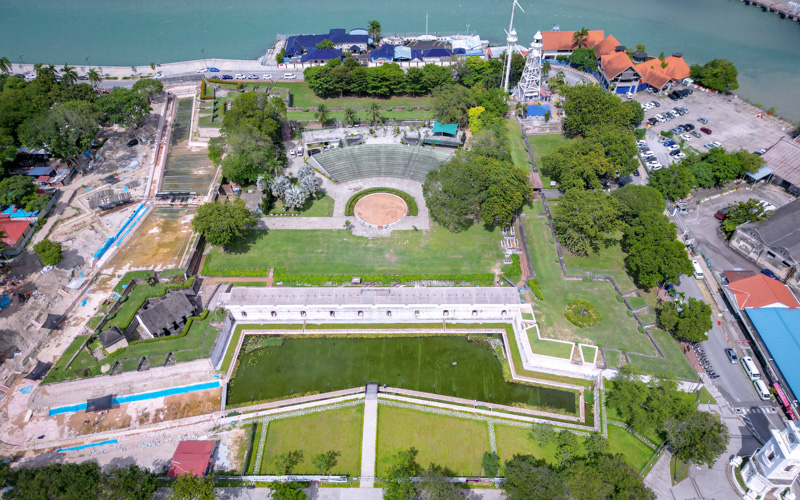
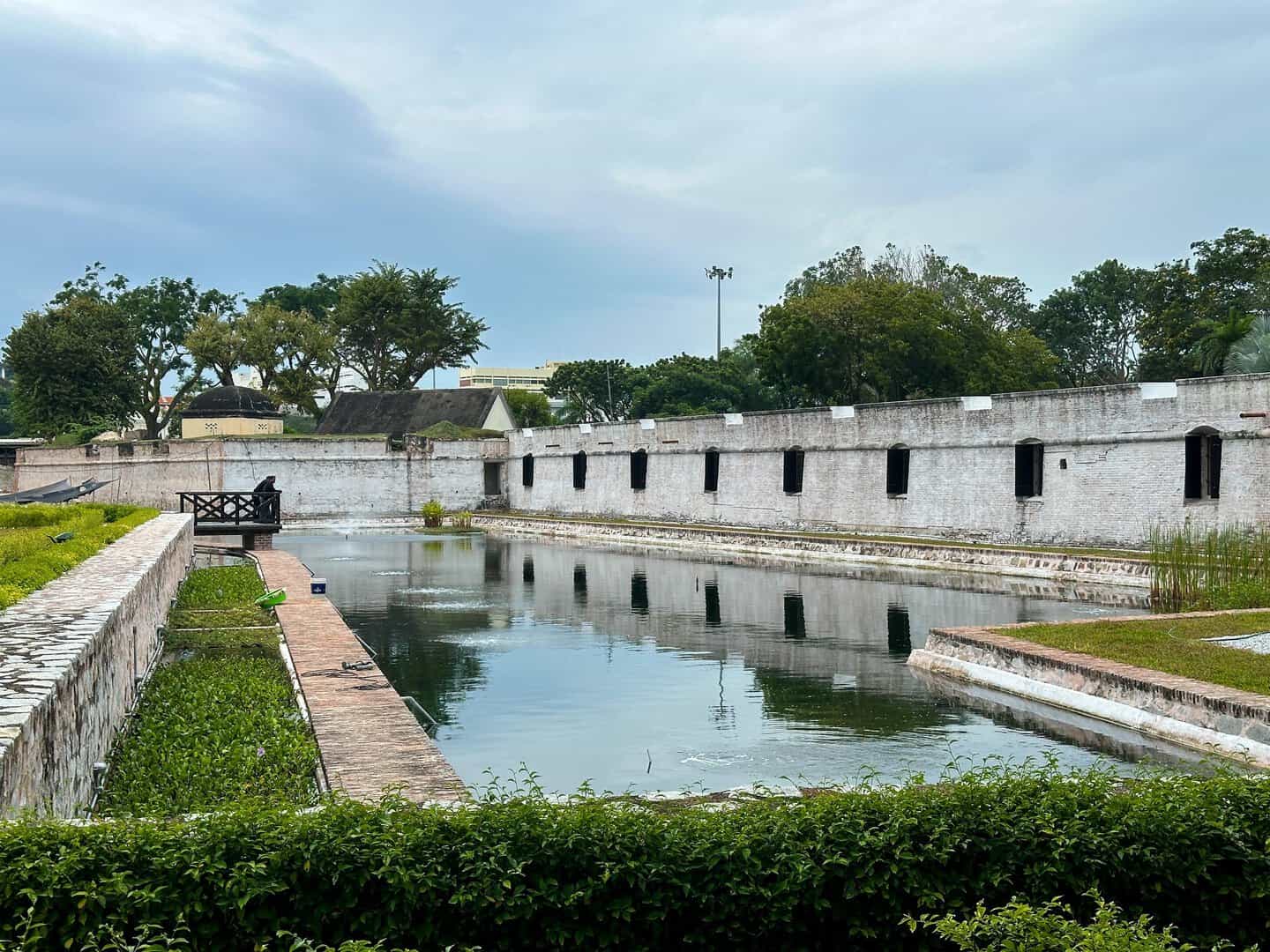
Fort Cornwallis is the star-shaped British fort on the north-eastern tip of George Town, on the spot where Captain Francis Light established the East India Company settlement in 1786. It is the largest standing fort in Malaysia and the starting point of Penang's modern history. After about a decade of conservation the fort reopened on 25 July 2026 with its south and west moats holding water again for the first time in roughly a century, restored vaulted storerooms and ten new interpretation galleries, so it is now a far richer visit than the bare ramparts many people remember.
This guide covers the fort's history, what to see inside, tickets and opening hours (checked October 2026), how to get there and tips for your visit.
| Address | Jalan Tun Syed Sheh Barakbah, George Town |
|---|---|
| Hours | Daily 9 am – 6 pm (reopened July 2026; free admission until end October 2026) |
| Price | Free during the 2026 reopening period (reported end dates: 31 Aug or 31 Oct 2026); standard entry RM20 non-MyKad, RM10 MyKad (card only) |
| Guided tours | Fri, Sat & Sun at 10 am, 12 pm, 2 pm and 4 pm |
| Typical visit | About 1 hour |
| Take me here | |
| Verified | Verified October 2026 |
History of Fort Cornwallis
Francis Light and the 1786 stockade
Captain Francis Light, a trader acting for the British East India Company, obtained Penang from Sultan Abdullah Mukarram Shah of Kedah in 1786 in return for an annual payment and the promise of protection. He was appointed superintendent on 1 July 1786, and on 11 August 1786, the eve of the Prince of Wales's birthday, he formally took possession of the island, which the British named Prince of Wales Island. His first defence on the cape was a simple stockade of nibong palm trunks with no permanent buildings.
The brick and stone fort, 1804–1810
With the outbreak of the Napoleonic Wars the Company decided Penang needed a proper fort. Between 1804 and 1810 the stockade was replaced by the present brick and stone fortifications, built largely by Indian convict labourers and finished under Governor Norman Macalister at a cost of about 80,000 dollars. The fort was named after Charles, 2nd Earl Cornwallis, Governor-General of Bengal at the time (better known in Britain and America for his surrender at Yorktown in 1781).
Chapel, lighthouse and the lost moat
A chapel inside the walls dates from 1799; the first recorded marriage there that year was between John Timmers and Martina Rozells, Francis Light's widow. A 21-metre steel-frame lighthouse was raised in the north-east corner in 1882 and is the second-oldest lighthouse in Malaysia. In the 1920s the fort was used by the Sikh police of the Straits Settlements, and in 1921 the surrounding moat, about nine metres wide and two metres deep, was filled in after a malaria outbreak. Parts of the old moat later lay under roads and a car park.
Monument status and the 2026 restoration
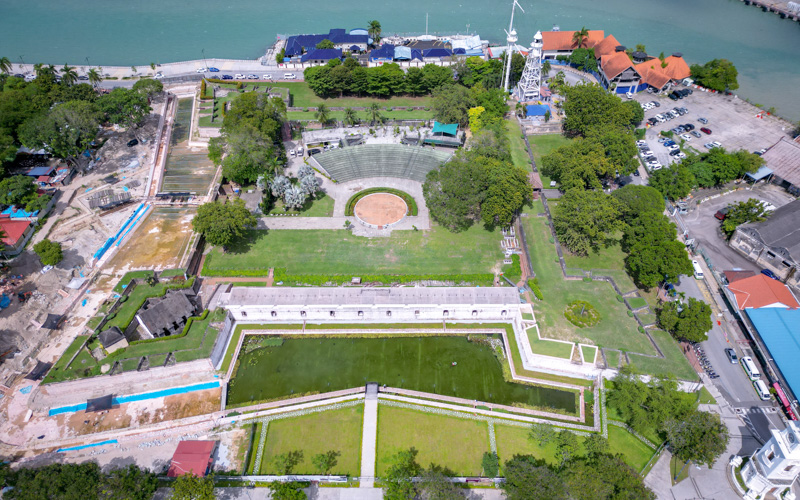
Fort Cornwallis was gazetted as an Ancient Monument and Historic Site on 8 September 1977, and since 2008 it has been part of the George Town UNESCO World Heritage Site. From the mid-2010s it was the centrepiece of the Penang North Seafront Programme, run by the Penang state government through Chief Minister Incorporated with the Penang Island City Council (MBPP) and Think City, with technical advice from the Aga Khan Trust for Culture. Nearly RM50 million went into the fort and surrounding seafront projects. Work included excavating and re-watering the south and west moats (the restored west moat alone covers about 4,000 square metres), reinstating courtyards, restoring the vaulted brick storerooms and installing ten interpretation galleries. The fort reopened to the public on 25 July 2026.
What to See Inside Fort Cornwallis
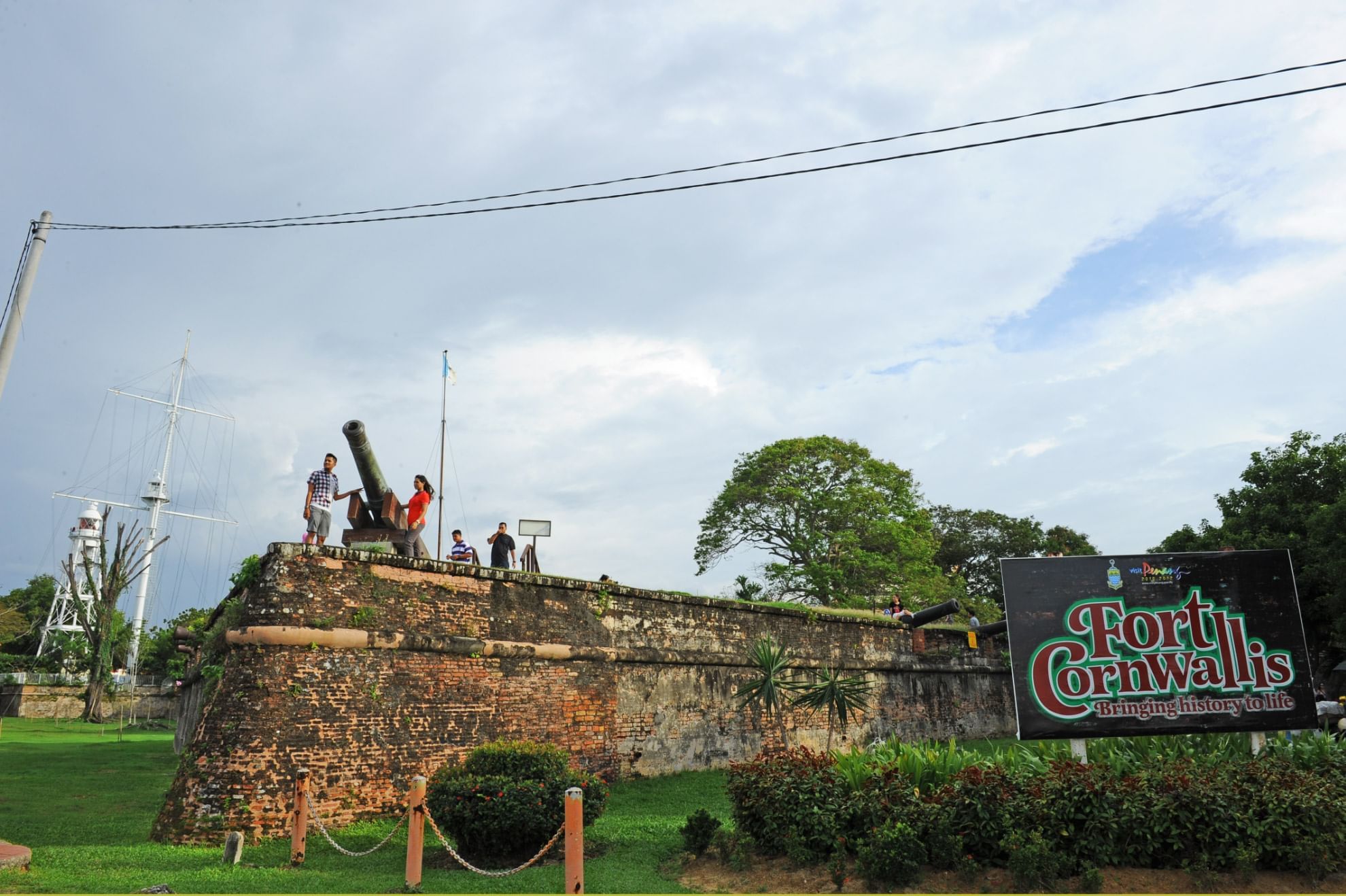
- The ramparts and cannons: walk the walls for views over the harbour and the Esplanade. The most famous gun is the bronze Seri Rambai, cast in 1603 and given by the Dutch East India Company to the Sultan of Johor in 1606. It passed to Aceh and later Kuala Selangor before the British seized it in 1871 and brought it to Penang. Local folklore says it helps childless women conceive, so you may see flowers and offerings left beside it.
- The interpretation galleries: ten galleries inside the recreated barracks and vaulted storerooms tell the story of the fort and of Penang's growth from a small settlement to a port city, using photographs, audio and projected documentaries; exhibits even include bicycles of the kind used by Japanese troops during the Second World War.
- The restored moat: the water-filled south and west moats show how the fort looked before 1921 and now also help with stormwater and cooling.
- The lighthouse: the 1882 steel lighthouse in the north-east corner, still one of the landmarks of the George Town seafront.
- The chapel and the gunpowder magazine: two of the oldest structures in the fort, from its early years under the East India Company.
- The Francis Light statue: a bronze statue erected in 1936. As no portrait of Light existed, the sculptor modelled the face on his son, Colonel William Light, founder of Adelaide.
Fort Cornwallis Tickets, Opening Hours and Tours
The fort is open daily from 9 am to 6 pm. Admission has been free since the July 2026 reopening and was free during the reopening period (reports give 31 August or 31 October 2026 as the end date). The standard fee is RM20 for non-MyKad visitors and RM10 for MyKad holders. Payment is by debit or credit card only; cash is not accepted. Guided tours run on Fridays, Saturdays and Sundays at 10 am, 12 pm, 2 pm and 4 pm. Allow about an hour, or 90 minutes with a tour.
How to Get There
- On foot: the fort is at the end of Lebuh Light, beside the Esplanade (Padang Kota Lama) and the Queen Victoria Memorial Clock Tower. It is about 10 minutes from Little India and 15 minutes from Armenian Street.
- Bus: the free CAT shuttle and several Rapid Penang routes stop near the Esplanade and the clock tower on Lebuh Light.
- From the ferry: the Pengkalan Sultan Abdul Halim ferry terminal at Weld Quay is about a 15-minute walk south; Swettenham Pier cruise terminal is around 10 minutes.
- Grab or taxi: ask for "Fort Cornwallis, Jalan Tun Syed Sheh Barakbah".
- Parking: metered parking is available around Padang Kota Lama and the Esplanade, but fills up in the evening and at weekends.
Tips for Visiting
- Visit in the morning or after 4 pm; the ramparts have little shade and get hot at midday. Bring water and a hat.
- Bring a card if you visit after October 2026, as the ticket counter does not take cash.
- Time a weekend visit to join one of the guided tours, which explain the galleries and the moat restoration.
- Most of the compound is flat, but the ramparts are reached by ramps and steps, so check with staff about access if you use a wheelchair.
- After your visit, walk along the Esplanade seawall at sunset, then eat at the Astaka Kota Selera hawker centre on the waterfront.
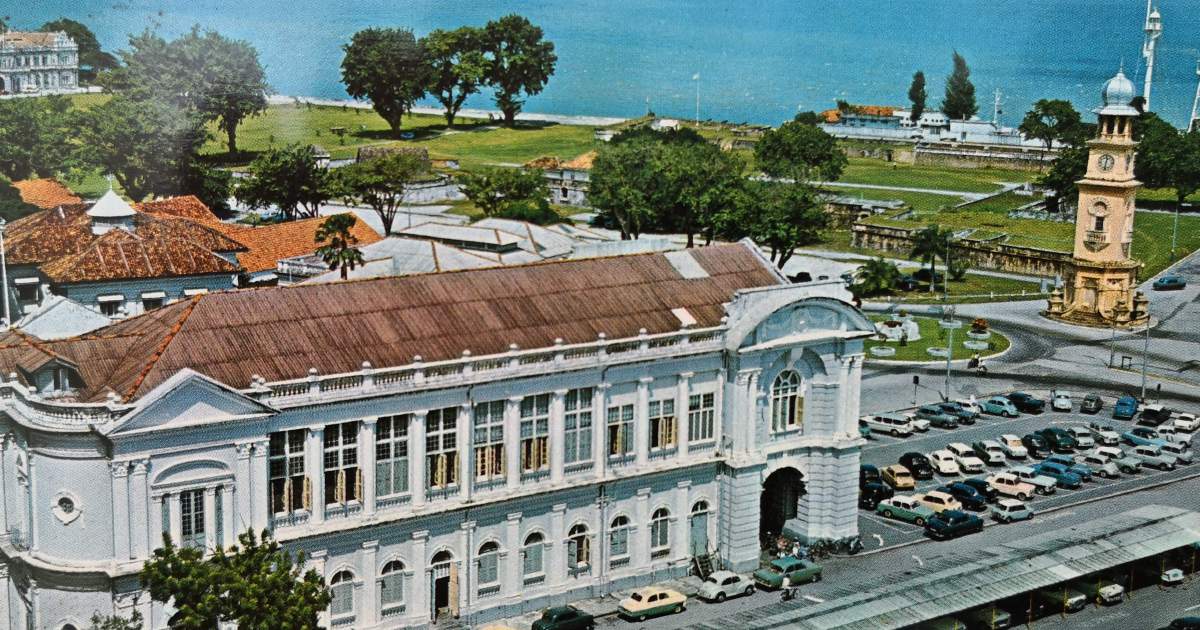
- Nearby heritage stops include the City Hall and Town Hall, the clock tower, St George's Church and the Penang State Museum, all within about ten minutes on foot.
Location
Photos
Frequently Asked Questions
How much is the Fort Cornwallis entrance fee?
Entry was free during the 2026 reopening period (reports give 31 August or 31 October as the end date). The standard fee is RM20 for non-MyKad visitors and RM10 for MyKad holders, payable by card only.
What are the Fort Cornwallis opening hours?
Fort Cornwallis is open daily from 9 am to 6 pm. Guided tours run on Fridays, Saturdays and Sundays at 10 am, 12 pm, 2 pm and 4 pm.
When was Fort Cornwallis built?
Francis Light built a wooden stockade on the site in 1786. The present brick and stone fort was built between 1804 and 1810 by Indian convict labourers and named after Charles, 2nd Earl Cornwallis.
What is the Seri Rambai cannon?
Seri Rambai is a bronze cannon cast in 1603 and given by the Dutch East India Company to the Sultan of Johor in 1606. It passed through Aceh and Kuala Selangor before the British seized it in 1871 and moved it to Penang.
Why was the Fort Cornwallis moat restored?
The moat was filled in 1921 after a malaria outbreak. The 2026 conservation project re-excavated the south and west moats to restore the fort's original form, and the water now also helps with drainage and cooling.
How long do I need at Fort Cornwallis?
About an hour covers the ramparts, the galleries and the lighthouse. Allow 90 minutes if you join a guided tour.