
Chow Kit Market
Last updated: October 2026
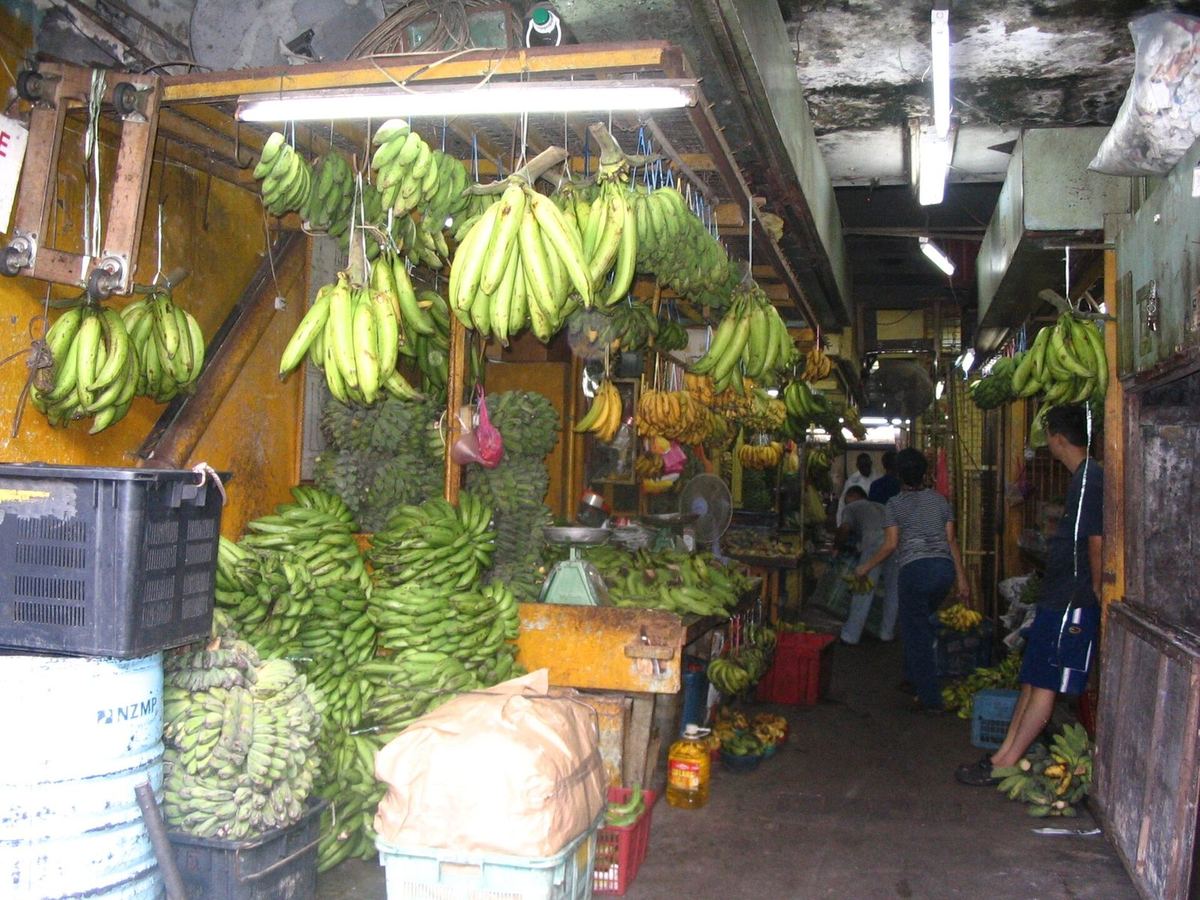
Chow Kit Market, officially Bazaar Baru Chow Kit and also called Pasar Raja Bot, is the largest wet market in Kuala Lumpur. Behind the shops on Jalan Tuanku Abdul Rahman, a maze of covered aisles sells fresh fish and seafood, meat, vegetables, tropical fruit, spices, dried goods, kitchenware and cheap clothing to the city's Malay and Indonesian households and to restaurant cooks. It is a working market rather than a tourist attraction, and that is the appeal: for an hour you get a close look at how KL shops and eats, a short walk from Kampung Baru and the Chow Kit monorail station.
This guide covers Chow Kit Market's history, the different sections, what to buy and eat, the best times to visit, how to get there and practical tips.
| Address | Jalan Raja Bot, off Jalan Tuanku Abdul Rahman |
|---|---|
| Details | Busiest early morning to early afternoon (about 7 am – 1 pm); some stalls later Free |
| Area | Chow Kit |
| Typical visit | About 45 min |
| Listed in | Kuala Lumpur Attractions |
| Take me here | |
| Verified | Verified October 2026 |
History of Chow Kit Market
The surrounding district takes its name from Loke Chow Kit (1862 to 1918), a tin miner, municipal councillor and businessman who in 1905 opened Loke Chow Kit & Co., the first department store in Kuala Lumpur owned and run by local interests. Jalan Chow Kit and, later, the whole area between Jalan Raja Laut and Jalan Tuanku Abdul Rahman came to be known by his name.
The market itself was the idea of Raja Muhamad Raja Alang, a member of the Kuala Lumpur Town Council, in the early 1950s. The council approved construction at a financial meeting in May 1953 and set aside 350,000 Malayan dollars for 350 stalls, which made it the largest market in the capital. It was opened in 1955 by the Sultan of Selangor, Sultan Hisamuddin Alam Shah. The original buildings were in a typical 1950s style, with arched roofs and tapered columns, and they were last given a major upgrade in the late 1980s.
Over the decades the market became the main shopping place for KL's Malay households and for the Indonesian community that settled around Chow Kit; Minangkabau, Javanese and Acehnese traders and restaurants gave the area the nickname "Little Jakarta". Many stalls are now run by the second or third generation of the same families. The Chow Kit area also entered popular culture through the singer Sudirman Arshad's song "Chow Kit Road"; he gave an open-air concert there in 1986 that drew around 100,000 people.
Kuala Lumpur City Hall (DBKL) began a long redevelopment in 2014 to replace the ageing structure with a multi-storey market complex. The project ran years behind schedule, with a change of contractor in 2021 and 2022, but the first part of the new modern wing opened on 1 April 2024, with the meat section on the ground floor, sundry shops and kopitiam stalls upstairs reached by escalator, and a multi-storey car park. Further phases are still being completed, so parts of the market are a mix of old aisles and new buildings.
What to See and Buy at Chow Kit Market
The wet market
The busiest section, with long rows of fish and seafood stalls (whole tuna, mackerel, prawns, squid and crabs on ice), poultry and beef butchers, and vegetable sellers with piles of local greens such as kangkung and ulam herbs. Pork is not sold here, which is why the customer base is mostly Malay and Indonesian.
Fruit and produce
Stalls on the edges and in the open-air lanes sell bananas by the bunch, papaya, pineapples and seasonal fruit such as durian, mangosteen and rambutan, usually cheaper than in supermarkets. Ask for a small quantity or a cut portion if you want to eat it straight away.
Spices and dry goods
Look for sacks of dried chillies, dried anchovies (ikan bilis), salted fish, belacan shrimp paste, spice mixes and Indonesian ingredients. These are the easiest things for visitors to take home; ask for them to be double-bagged.
Clothes, household goods and the bundle market
The dry bazaar sells clothing, shoes, textiles, kitchenware and religious items. In the evenings, the "bundle" market on and around Lorong Haji Taib and Jalan Raja Bot sells second-hand clothes, shoes and accessories.
Food stalls
Hawker stalls around and inside the market serve Malay and Indonesian dishes, noodles, porridge and kuih for very little money. Stalls change over time, so follow the queues and look for what is freshly cooked.
Opening Hours, Cost and How Long to Spend
- Hours: the market is busiest from early morning to early afternoon (about 7 am to 1 pm). Some stalls stay open later and the bundle market runs in the evening, but many wet-market stalls sell out and close by early afternoon. Opening days vary between sections.
- Cost: free to walk around. Prices are usually per kilo or per bunch, and it is wise to carry cash in small notes.
- Time needed: about 45 minutes to an hour for a walk through, longer if you stop to eat.
How to Get to Chow Kit Market
- Monorail: Chow Kit station is about five minutes' walk along Jalan Tuanku Abdul Rahman.
- MRT: Hospital Kuala Lumpur station on the Putrajaya Line is nearby on the north side of the district.
- LRT: PWTC station (Ampang/Sri Petaling Line) is about 15 minutes' walk, and Kampung Baru LRT is a similar distance to the east.
- Grab: ask for Bazaar Baru Chow Kit or Jalan Raja Bot. If you drive, use the car park in the new market complex; the surrounding streets are congested in the morning.
Tips for Visiting Chow Kit Market
- Go early, ideally between 7 and 10 am, when the stalls are full and the morning trade is at its liveliest. By 1 pm many stalls are packing up.
- Wear closed shoes you do not mind getting wet. The floors in the fish and meat sections are slippery.
- Ask before photographing traders up close. Most do not mind a quick photo, but this is their workplace, and the aisles are narrow, so keep moving and do not block busy stalls.
- Keep valuables in a front pocket or zipped bag, as you would in any crowded market.
- Dress modestly; most shoppers are Muslim and the area is conservative.
- Combine the visit with a walk through Kampung Baru, about ten minutes to the east, or a coffee at Yut Kee, the Hainanese coffee shop that has been serving since 1928, on Jalan Kamunting near Dang Wangi.
Chow Kit Market Location
Nearby
- Kuih stalls at Bazaar Baru Chow Kit — Dessert, 0.1 km away
- Gurdwara Sahib Tatt Khalsa Diwan — Temple, 0.2 km away
- Nasi Lemak Wanjo — Hawker food, 0.3 km away
- Kin Kin Chilli Pan Mee — Hawker food, 0.3 km away
- Yut Kee Restaurant — Hawker food, 0.5 km away
- Kampung Baru — Attraction, 0.5 km away
Plan a route with opening times using the Where2Go trip planner.
Frequently Asked Questions
What are Chow Kit Market opening hours?
Chow Kit Market is busiest from about 7 am to 1 pm. Many wet-market stalls close by early afternoon, some stalls stay open later, and the second-hand bundle market nearby runs in the evening.
Is Chow Kit Market safe for tourists?
Yes, during market hours it is busy with local shoppers. Keep valuables secure in the crowds and wear closed shoes because the floors in the wet sections are slippery.
Is Chow Kit Market halal?
Pork is not sold at Chow Kit Market, and most food stalls in and around it are Malay or Indonesian. Check for a halal certificate at individual stalls if this matters to you.
When was Chow Kit Market built?
The market was approved by the Kuala Lumpur Town Council in 1953 and opened in 1955 by Sultan Hisamuddin Alam Shah. A new multi-storey wing opened on 1 April 2024 as part of a redevelopment by DBKL.
What is the nearest station to Chow Kit Market?
Chow Kit monorail station is about five minutes away on foot. Hospital Kuala Lumpur MRT station and PWTC LRT station are also within walking distance.