
Putrajaya
Last updated: October 2026
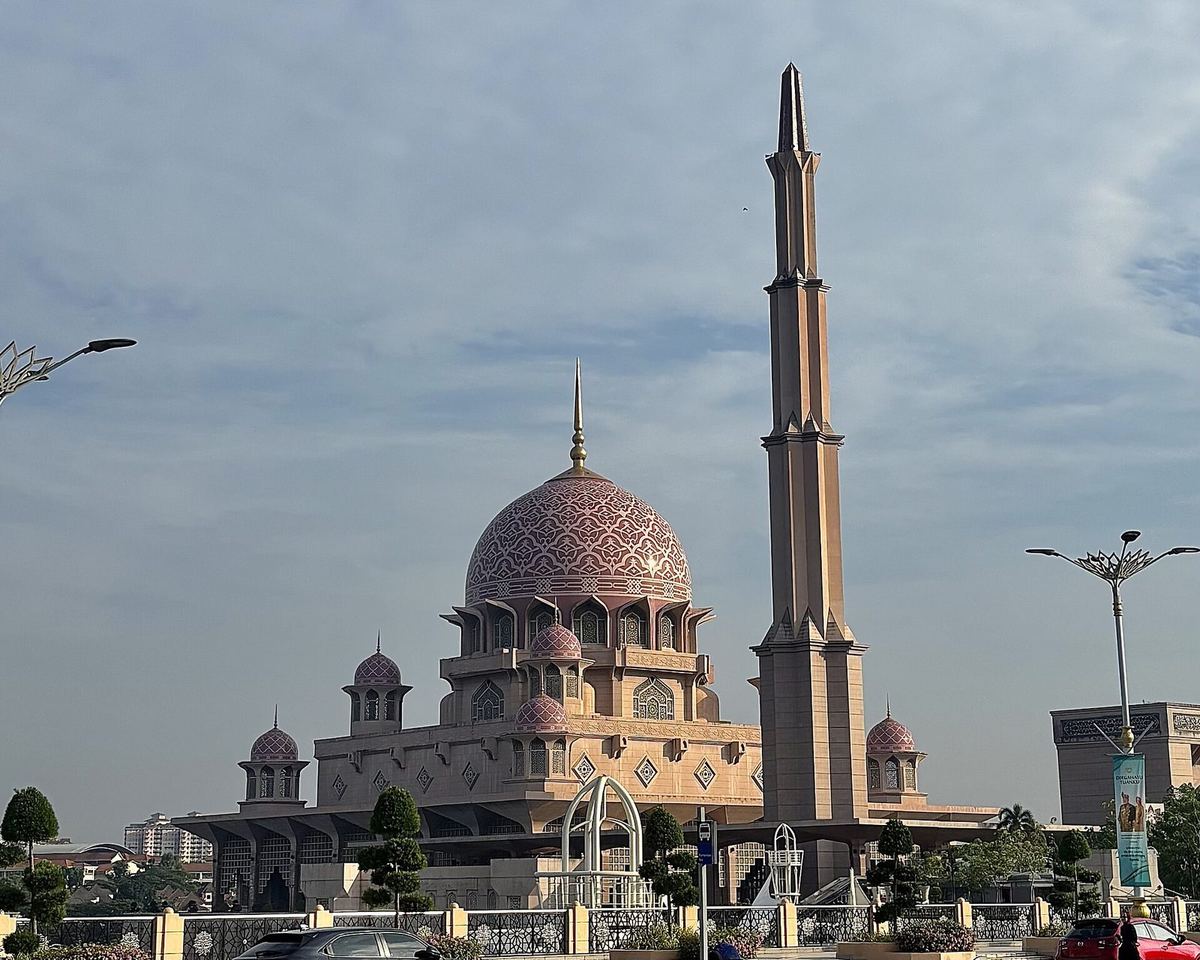
Putrajaya is Malaysia's planned federal administrative capital, a garden city about 25 km south of Kuala Lumpur where the prime minister's office, most ministries and the federal courts are based. Built from scratch since 1995 around a 400-hectare man-made lake, it is very different from the rest of the Klang Valley: wide boulevards, monumental government buildings, eight architect-designed bridges and large parks. For visitors, the highlights are the pink-domed Putra Mosque, Putra Square and Perdana Putra, the steel-mesh Tuanku Mizan Zainal Abidin Mosque, and a cruise on the lake. It makes an easy half-day trip from KL by train.
This guide covers Putrajaya's history, the main sights, mosque visiting times and dress code, lake cruises, how to get there and tips (checked October 2026).
| Address | Putrajaya, 25 km south of KL |
|---|---|
| Details | Putra Mosque non-Muslim visiting Sat–Thu 9 am – 12:30 pm, 2 – 4 pm, 5:30 – 6 pm; Fri 3 – 4 pm, 5:30 – 6 pm Free (lake cruises extra) |
| Area | Putrajaya |
| Typical visit | About 4 h |
| Listed in | Kuala Lumpur Attractions |
| Take me here | |
| Verified | Verified October 2026 |
History of Putrajaya
By the late 1980s, Kuala Lumpur was congested and the government was short of office space. Under Prime Minister Mahathir Mohamad, it decided to build a new administrative centre between Kuala Lumpur and the new international airport at Sepang, as part of the Multimedia Super Corridor. The chosen site was Prang Besar, a rubber estate founded in 1921 by British veterans of the First World War (Perang Besar is Malay for "Great War").
The new city was named after Tunku Abdul Rahman Putra Al-Haj, Malaysia's first prime minister. "Putra" is from Sanskrit and means "prince" or "son"; "jaya" means "success" or "victory". Construction began in August 1995. The government core was laid out along the ceremonial Persiaran Perdana boulevard, on an island ringed by the new 400-hectare lake. The prime minister's office moved here in 1999, followed by most ministries and, in 2003, the judiciary. On 1 February 2001 the city was declared Malaysia's third federal territory, carved out of Selangor. Kuala Lumpur remains the official national capital and the seat of parliament.
Today Putrajaya covers about 49 square kilometres and had a population of about 125,000 in 2025. Its architecture mixes Islamic, Malay and modern styles, and it was designed as a garden city, with nearly 40 per cent of its land reserved for parks, water bodies and landscaped open space.
What to See in Putrajaya
Putra Mosque (Masjid Putra)
Built between 1997 and 1999 at a cost of about RM250 million, Putra Mosque stands on the edge of Putra Square and the lake. Its main dome is clad in rose-tinted granite, which gives the building its pink colour, and its minaret rises 116 metres. The design draws on Mamluk and Moorish Islamic architecture combined with modern elements, and the mosque can hold 15,000 worshippers. Non-Muslim visitors can enter the courtyard and the visitor areas outside prayer times, and robes and headscarves are lent at the entrance free of charge.
Putra Square and Perdana Putra
Putra Square (Dataran Putra) is the large ceremonial plaza in front of the mosque. Facing it across the square is Perdana Putra, the office of the prime minister, easily recognised by its large green dome. The building itself is not open to the public, but the square is a good place for photographs.
Tuanku Mizan Zainal Abidin Mosque (the Iron Mosque)
About 2.2 km from Putra Mosque, opposite the Palace of Justice in Precinct 3, this mosque was built between 2004 and 2009 and officially opened on 11 June 2010 by the 13th Yang di-Pertuan Agong, Tuanku Mizan Zainal Abidin. It is known as the Iron Mosque because of the steel architectural wire mesh, imported from Germany and China, that wraps its walls. It holds 20,000 worshippers and has a 13-metre glass mihrab panel inscribed with Quranic verses. Non-Muslims can visit outside prayer times with appropriate dress.
Palace of Justice and the bridges
The domed Palace of Justice (Istana Kehakiman) is home to the Federal Court and the Court of Appeal and is one of the most photographed buildings in the city. Eight bridges link the core island with the surrounding precincts, including the Putra Bridge on the main boulevard and the Seri Wawasan Bridge, and several are lit up after dark.
Lake cruises
Cruise Tasik Putrajaya runs sightseeing trips from a jetty below Putra Mosque. Its air-conditioned catamarans (up to 76 passengers) sail past the mosque, the Millennium Monument, government buildings and several bridges in about 45 minutes, and small traditional wooden perahu boats seat up to seven. Recent fares are about RM50 for foreign adults and RM30 for MyKad holders, with cheaper short evening trips; check the operator's site for current prices and times.
Parks and gardens
The Putrajaya Botanical Garden covers more than 92 hectares with themed gardens and lakeside paths, and Putrajaya Wetlands Park has walking trails, bird hides and a viewing tower. Both are good for an early morning or late afternoon walk or cycle.
Opening Hours, Costs and How Long to Spend
- Putra Mosque visiting hours for non-Muslims: Saturday to Thursday 9 am to 12:30 pm, 2 to 4 pm and 5:30 to 6 pm; Friday 3 to 4 pm and 5:30 to 6 pm. Hours can change during Ramadan and on religious holidays.
- Cost: the mosques, squares, bridges and parks are free. Lake cruises and bike hire cost extra.
- Time needed: half a day (about four hours) for Putra Mosque, Putra Square, the Iron Mosque and a lake cruise. Add time for the gardens or a sunset view of the bridges.
How to Get to Putrajaya
- KLIA Transit: from KL Sentral, the KLIA Transit train reaches Putrajaya Sentral in about 20 minutes.
- MRT: the MRT Putrajaya Line runs from Kwasa Damansara through the city centre to Putrajaya Sentral; it is slower than KLIA Transit but cheaper.
- From Putrajaya Sentral: Nadi Putra buses, run by Rapid Bus, serve Putra Square, but Grab is the simplest way to get between the main sights, which are several kilometres apart.
- Car: about 30 to 45 minutes from central KL via the Maju Expressway (MEX). There is parking near the main attractions.
Tips for Visiting Putrajaya
- Dress modestly for the mosques: long trousers or a long skirt and covered shoulders. Women should cover their hair; robes and scarves are lent at Putra Mosque. Remove your shoes before entering prayer areas.
- Do not visit during Friday midday prayers, and keep voices low and avoid walking in front of people praying.
- Putrajaya is spread out and exposed to the sun. Go early in the morning or in the late afternoon, carry water and use Grab between sights rather than walking in the midday heat.
- Stay for sunset if you can. The mosques and bridges are lit up after dark, and the evening is cooler.
- For food, the Alamanda Putrajaya shopping centre and the food stalls near Putra Square have plenty of halal options.
Putrajaya Location
Nearby
- Masjid Tuanku Mizan Zainal Abidin (Iron Mosque) — Temple, 2.1 km away
Plan a route with opening times using the Where2Go trip planner.
Frequently Asked Questions
Can non-Muslims visit Putra Mosque?
Yes. Non-Muslims can visit Saturday to Thursday from 9 am to 12:30 pm, 2 to 4 pm and 5:30 to 6 pm, and on Fridays from 3 to 4 pm and 5:30 to 6 pm. Robes and headscarves are lent free at the entrance.
How do I get from KL to Putrajaya?
Take the KLIA Transit train from KL Sentral to Putrajaya Sentral, which takes about 20 minutes, then a Grab or local bus to Putra Square. The MRT Putrajaya Line is a slower, cheaper alternative.
Is Putrajaya the capital of Malaysia?
Putrajaya is the federal administrative capital, home to the prime minister's office, most ministries and the federal courts. Kuala Lumpur remains the official national capital and the seat of parliament.
How long do I need in Putrajaya?
Half a day, about four hours, is enough for Putra Mosque, Putra Square, the Iron Mosque and a lake cruise. Stay into the evening to see the bridges and mosques lit up.
Why is Putra Mosque pink?
Its dome and parts of its walls are clad in rose-tinted granite, which gives the mosque its pink colour. It was built between 1997 and 1999 and holds 15,000 worshippers.