
River of Life and Blue Pool
Last updated: October 2026
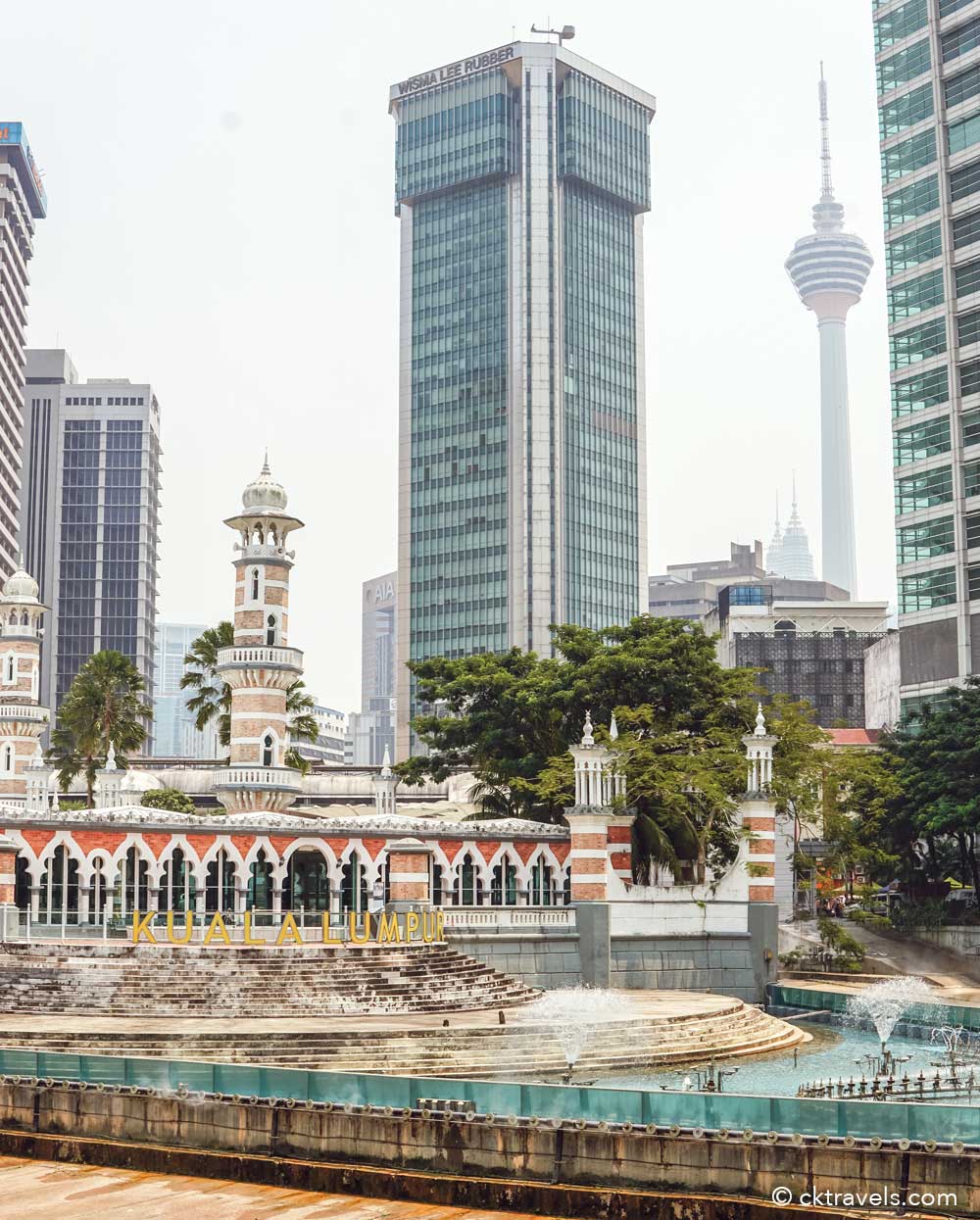
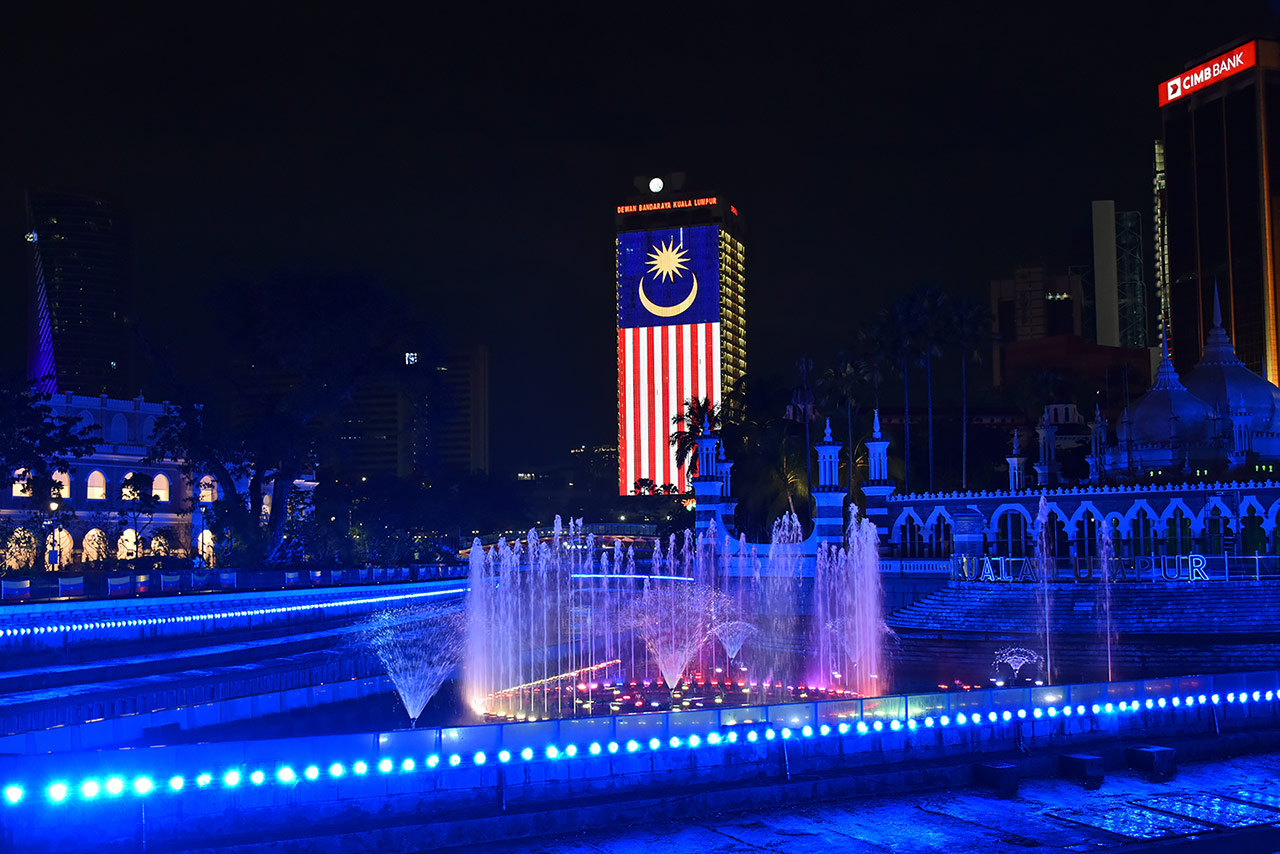
The River of Life is the restored stretch of riverfront where the Klang and Gombak rivers meet in the old centre of Kuala Lumpur, the muddy confluence that gave the city its name. Its showpiece, the Blue Pool (Kolam Biru), sits right in front of the century-old Masjid Jamek: after dark the river walls glow blue, fountains play and mist drifts across the water, with the mosque's domes and the city towers behind. A paved promenade now runs along the banks between Masjid Jamek, Merdeka Square and Central Market, and the whole area is free and open at all hours.
This guide covers the history of the confluence and the River of Life project, what to see along the river, the best time to visit, how to get there and practical tips.
| Address | Klang–Gombak confluence, by Masjid Jamek |
|---|---|
| Details | Riverside walk open 24 hours; lights and mist after dark Free |
| Area | Masjid Jamek |
| Typical visit | About 30–60 minutes (after dark is best) |
| Listed in | Kuala Lumpur Attractions |
| Take me here | |
| Verified | Verified October 2026 |
History of the River of Life Site
Kuala Lumpur means "muddy confluence" in Malay, and the spot where the Gombak flows into the Klang River, directly behind Masjid Jamek, is where the city began. The official account dates the founding to 1857, when Raja Abdullah, the Malay chief of Klang, sent Chinese miners up the Klang River to open tin mines in the area. A trading settlement grew up at the confluence, though there were probably smaller settlements here even earlier, in the 1820s. Under leaders such as the Kapitan Cina Yap Ah Loy and later British Residents such as Frank Swettenham, the trading post became the capital of Selangor in 1880 and of the Federated Malay States in 1896.
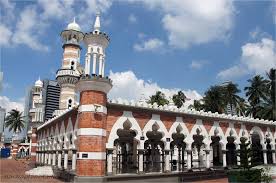
Masjid Jamek was built on an old Malay burial ground on the spit of land between the two rivers. Designed by Arthur Benison Hubback in the Indo-Saracenic style, with pink-and-white banded minarets and three domes, it had its foundation stone laid by Sultan Alaeddin Sulaiman Shah of Selangor on 23 March 1908 and was opened by him on 23 December 1909. It was the city's main mosque until Masjid Negara opened in 1965, and in 2017 it was renamed Masjid Jamek Sultan Abdul Samad. On the west bank stands the Sultan Abdul Samad Building of 1897, facing Merdeka Square.
As the city grew, the rivers were straightened and channelled to control floods; the stretch of the Klang River from the confluence to Brickfields was diverted into a new channel in a project finished in 1932. By the late 20th century the rivers were walled-in, polluted and largely ignored, running behind the buildings rather than in front of them.
The River of Life project
The River of Life was set up under the government's Economic Transformation Programme as an Entry Point Project to clean the rivers and turn the city back towards its waterfront. It has three parts: river cleaning, river master-planning and beautification, and land development along the banks. The clean-up covers 110 km of eight rivers in the upper Klang basin, across Kuala Lumpur City Hall, Selayang and Ampang Jaya municipal areas, while the beautification works cover a 10.7 km corridor of the Klang and Gombak rivers in central Kuala Lumpur. The total allocation was about RM4.4 billion.
Prime Minister Najib Razak launched the River of Life and the Blue Pool on 28 August 2017, with fireworks, at the bridge on Lebuh Pasar Besar. The Blue Pool was designed as a sensory focal point for Masjid Jamek, with a "dancing" fountain, a blue-lit river corridor, mist (fog) jets and lighting effects. A new pedestrian crossing, Jambatan Sultan Abdul Samad, linked the mosque with the Sultan Abdul Samad Building and Merdeka Square, roughly halving the walking time between them.
What to See at the River of Life
The Blue Pool at Masjid Jamek
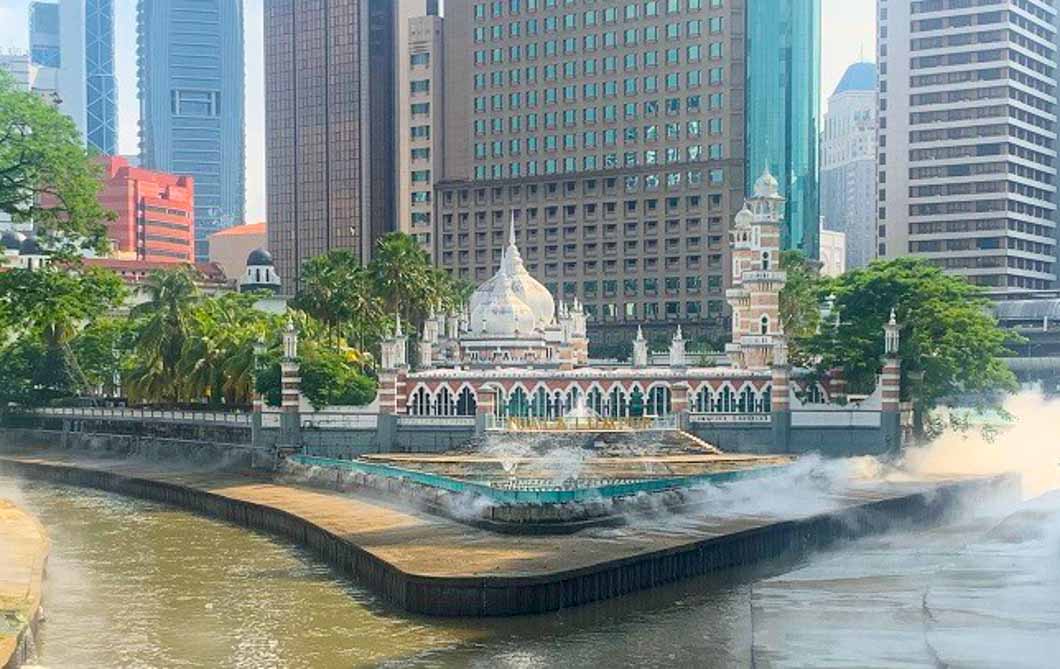
The main attraction is the view of Masjid Jamek from the riverside: the mosque's domes and minarets sit on the point between the two rivers, framed by the skyscrapers of the city centre and, in the distance, KL Tower. By day you see the terraced river walls and paved banks; after dark the walls are lit blue, the fountains rise in the middle of the confluence and mist effects roll across the surface.
The riverside promenade
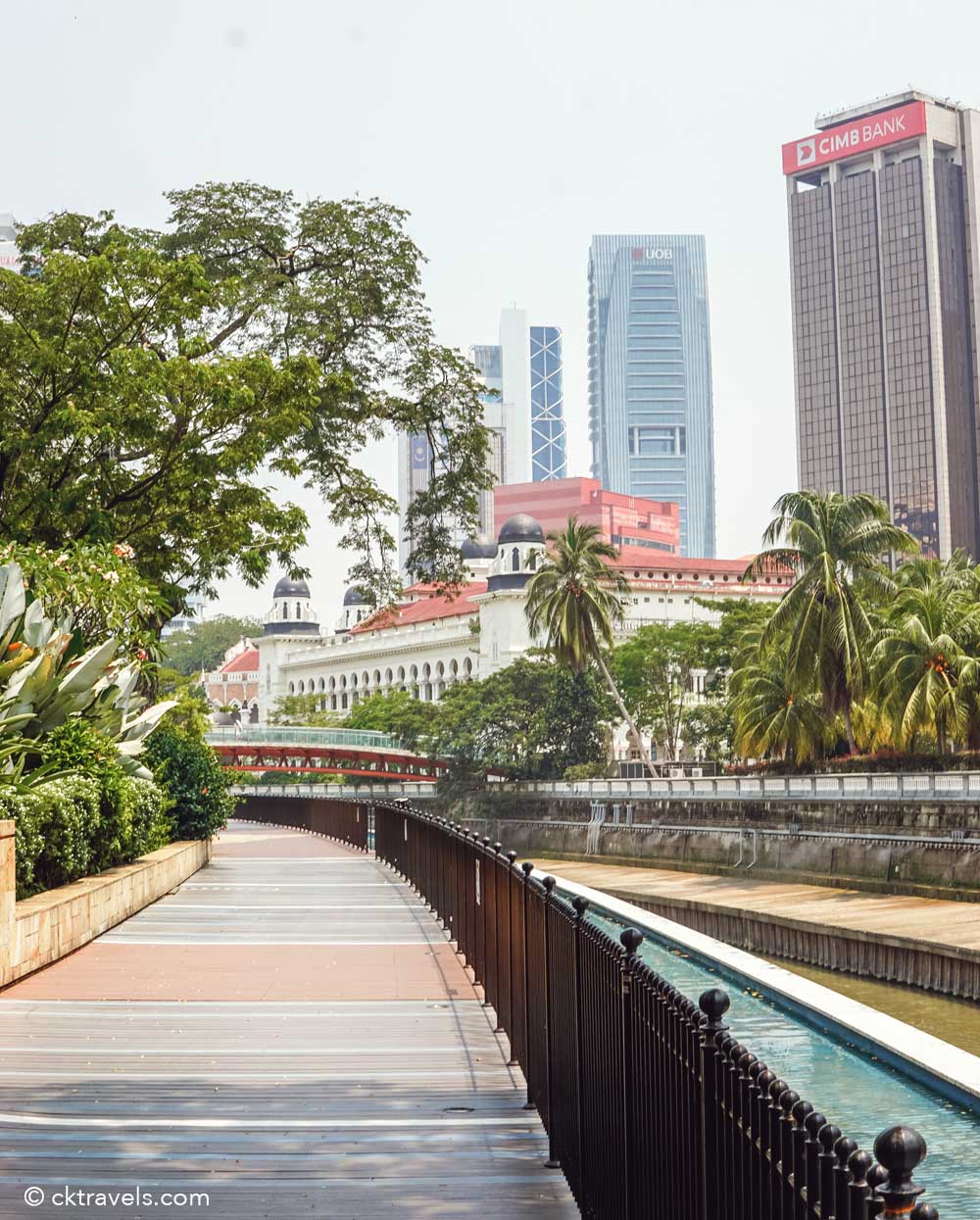
Paved walkways with railings, trees and benches follow the rivers south past the back of the Sultan Abdul Samad Building towards Lebuh Pasar Besar, Central Market and the Dayabumi complex. It is a pleasant walk in the evening, and several bridges give good views back towards the mosque.
Masjid Jamek Sultan Abdul Samad
The mosque itself can be visited by non-Muslims outside prayer times (generally Saturday to Thursday, roughly 10 am to 12:30 pm and 2:30 to 4 pm, and not on Fridays). Robes and headscarves are usually lent at the entrance.
Heritage buildings nearby
Across the river are Merdeka Square and the restored Sultan Abdul Samad Building, now open daily with galleries and cafés. A few minutes south along the river is Central Market (Pasar Seni), the Art Deco market hall now full of craft and souvenir stalls, beside the Kasturi Walk covered street.
Opening Hours, Cost and When to Go
- Hours: the riverside promenade is a public space, open 24 hours.
- Cost: free.
- Night show: the blue lighting, fountains and mist run after dark, roughly from 7:30 pm until late evening, with breaks between cycles. They can be switched off without notice for maintenance or after heavy rain.
- Time needed: 30 minutes to an hour, longer if you walk to Central Market or visit the Sultan Abdul Samad Building first.
How to Get to the River of Life
- LRT: Masjid Jamek station (Kelana Jaya, Ampang and Sri Petaling lines) is right beside the mosque; the best viewpoints are a two-minute walk.
- LRT/MRT Pasar Seni: about 10 minutes' walk north along the river via Central Market.
- Bus: the free GOKL city buses and many RapidKL routes stop around Jalan Tun Perak and Lebuh Pasar Besar.
- Grab or taxi: ask for Masjid Jamek or Dataran Merdeka; traffic is heavy in the old centre in the evening rush, so the LRT is usually quicker.
Tips for Visiting
- Arrive around sunset, about 7 to 7:30 pm, to see the mosque in the last light and then the blue lighting come on.
- The classic photo is from the riverside walkway on the Sultan Abdul Samad Building side (Jalan Raja / Lebuh Pasar Besar), looking across the Blue Pool to the mosque.
- Combine it with a walk around floodlit Merdeka Square and the Sultan Abdul Samad Building, then dinner in Chinatown or at the mamak restaurants around Masjid Jamek and Jalan Tuanku Abdul Rahman.
- The rivers can rise quickly after heavy rain; keep to the promenade and stay off any lower steps near the water.
- Dress modestly if you plan to go into the mosque, and avoid Friday midday prayers.
- The area is busy and generally safe in the evening, but keep an eye on bags and phones in crowds, as anywhere in a city centre.
River of Life and Blue Pool Location
Photos
Nearby
- Masjid Jamek Sultan Abdul Samad — Attraction, 0.1 km away
- River of Life at Masjid Jamek — Night view, 0.1 km away
- Sultan Abdul Samad Building — Attraction, 0.2 km away
- 1000 Miles Hotel — Hotel, 0.2 km away
- Merchantrade Wisma GTK — Money changer, 0.2 km away
Plan a route with opening times using the Where2Go trip planner.
Frequently Asked Questions
What time is the River of Life light show?
The blue lighting, fountains and mist run after dark, roughly from 7:30 pm until late evening, in cycles with short breaks. They are sometimes switched off for maintenance, so treat the timing as a guide.
Is the River of Life free?
Yes. The River of Life promenade and Blue Pool are public spaces, free and open 24 hours.
What is the Blue Pool in Kuala Lumpur?
The Blue Pool (Kolam Biru) is the section of the River of Life in front of Masjid Jamek, at the confluence of the Klang and Gombak rivers. Launched in 2017, it has blue-lit river walls, fountains and mist effects after dark.
Why is the river confluence important to Kuala Lumpur?
Kuala Lumpur means "muddy confluence", and the city grew from a tin-mining trading post founded around 1857 at the point where the Gombak joins the Klang River, beside today's Masjid Jamek.
How do I get to the River of Life?
Take the LRT to Masjid Jamek station on the Kelana Jaya, Ampang or Sri Petaling line. The Blue Pool viewpoints are a two-minute walk from the station.