
Cheong Fatt Tze Blue Mansion, Penang
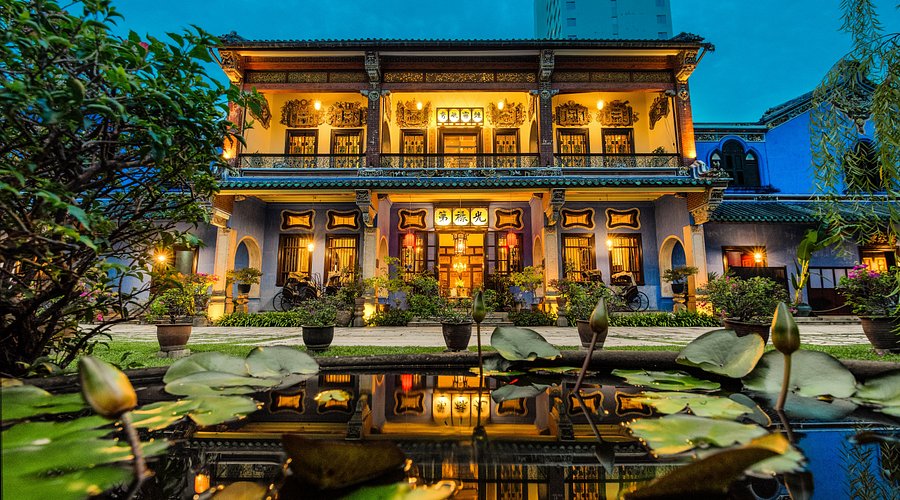
The Cheong Fatt Tze Mansion, better known as the Blue Mansion, is the indigo-blue courtyard house at 14 Lebuh Leith in George Town's UNESCO World Heritage Site. It was built between 1897 and 1904 for Cheong Fatt Tze, a Hakka merchant once called the "Rockefeller of the East", and combines a traditional southern Chinese courtyard plan with Scottish cast iron, English floor tiles and Art Nouveau stained glass. After decades of decline, it was rescued and restored in the 1990s and won a UNESCO heritage conservation award in 2000. Today it is a small boutique hotel that opens to the public for daily guided tours.
This guide covers the mansion's history and its founder, what you see on the tour, tour times and tickets (checked October 2026), how to get there and tips for visiting.
| Address | 14 Lebuh Leith, George Town, 10200 Penang |
|---|---|
| Hours | Guided tours at 11:00 am and 3:30 pm daily. Self-guided audio tours 11:00 am – 6:00 pm. |
| Closed | Open every day; tours may be suspended during private events |
| Price | RM25 adults, RM12.50 children under 12 |
| Payment | Cash and card; online booking available |
| Halal status | Not applicable (heritage building) |
| Getting there | Within George Town UNESCO zone. 10-minute walk from Lebuh Chulia. Street parking on Lebuh Leith. |
| Take me here | |
| Official site | cheongfatttzemansion.com |
| Verified | Verified October 2026 |
Who Was Cheong Fatt Tze?
Cheong Fatt Tze (born Chang Chin Hsun) was born around 1840 into a poor Hakka family in Dabu county, Guangdong. At about 16 he left China for Batavia (now Jakarta), where he started as a water-carrier and shopkeeper. He went on to build a business empire across the region in trading, rubber, coffee and tea plantations, and shipping. By 1877 he had expanded to Medan in Sumatra, and by 1886 to Penang, where he owned ships running between Penang and Medan.
He also became a senior figure in the Qing government overseas. He was appointed Chinese consul in Penang in 1890 and later consul-general in Singapore, and the Qing court made him a first-class mandarin and a minister responsible for agriculture, industry, roads and mines in Fujian and Guangdong. He had eight wives and fourteen children and homes across South-east Asia, but Penang was his favourite base. He died of pneumonia in Batavia in 1916; his funeral drew senior representatives of the Chinese government, and British and Dutch authorities lowered their flags in tribute.
History of the Blue Mansion
Cheong built the mansion on Leith Street between 1897 and 1904. It has 38 rooms, five granite-paved courtyards, seven staircases and 220 timber louvred windows. The layout follows the principles of feng shui. The house faces the sea with hills behind it and was built to "sit on the dragon's back", with the rear of the upper floor raised well above the front. Because water symbolises wealth, a hidden network of pipes and a deliberately convoluted drainage system were designed to keep rainwater from the open courtyards within the house for as long as possible.
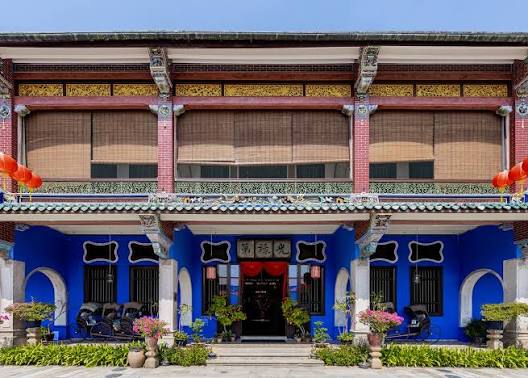
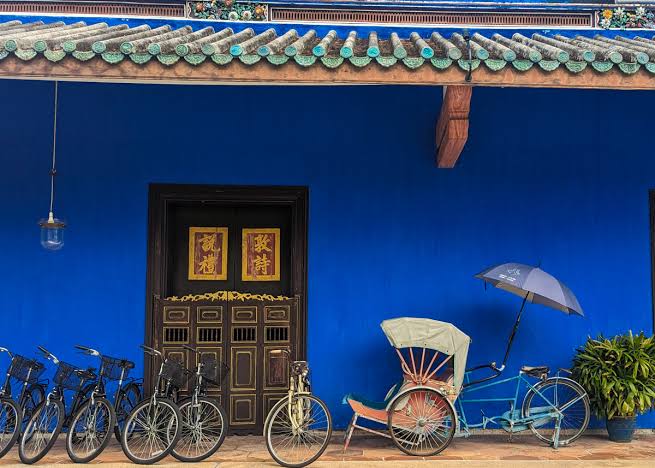
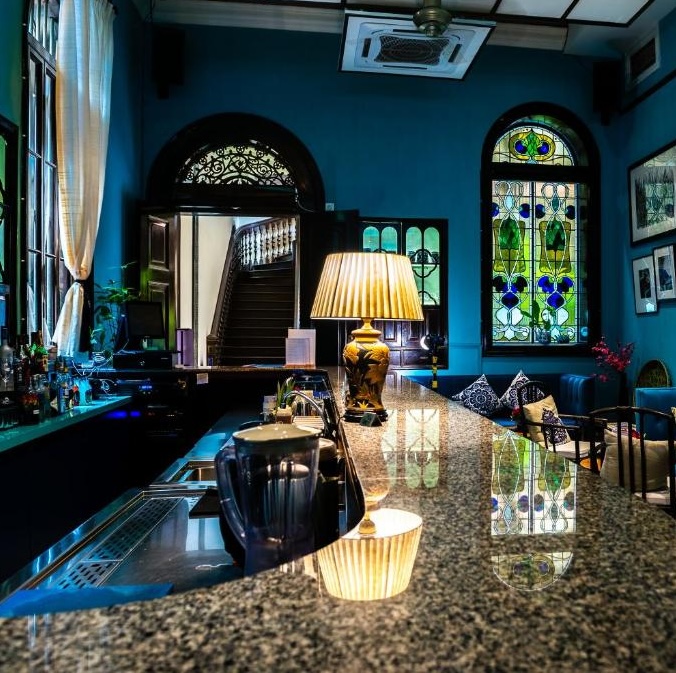
Cheong was happy to borrow from the West. The house has cast-iron balustrades and columns from Walter MacFarlane & Co. of Glasgow, clay floor tiles from Stoke-on-Trent, Gothic louvred windows and Art Nouveau stained glass, alongside Chinese carved timber screens, gilded panels and cut-porcelain decoration. The striking blue colour comes from lime wash mixed with natural indigo dye, a traditional finish that also suits the tropical climate.
Cheong's will stipulated that the house could not be sold until the death of the last of his sons. That son was only about two years old when Cheong died, and he lived until 1989. In the meantime the family's fortunes fell, rooms were rented out and the mansion became crowded and run-down. In 1989 the house came up for sale and was bought by a group of Penang conservationists led by the architect Laurence Loh and his wife Lin Lee Loh-Lim, in order to save it from demolition. The restoration, which the owners say took six and a half years, was carried out using traditional materials and techniques, and in 2000 the mansion received the UNESCO Asia-Pacific Heritage Award for Culture Heritage Conservation, in the "Most Excellent Project" category. Lin Lee Loh-Lim later told its story in the book The Blue Mansion: The Story of Mandarin Splendour Reborn.
The house has also had a screen career. It appears in the Oscar-winning French film Indochine (1992) and in the Hollywood film Crazy Rich Asians (2018), whose mahjong scene was filmed in the courtyard.
What You See on the Cheong Fatt Tze Mansion Tour
The guided tour lasts about 45 minutes and is the only way to see the interior unless you stay at the hotel. Guides tell the story of Cheong Fatt Tze and his family and explain the building's design and restoration. Highlights include:
- The facade: the indigo walls, timber louvred windows and carved entrance on Lebuh Leith, one of the most photographed buildings in George Town.
- The reception hall: with carved and gilded timber screens, blackwood furniture and the house's formal entrance arrangement.
- The main courtyard: open to the sky, with granite paving, cast-iron columns and the feng shui drainage design, and the setting of the Crazy Rich Asians mahjong scene.
- Decorative details: Art Nouveau stained glass, Stoke-on-Trent tiles, Glasgow ironwork and Chinese porcelain decoration.
- The museum exhibition: displays on the upper floors with photographs, artefacts and the story of the family and the restoration.
Tour Times, Tickets and How Long to Spend
- Guided tours: daily at 11 am and 3:30 pm, about 45 minutes, with a maximum of 24 people per tour. Tours may be suspended during private events.
- Self-guided audio tour: available daily between 11 am and 6 pm, with limited places per hour.
- Tickets: RM25 for adults and RM12.50 for children under 12, the same price for Malaysians and foreign visitors. Book online through the mansion's website, especially at weekends and in the holiday season; walk-ins are accepted if there is space.
- Staying overnight: the mansion operates as an 18-room boutique heritage hotel, which is the only way to see the private rooms.
- Time needed: about an hour including the tour and a look at the facade outside.
How to Get to the Blue Mansion
- On foot: Lebuh Leith is in the northern part of the George Town heritage zone, about ten minutes' walk from Lebuh Chulia and close to Lebuh Farquhar and the E&O Hotel area.
- Bus: Rapid Penang routes along Jalan Penang and Lebuh Chulia stop within a few minutes' walk.
- Grab or taxi: ask for 14 Lebuh Leith (Leith Street).
- Car: there is limited metered street parking on Lebuh Leith and the surrounding streets.
Tips for Visiting
- Book the guided tour rather than relying on the audio option if you want the full story; the guides are the highlight.
- The 11 am tour is often slightly quieter than the afternoon one. Arrive 10 to 15 minutes early.
- Photography rules can vary in parts of the house, especially areas used by hotel guests; follow your guide's instructions.
- The house has stairs and uneven historic floors, so check access in advance if you have limited mobility.
- Combine the visit with St George's Church, Fort Cornwallis and the Pinang Peranakan Mansion, all within walking distance.
- For food, the cafes of Lebuh Leith and Jalan Penang and the hawker stalls along Lebuh Chulia are close by.
Location
Photos
Nearby
- ChinaHouse — 5-minute walk east to Beach Street
- Pinang Peranakan Mansion — 12-minute walk south on Church Street
- Chew Jetty — 15-minute walk south to Weld Quay
Frequently Asked Questions
What time are the Blue Mansion tours?
Guided tours of the Cheong Fatt Tze Mansion run daily at 11 am and 3:30 pm and last about 45 minutes, with up to 24 people per tour. A self-guided audio tour is available between 11 am and 6 pm.
How much is the Blue Mansion entrance fee?
Tickets cost RM25 for adults and RM12.50 for children under 12, the same for Malaysians and foreign visitors. The fee covers either the guided tour or the self-guided audio tour.
Why is the Cheong Fatt Tze Mansion blue?
Its walls are finished with lime wash mixed with natural indigo dye, a traditional technique that also suits the tropical climate. The colour was restored during the 1990s conservation work.
When was the Blue Mansion built?
It was built between 1897 and 1904 for the Hakka merchant Cheong Fatt Tze. It was bought by conservationists in 1989, restored, and won a UNESCO Asia-Pacific Heritage Award in 2000.
Was Crazy Rich Asians filmed at the Blue Mansion?
Yes. The mahjong scene in the 2018 film Crazy Rich Asians was filmed in the mansion's courtyard. The house also appears in the French film Indochine.
Can I stay at the Blue Mansion?
Yes. The mansion operates as an 18-room boutique heritage hotel. Hotel guests can explore the house at quieter times than the public tours.