
Chew Jetty, Penang
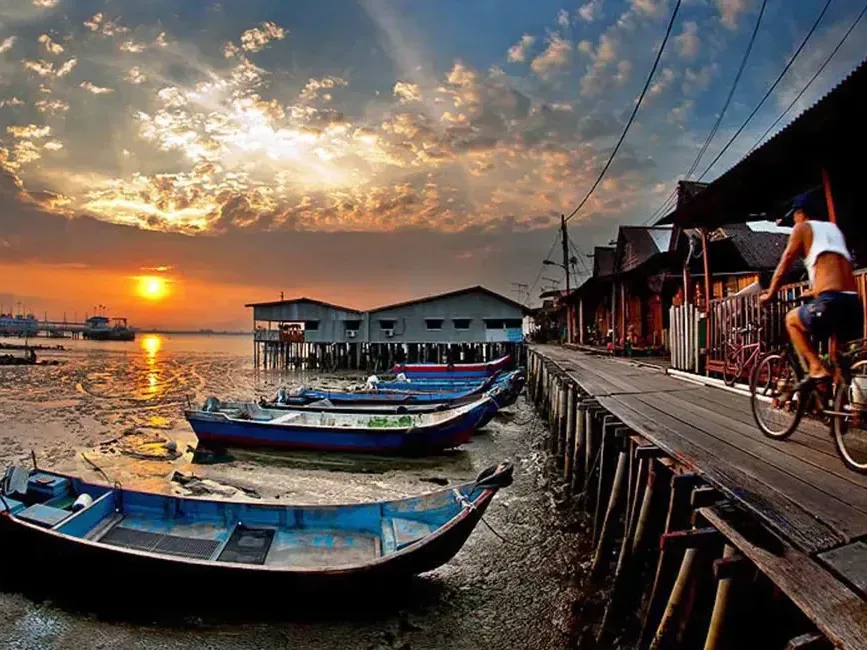
Chew Jetty is the largest and best-known of the Clan Jetties, the wooden villages on stilts that stretch out over the water from Weld Quay (Pengkalan Weld) in George Town. Each jetty was settled by Hokkien families who shared a surname, and on Chew Jetty most residents still belong to the Chew (Zhou) clan whose ancestors came from Tong'an near Xiamen in Fujian. A long plank walkway runs between their homes, shrines, souvenir shops and snack stalls to a small temple at the end facing the sea. Entry is free, and it is a living community rather than a museum.
This guide explains the history of Chew Jetty and its neighbours, what to see, festivals, how to get there and how to visit respectfully (checked October 2026).
| Address | Pengkalan Weld (Weld Quay), George Town, 10300 Penang |
|---|---|
| Hours | Walkway accessible 24 hours. Shops and stalls 9:00 am – 9:00 pm. |
| Closed | Never closed |
| Price | Free |
| Payment | Cash for food stalls and souvenir shops |
| Halal status | Mixed — some stalls are halal, some are not |
| Getting there | 5-minute walk south from the Penang ferry terminal. Rapid Penang bus 101/102/103 to Weld Quay. Street parking nearby. |
| Take me here | |
| Verified | Verified October 2026 |
History of Chew Jetty and the Clan Jetties
Reclamation of Weld Quay
George Town's busy waterfront once ran much further inland. In 1882 land was reclaimed along the old shoreline to create Weld Quay, and landing jetties were built out from the new quay. These became arrival and work points for Chinese immigrants, and between the 1880s and the 1960s small communities grew up on and around them. Each settlement was organised around a clan, a group sharing a surname and usually a home village in China, which gave the jetties their names.
Boatmen from Tong'an
The Chew clan came from Xinglinshe in Tong'an, Xiamen, and Chew Jetty is generally considered the oldest of the jetties, dating from the mid-19th century. Different clans tended to do different work: the Ongs, Lims, Chews and Lees were mostly boatmen who carried cargo and passengers between ships anchored offshore and the quay in sampans and lighters, while the Tans, Yeohs and Koays traded in charcoal and firewood. When Penang lost its free-port status in 1969 and port work declined, many jetty families turned to hawking, fishing and other jobs ashore.
Nine jetties, seven left
There were once nine clan jetties. Several were damaged when Japan invaded in 1941 and rebuilt after the war; the Lee Jetty moved to its present site in the early 1960s when the ferry terminal was developed, and the Mixed Clan Jetty for families of different surnames was added in 1962. The Koay Jetty (from the 1950s) and Peng Aun Jetty (from the 1960s) were demolished in 2006 for redevelopment. Seven remain today: the Ong, Lim, Chew, Tan, Lee, Yeoh and Mixed Clan jetties, with Ong the northernmost and Yeoh the southernmost. The Ong Jetty is now largely absorbed into the Raja Tun Uda ferry terminal area.
World Heritage and tourism
The jetties lie within the George Town UNESCO World Heritage Site inscribed in 2008, and the Penang Island City Council has designated almost all jetty buildings as Category II protected structures. Heritage status also brought crowds. Chew Jetty became a fixture on tour itineraries after appearing in the Malaysian film Ice Kacang Puppy Love, and by around 2017 roughly a third of its houses had been turned into shops, cafes or homestays. Residents still hold only annual Temporary Occupation Licences (TOL) for the land beneath their homes, which leaves the community's long-term future uncertain.
On the morning of 5 September 2026 a large fire destroyed five premises on Weld Quay about 20 metres from the jetty. Firefighters worked for 17 hours to contain it, and the Penang Chief Minister confirmed that Chew Jetty itself was not affected.
What to See on Chew Jetty
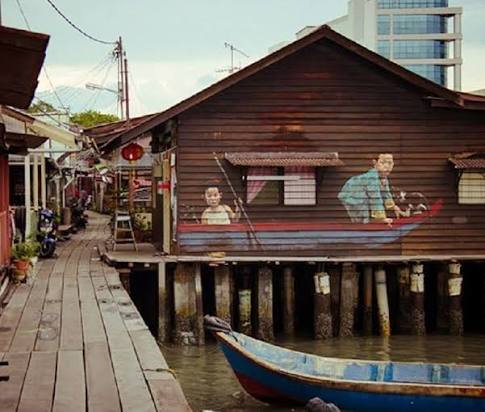
- The main walkway: a long timber boardwalk running out over the sea with houses on both sides. The planks and stilts are replaced regularly, and the mix of old weathered houses and renovated ones shows how the village has changed.
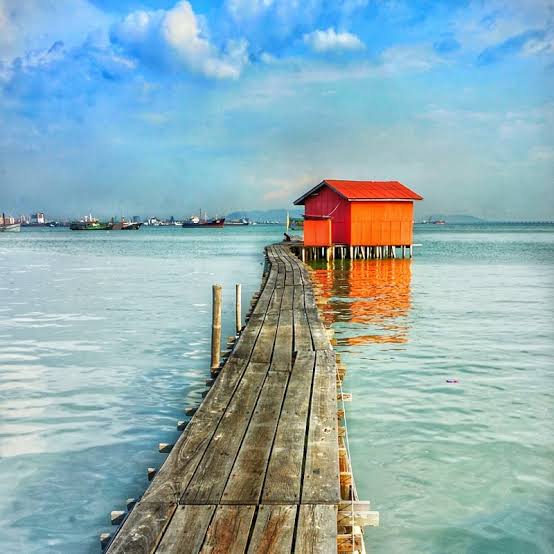
- The entrance shrine and the temple at the end: a shrine with an altar and incense urns greets you near the entrance, and a small clan temple stands at the far end facing the strait. The end platform has open views across the water to Butterworth and the ships in the channel.
- Shops and stalls: many front rooms now sell souvenirs, fridge magnets, postcards, local snacks, cold drinks and ice kacang. Murals have also been painted on some house walls.
- The other jetties: walk to the Tan, Lee and Yeoh jetties to the south and the Lim Jetty to the north. They are quieter and more residential, with their own shrines, including temples to Mazu, the sea goddess, and you will see more everyday life and fewer souvenir stalls.
- Hean Boo Thean Temple: a temple to Kuan Yin, the Bodhisattva of the South Sea, at the water's edge by the Yeoh Jetty, a short walk south. Its shrine dates from 1972 and was rebuilt and expanded in 2011–2012; the end of Chew Jetty gives a good front view of it.
The Jade Emperor Festival
Chew Jetty is the focal point of Penang's Hokkien celebrations of the Jade Emperor's birthday (Pai Ti Kong), held on the eve and night of the ninth day of Chinese New Year. The jetty is decorated with lanterns, and families set up altars along the walkway with a sugarcane stalk tied to each side, pineapples and other fruit, red tortoise cakes, roast meat and joss paper. Prayers and fireworks continue around midnight. The sugarcane recalls a Hokkien story from Tang-dynasty China: fleeing rebels, Hokkien families hid for nine days in a sugarcane plantation and emerged safely on the Jade Emperor's birthday. It is one of the most atmospheric nights to visit, but very crowded, so be patient and keep clear of the altars.
Visiting Chew Jetty: Hours, Price and Time Needed
Entry is free. The walkway is open at all hours, but shops and stalls generally trade from about 9 am to 9 pm, and the community asks visitors to come during those hours as people live here. Allow 30 minutes to an hour for Chew Jetty, or two hours if you walk along Weld Quay to several jetties and the Hean Boo Thean Temple. Bring small notes for the stalls; most are cash only.
How to Get There
- On foot: Chew Jetty is on Pengkalan Weld, about five minutes' walk south of the Pengkalan Sultan Abdul Halim ferry terminal and ten minutes from Armenian Street and Lebuh Chulia.
- Bus: Rapid Penang routes 101, 102 and 103 stop on Weld Quay near the jetties, and the free CAT shuttle runs along Pengkalan Weld.
- Ferry: passengers arriving from Butterworth on the Penang ferry can walk straight to the jetties from the terminal.
- Grab or taxi: ask for "Chew Jetty, Pengkalan Weld"; drivers drop at the jetty entrance on the main road.
- Parking: limited metered parking along Weld Quay; avoid weekend afternoons.
Tips for Visiting
- Remember that these are homes: stay on the main walkway, keep voices down in the residential stretches, do not open doors or peer into houses, and ask before photographing residents.
- Visit before 10 am for quiet photos, or from about 4:30 pm for softer light and sunset over the strait. Midday is very hot on the exposed boardwalk.
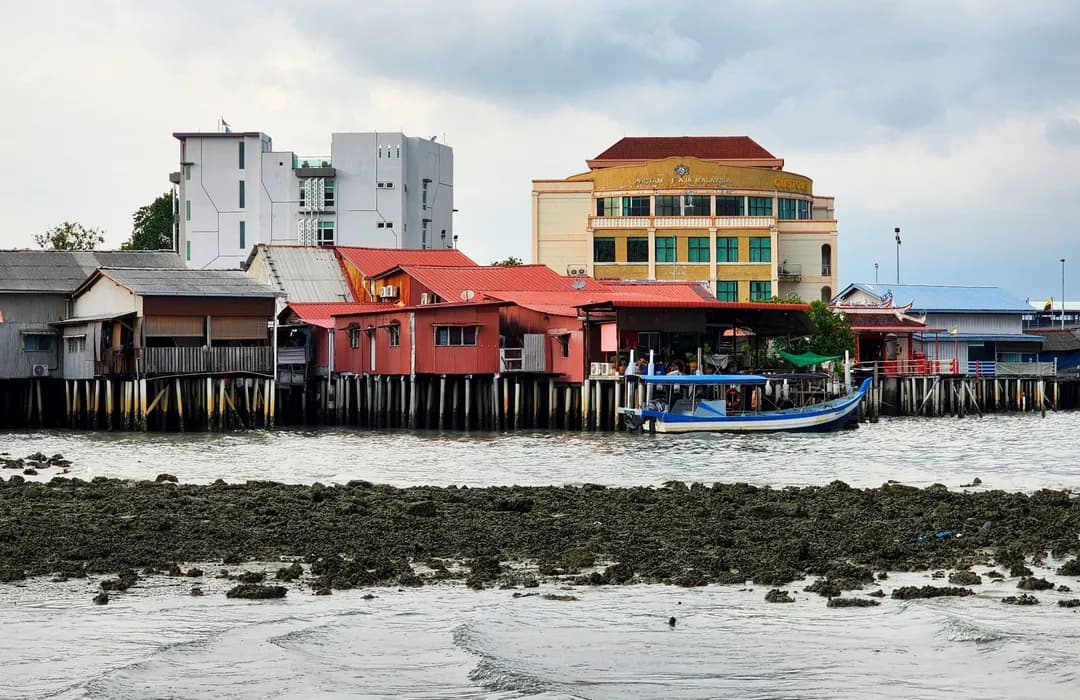
- Check the tide: at high tide water fills the space under the houses, while at low tide you see mudflats.
- The walkway is narrow and uneven, with gaps between planks; watch small children and avoid heels. Pushchairs and wheelchairs will find it difficult.
- Do not smoke on the jetty; the houses are timber and fire is a constant risk.
- Combine the visit with the Wonderfood Museum on Beach Street or the Pinang Peranakan Mansion on Church Street, both about ten minutes' walk away.
Location
Photos
Nearby
- Pinang Peranakan Mansion — 10-minute walk north on Church Street
- Penang Road Famous Laksa — 15-minute walk northwest to Lebuh Keng Kwee
Frequently Asked Questions
Is Chew Jetty free to visit?
Yes, there is no entry fee. The walkway is open at all hours, but shops and stalls trade roughly from 9 am to 9 pm, and visitors are asked to come during the day and early evening because people live there.
How old is Chew Jetty?
Chew Jetty dates from the mid-19th century and is generally considered the oldest of the clan jetties. The wider row of jetties developed after Weld Quay was reclaimed in 1882 and grew between the 1880s and the 1960s.
How many clan jetties are there in Penang?
Seven remain: the Ong, Lim, Chew, Tan, Lee, Mixed Clan and Yeoh jetties. Two others, the Koay and Peng Aun jetties, were demolished in 2006.
Do people still live on Chew Jetty?
Yes. Families of the Chew clan still live there, although about a third of the houses have become shops, cafes or homestays. Stay on the main walkway and respect residents' privacy.
When is the Jade Emperor festival at Chew Jetty?
It is celebrated on the eve and night of the ninth day of Chinese New Year, with altars, sugarcane offerings, prayers and fireworks along the jetty around midnight.
Was Chew Jetty damaged in the September 2026 fire?
No. The fire on 5 September 2026 destroyed five premises on Weld Quay about 20 metres away, but the Penang Chief Minister confirmed that Chew Jetty was not affected.