
Islamic Arts Museum Malaysia
Last updated: October 2026
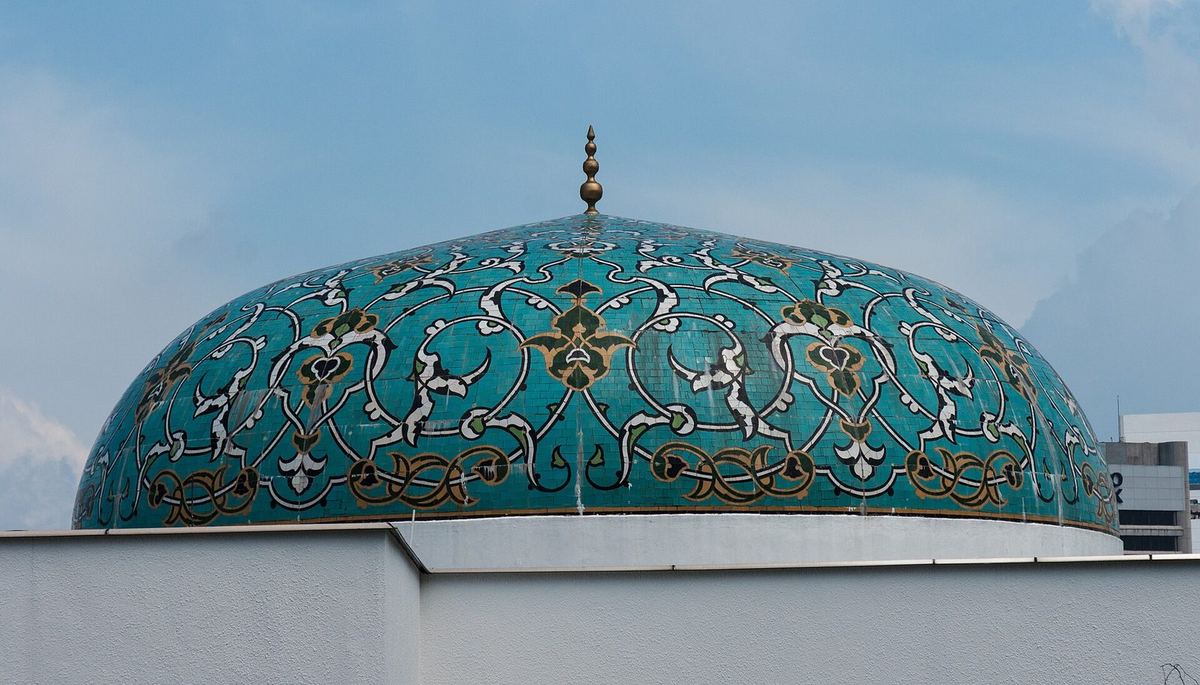
The Islamic Arts Museum Malaysia (IAMM, Muzium Kesenian Islam Malaysia) is the largest museum of Islamic art in Southeast Asia and one of the most rewarding museums in Kuala Lumpur. Set on the edge of the Perdana Botanical Gardens (Lake Gardens), a short walk from the National Mosque, it holds more than 7,000 artefacts from across the Islamic world, from Qurans and manuscripts to Mughal jewellery, Chinese Muslim ceramics, arms and armour, textiles and a complete 19th-century room from Ottoman Syria. The building, with its turquoise-tiled domes, bright marble halls and blue-tiled entrance, is part of the attraction.
This guide covers the museum's history and building, what is in each of its 12 permanent galleries, tickets and hours (checked October 2026), how to get there and tips for your visit.
| Address | Jalan Lembah Perdana, Lake Gardens |
|---|---|
| Details | Daily 9:30 am – 6 pm, last entry 5:30 pm (closed Hari Raya Aidilfitri and Aidiladha) Adult RM20, student RM10, under 6 free |
| Area | Lake Gardens |
| Typical visit | About 2 h |
| Listed in | Kuala Lumpur Attractions |
| Take me here | |
| Verified | Verified October 2026 |
History of the Islamic Arts Museum Malaysia
The museum was created by the Albukhary Foundation, the charitable foundation of the Malaysian businessman Syed Mokhtar Albukhary, and is run privately rather than by the government's Department of Museums. Ground was broken in 1997 and the museum was officially opened on 12 December 1998. Prime Minister Mahathir Mohamad, who followed its development from the ground-breaking, later recalled a close personal interest in the project.
From the start the aim was to show Islamic art as a world-wide tradition, not only from the Middle East but also from India, China and the Malay world, which is why the galleries are organised partly by region and partly by material. The museum has its own conservation laboratories, research and education departments and a scholars' library: in December 2018, at the museum's 20th anniversary celebrations, Dr Mahathir opened the Albukhary Foundation Scholar's Library, with more than 20,000 books and journals on Islamic art, architecture, history and religion. Over the years the museum has also staged a long series of temporary exhibitions and published scholarly catalogues.
The Building
The museum occupies about 30,000 square metres. Its exterior is modern and white, with clean lines, but it uses traditional Islamic elements to create its character. Five domes rise from the roof, tiled in turquoise and blue, and inside each is decorated with pastel plasterwork in patterns drawn from Persian and Central Asian traditions; a central inverted-dome pavilion with a glass ceiling lets daylight into the ground floor. The main entrance takes the form of an iwan, the vaulted portal of Persian architecture, faced with hand-painted tiles made by craftsmen from Isfahan in Iran. Polished marble floors and large windows towards the gardens make the interior bright and calm.
What to See: the 12 Permanent Galleries
The permanent collection is spread over two gallery levels. One level holds the Architecture, Quran and Manuscripts, India, China and Malay World galleries and the Ottoman Room; the other holds the galleries arranged by type of object.
Islamic Architecture Gallery
The most popular gallery has detailed scale models of famous Islamic buildings, including the Masjid al-Haram in Mecca and the Taj Mahal in India, built in fine detail so you can study their layout and geometry from above. It is a good way to compare how mosque design changed from region to region.
Quran and Manuscripts Gallery
Hand-written Qurans and other manuscripts, some on vellum, with gold illumination and many styles of calligraphy, alongside scientific and literary texts and royal documents.
India, China and Malay World Galleries
Three regional galleries show how Islamic art adapted to local traditions in India, in China and in the Malay Peninsula, a reminder that most of the world's Muslims live in Asia rather than the Middle East.
The Ottoman Room
A highlight of the museum is a complete reception room from a house in Ottoman Syria, dating from the early 19th century, with painted and gilded wood panelling, mirrors and niches. The museum's conservators restored it in-house, and the work has fed into international research on how painted wood behaves in tropical climates.
Material galleries
The upper level holds the Arms and Armour, Textiles, and Jewellery galleries, the Coins gallery, and three galleries arranged by material: Metalwork, Woodwork and Ceramics. The museum is also known for its early Islamic glassware.
Temporary exhibitions and the shop
Check the museum's website or social media for current temporary exhibitions. The museum shop on the ground floor sells art books, scarves, jewellery and crafts, and the in-house restaurant serves Middle Eastern and Mediterranean dishes.
Tickets, Opening Hours and How Long to Spend
- Hours: daily 9:30 am to 6 pm, last entry 5:30 pm. Closed on Hari Raya Aidilfitri and Hari Raya Aidiladha; hours may be shortened during Ramadan.
- Tickets: adults RM20; students RM10; children under 6 free. Temporary exhibitions are sometimes included and sometimes charged separately.
- Photography: allowed for personal use in the permanent galleries, without flash or tripods. Check signs in temporary exhibitions.
- Time needed: about two hours for the permanent galleries; half a day if you add a temporary exhibition and lunch.
How to Get to the Islamic Arts Museum Malaysia
- KTM Komuter: the old Kuala Lumpur railway station is the nearest station, about 10 to 15 minutes on foot past the National Mosque. Use the pedestrian bridge or crossing; Jalan Sultan Hishamuddin is a busy road.
- LRT/MRT Pasar Seni: about 15 to 20 minutes on foot, crossing the river and walking past the National Mosque.
- Grab or taxi: ask for "Muzium Kesenian Islam, Jalan Lembah Perdana". This is the most comfortable option in the midday heat.
Tips for Visiting
- Arrive by 3:30 or 4 pm at the latest if you want to see all 12 galleries without rushing.
- The museum is air-conditioned, which makes it a good midday stop between the outdoor sights of the Lake Gardens.
- There is no strict dress code, but modest clothing is appropriate, and you will need it anyway if you also visit the National Mosque next door.
- Combine the museum with the National Mosque, Perdana Botanical Gardens, the KL Bird Park and the National Museum, all within a short walk or Grab ride.
- Leave time for the shop and the restaurant; both are good, and the restaurant is a quiet place for lunch away from the city crowds.
Islamic Arts Museum Malaysia Location
Nearby
- Nasi Lemak Tanglin — Hawker food, 0.1 km away
- National Mosque (Masjid Negara) — Attraction, 0.2 km away
- Masjid Negara (National Mosque) — Temple, 0.2 km away
- KL Bird Park — Attraction, 0.3 km away
- The Majestic Hotel KL — Hotel, 0.4 km away
- The Majestic Spa — Spa & massage, 0.4 km away
Plan a route with opening times using the Where2Go trip planner.
Frequently Asked Questions
How much is the ticket for the Islamic Arts Museum Malaysia?
Adult tickets cost RM20 and students pay RM10. Children under 6 enter free.
What are the Islamic Arts Museum opening hours?
The museum opens daily from 9:30 am to 6 pm, with last entry at 5:30 pm. It closes on Hari Raya Aidilfitri and Hari Raya Aidiladha.
How long do you need at the Islamic Arts Museum Malaysia?
Allow about two hours for the 12 permanent galleries, and longer if there is a temporary exhibition or you plan to eat at the museum restaurant.
What is the Ottoman Room at the Islamic Arts Museum?
It is a complete early 19th-century reception room from a house in Ottoman Syria, with painted and gilded wood panelling, restored by the museum's own conservators and displayed as a permanent exhibit.
Who founded the Islamic Arts Museum Malaysia?
It was founded by the Albukhary Foundation, set up by businessman Syed Mokhtar Albukhary, and officially opened on 12 December 1998. It is a privately run museum.
How do I get to the Islamic Arts Museum Malaysia?
The nearest station is the old Kuala Lumpur KTM station, about 10 to 15 minutes' walk past the National Mosque. Pasar Seni LRT/MRT is about 15 to 20 minutes on foot, or take a Grab to Jalan Lembah Perdana.