
Bukit Bintang
Last updated: October 2026
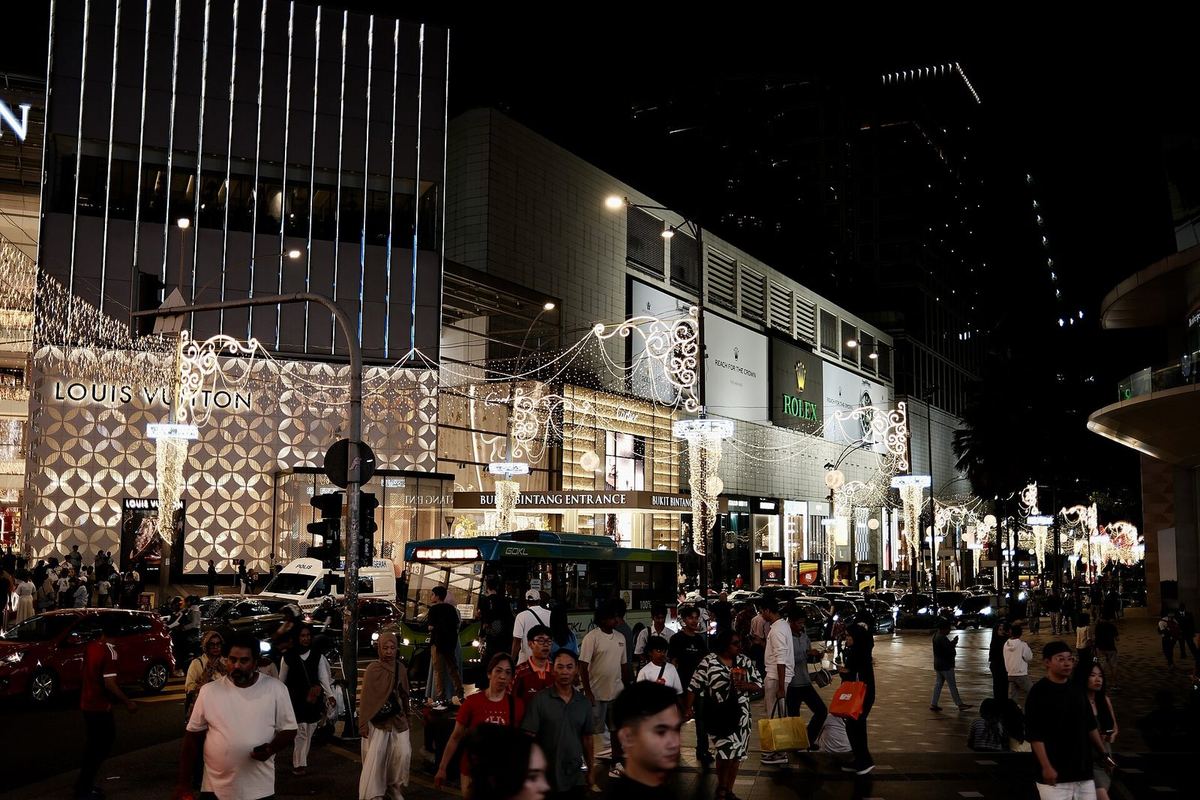
Bukit Bintang is Kuala Lumpur's main shopping and entertainment district, the heart of the so-called Golden Triangle. It centres on the busy junction of Jalan Bukit Bintang and Jalan Sultan Ismail, where Pavilion Kuala Lumpur, Lot 10, Fahrenheit88, Starhill and Sungei Wang Plaza face each other across a scramble crossing. One block north is Jalan Alor, KL's best-known food street, and a few minutes west are the bars and restaurants of Changkat Bukit Bintang. Most visitors to KL pass through at least once, whether to shop, eat, people-watch or catch the MRT and monorail.
This guide covers Bukit Bintang's history, the main malls and food streets, practical hours, how to get there and tips for visiting.
| Address | Jalan Bukit Bintang and Jalan Alor |
|---|---|
| Details | District open 24 hours; malls about 10 am – 10 pm Free |
| Area | Bukit Bintang |
| Typical visit | About 2 h |
| Listed in | Kuala Lumpur Attractions |
| Take me here | |
| Verified | Verified October 2026 |
History of Bukit Bintang
"Bukit Bintang" means "Star Hill" in Malay. The name is usually traced to a small hill, about 50 metres high, near Kampung Dollah, a Malay village in the area that has since disappeared. In the early 20th century the district was on the edge of town, with schools, bungalows and a few streets of shophouses.
One of its first institutions was the Bukit Bintang Girls' School. The school began in 1893, when Betty Langlands started teaching girls to read in Brickfields, and took its Bukit Bintang name after moving to premises on Bukit Bintang Road in 1930. It closed on the site in 2000, and the land was redeveloped as Pavilion Kuala Lumpur.
After the Second World War, Bukit Bintang became a place for entertainment. By the late 1940s the street had cabarets, cultural shows, amusement rides and hawker food. The Shaw family of Hong Kong opened the Bukit Bintang Amusement Park in 1947 on the site now occupied by Sungei Wang Plaza, and the businessman Low Yow Chuan opened the Capitol Hotel in 1948. Jalan Alor takes its name from the Malay word for a small stream that once ran along it; a stream is marked there on a 1921 map.
In the 1970s and 1980s parts of the area had a reputation for vice, and enforcement gradually cleaned it up. Retail took over: Sungei Wang Plaza opened in 1977 and Lot 10 in 1989. In the late 1980s, Yeoh Tiong Lay of YTL Corporation pushed a plan to rejuvenate the street for shoppers, branding the pavement strip "Bintang Walk". The KL Monorail arrived in 2003, Pavilion opened in 2007, and Fahrenheit88 replaced the older KL Plaza in 2010. In 2011 an elevated, air-conditioned walkway, funded by Petronas, linked Pavilion with KLCC. The underground MRT station opened on 17 July 2017, and in June 2021 City Hall added the scramble crossing at the main junction to make the area easier to walk.
The district keeps growing south and east: LaLaport at Bukit Bintang City Centre opened in January 2022, The Exchange TRX in November 2023, and the Merdeka 118 tower, the world's second-tallest building, rises a short distance away.
What to See and Do in Bukit Bintang
Shopping malls
- Pavilion Kuala Lumpur: the district's flagship mall, with international brands, a large food court and department stores. Its main entrance plaza on Jalan Bukit Bintang is a popular meeting point and photo spot.
- Lot 10: opened in 1989 and known for the Lot 10 Hutong food court in the basement, which brought well-known heritage hawker names under one roof.
- Fahrenheit88: mid-range fashion and beauty, across the road from Pavilion; it replaced the older KL Plaza in 2010.
- Sungei Wang Plaza: the oldest mall on the strip (1977), a warren of small shops selling phones, gadgets, clothes and games at lower prices.
- Starhill: a luxury mall refurbished in 2021, beside the JW Marriott.
- Berjaya Times Square and LaLaport BBCC: a short walk south-east, with family attractions, cinemas and Japanese stores.
Jalan Alor food street
Every evening, Jalan Alor's restaurants and stalls spill on to the road with tables, grills and plastic stools. Most of the food is Chinese-Malaysian: grilled chicken wings, satay, char kuey teow, seafood, frog porridge, and fruit stalls with durian in season. It is atmospheric and convenient but priced for tourists, so check prices before ordering seafood sold by weight. Much of the food on Jalan Alor is not halal.
Changkat Bukit Bintang
West of Jalan Alor, this short hill street of restored shophouses is KL's best-known bar and restaurant strip, busiest from late evening on Thursday to Saturday.
Events and street life
Bintang Walk is the setting for New Year's Eve countdowns, festive light displays for Christmas, Chinese New Year and Hari Raya, fashion weeks and other street events. Even on an ordinary night the junction outside Pavilion is a good place to watch the city go by.
Opening Hours, Cost and How Long to Spend
- Hours: the streets are open at all times. Most malls open from about 10 am to 10 pm. Jalan Alor's stalls start setting up around 5 pm and run late into the night.
- Cost: free to walk around. Food on Jalan Alor is cheap to mid-priced; seafood sold by weight costs more, so ask first.
- Time needed: about two hours for a walk and a meal, a full day if you are shopping.
How to Get to Bukit Bintang
- MRT: Bukit Bintang station on the Kajang Line has five exits serving the surrounding malls, including Pavilion, Lot 10 and Fahrenheit88.
- Monorail: three KL Monorail stations serve the district: Bukit Bintang (at the main junction), Imbi (for Berjaya Times Square) and Raja Chulan (for Changkat and Jalan P. Ramlee).
- From KLCC: the covered, air-conditioned walkway runs from the KL Convention Centre side of KLCC to Pavilion; the walk takes about 15 minutes.
- Grab or taxi: traffic is heavy in the evenings and on weekends, so the train is usually quicker. Most malls have paid basement parking.
Tips for Visiting Bukit Bintang
- Evenings are the liveliest time; arrive around sunset, eat on Jalan Alor and walk the Bintang Walk afterwards.
- Shop in the malls in the heat of the afternoon and save the street walking for after dark.
- Watch for bag snatchers and pickpockets in the crowds, and keep phones away from the kerb.
- Use the scramble crossing and the pedestrian bridges rather than crossing between traffic on Jalan Bukit Bintang.
- For halal food, the mall food courts (Pavilion, Lot 10 and Fahrenheit88) have plenty of choice.
- Ignore touts offering massages or "special" bar deals on Changkat and Jalan Alor; choose places with clear prices.
Bukit Bintang Location
Nearby
- CHAGEE (WOLO KL Global Flagship) — Drinks, 0.0 km away
- Lot 10 Hutong — Hawker food, 0.0 km away
- HME Money Changer @ Bukit Bintang — Money changer, 0.1 km away
- Suka Money Changers — Money changer, 0.1 km away
- MaxMoney Sungei Wang Plaza — Money changer, 0.2 km away
- Jalan Bukit Bintang Reflexology Strip — Spa & massage, 0.2 km away
Plan a route with opening times using the Where2Go trip planner.
Frequently Asked Questions
What does Bukit Bintang mean?
Bukit Bintang is Malay for "Star Hill". The name is usually traced to a small hill, about 50 metres high, near a former Malay village called Kampung Dollah.
What time do the Bukit Bintang malls open?
Most malls in Bukit Bintang, including Pavilion, Lot 10 and Fahrenheit88, open from about 10 am to 10 pm daily. The streets and Jalan Alor stay busy until late at night.
Is Jalan Alor halal?
Much of the food on Jalan Alor is Chinese-Malaysian and not halal, though there are some Muslim-owned stalls. For a wide halal choice, use the food courts in the nearby malls.
How do I walk from KLCC to Bukit Bintang?
Use the covered, air-conditioned KLCC to Pavilion walkway. It is about 560 metres long and the walk takes around 15 minutes.
Which station is best for Bukit Bintang?
Bukit Bintang MRT station on the Kajang Line and Bukit Bintang monorail station are both at the main junction beside Pavilion and Lot 10.