
Snake Temple
Last updated: October 2026
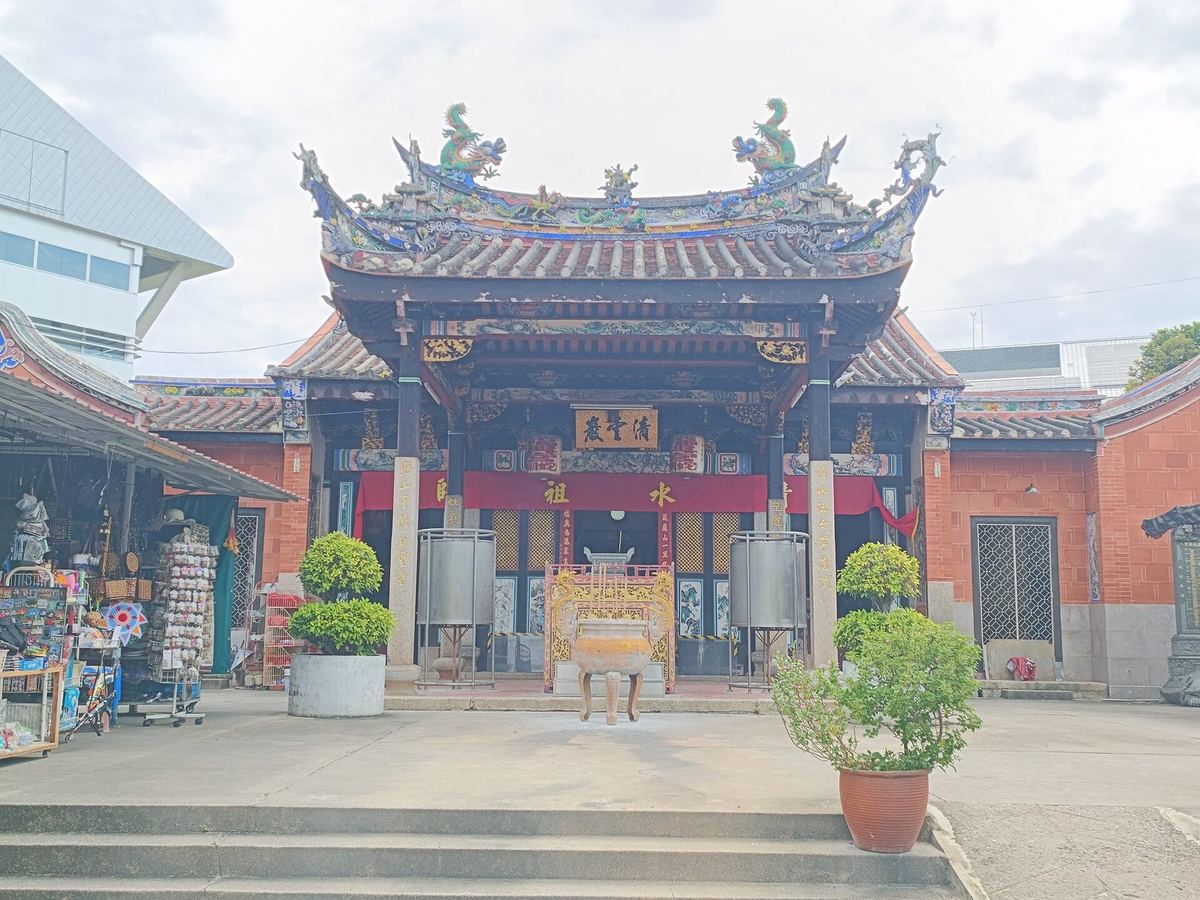
The Snake Temple in Bayan Lepas is one of Penang's oddest and best-known sights: a Chinese temple where green pit vipers lie coiled on the altars, the incense stands and the branches placed around the prayer hall. Its proper name is Hock Hin Keong (also written Hock Hin Kong), and it is also called the Temple of the Azure Clouds. It honours Chor Soo Kong, a Buddhist monk and healer from Song dynasty China, and is still an active place of worship, about 3 km from Penang International Airport on Jalan Sultan Azlan Shah.
This guide covers the temple's history and legends, the snakes, what else is in the compound, hours, transport and practical tips, checked in October 2026.
| Address | Jalan Sultan Azlan Shah, Bayan Lepas |
|---|---|
| Details | Daily 6 am – 7 pm Free (adjacent snake exhibit charges separately) |
| Area | Bayan Lepas |
| Typical visit | About 30 min |
| Listed in | Penang Attractions |
| Take me here | |
| Verified | Verified October 2026 |
History of the Snake Temple
Chor Soo Kong
Chor Soo Kong (Qingshui Zushi, "the Patriarch of Clear Water") was a Buddhist monk from Fujian province in China who lived during the Song dynasty (960 to 1279). He was revered for his knowledge of medicine, for healing the sick and, according to legend, for giving shelter to snakes in the forest. After his death he was deified, and his cult spread with Hokkien emigrants across South East Asia.
David Brown and the land
The temple's origin story involves David Brown, a Scottish merchant who was the largest landowner in early 19th-century Penang, with estates at Gelugor and Sungai Keluang. According to legend, he fell ill with a persistent fever and was cured by monks using herbs and prayer; in gratitude he offered them land at Sungai Keluang for a temple. Brown died in 1825, and the monks are said to have built only a simple hut at first.
Sources differ on the date of the temple itself. Most published histories, including the New Straits Times, give 1850 as the year the temple was built and consecrated, after a monk arrived from China with a statue of Chor Soo Kong. Other accounts, including Wikipedia and Timothy Tye's Penang guide, give 1805, the date usually attached to the two wells in the compound. Either way, it is one of the older Chinese temples outside George Town.
The arrival of the snakes
The story goes that once the temple was finished, snakes from the surrounding jungle came in on their own and settled in the prayer hall, which devotees took as a sign of the monk's blessing. They were Wagler's pit vipers, a venomous tree-dwelling species that has since become known as the temple pit viper because of this place. Over the following century the temple became famous, and in recent decades it has been featured on television, including The Amazing Race, and in Tan Twan Eng's novel The Gift of Rain.
Today the temple sits beside a busy road in the Bayan Lepas industrial area, and with the forest gone, few snakes arrive on their own. A snake breeding centre was set up in 2005 to keep up the temple's population.
The Snakes
Wagler's pit vipers are slow-moving and largely nocturnal, and spend the day resting motionless, which is why they seem so calm on the altars. Adults are usually about a metre long; young snakes are bright green, and adults turn darker with yellow bands. Devotees believe the incense smoke makes them docile. Most accounts say the temple's snakes have been de-venomed but keep their fangs, so they can still bite. Usually only a small number, often around a dozen, are on display in the main hall.
During the birthday celebrations of Chor Soo Kong, on the sixth day of the first lunar month (in the Chinese New Year period), large crowds of devotees arrive from across Malaysia and from Singapore, Taiwan and China, and the temple removes most of the snakes so they are not stressed.
What to See at the Snake Temple
- The main prayer hall: the altar to Chor Soo Kong, with snakes coiled on the incense holders, candle stands and shrubs.
- The Dragon Eye Wells: two brick wells, also called the Dragon Pure Water Wells, said to date from 1805 and to be about 10 feet deep.
- The bells: two large brass bells cast in 1886.
- Side shrines: including a hall to Guan Yin, the goddess of mercy.
- The snake exhibit: next to the temple, a privately run reptile exhibit shows snakes in enclosures and offers photos holding a python. It charges its own fee, separate from the temple; ask the price before you go in or pose for a photo.
Opening Hours, Entry and How Long to Spend
- Hours: daily 6 am to 7 pm.
- Entry: the temple is free; donations are welcome. The adjacent snake exhibit charges separately, and the python photo costs extra.
- Time needed: about 30 minutes, or a little longer with the exhibit.
How to Get to the Snake Temple
- Bus: Rapid Penang route 401 (towards Balik Pulau via Bayan Lepas) passes the temple on Jalan Sultan Azlan Shah; check the current Rapid Penang route map for other services to the airport area.
- Grab or taxi: about 25 to 30 minutes from George Town via the expressway, and under 10 minutes from Penang International Airport.
- Car: free parking is available at the temple.
Tips for Visiting
- Never touch, poke or try to pick up the snakes, and keep children close. Look up as well as down; some vipers rest on branches at head height.
- Photography is generally fine, but do not use flash near the snakes or block worshippers at the altar.
- Dress respectfully, as this is a working temple.
- The temple fits well into a trip to or from the airport, or a day in the south of the island with the Penang War Museum and Balik Pulau.
- Avoid the Chor Soo Kong birthday festival if you want to see the snakes; go then if you want to see the temple at its busiest.
- For food, the Bayan Lepas and Sungai Ara areas have plenty of hawker centres and coffee shops a short drive away.
Snake Temple Location
Nearby
- Pantai Hospital Penang — Hospital, 0.9 km away
- Suria Car Rental — Car rental, 0.9 km away
- XpertGadget Bayan Baru — Phone repair, 1.3 km away
- Tyreplus Bok Tyre & Battery — Car repair, 1.4 km away
- Hertz (Sime Darby Rent-A-Car) — Car rental, 2.3 km away
- Avis Malaysia — Car rental, 2.3 km away
Plan a route with opening times using the Where2Go trip planner.
Frequently Asked Questions
Are the snakes at the Penang Snake Temple venomous?
They are Wagler's pit vipers, a venomous species. Most accounts say the temple snakes have been de-venomed, but they keep their fangs and can still bite, so never touch them.
Is the Snake Temple free to enter?
Yes. The temple is free and open daily from 6 am to 7 pm. The privately run snake exhibit next door charges its own fee, and photos holding a python cost extra.
When was the Snake Temple built?
Most sources date the temple to 1850, on land associated with the landowner David Brown, who died in 1825. Some accounts give 1805, the date attached to the temple wells.
How far is the Snake Temple from Penang Airport?
It is about 3 km from Penang International Airport, a drive of under 10 minutes, so it is easy to visit on the way to or from a flight.
When are there fewer snakes at the temple?
During the birthday celebrations of Chor Soo Kong on the sixth day of the first lunar month, the temple removes most of the snakes because of the crowds.