
Penang War Museum
Last updated: October 2026
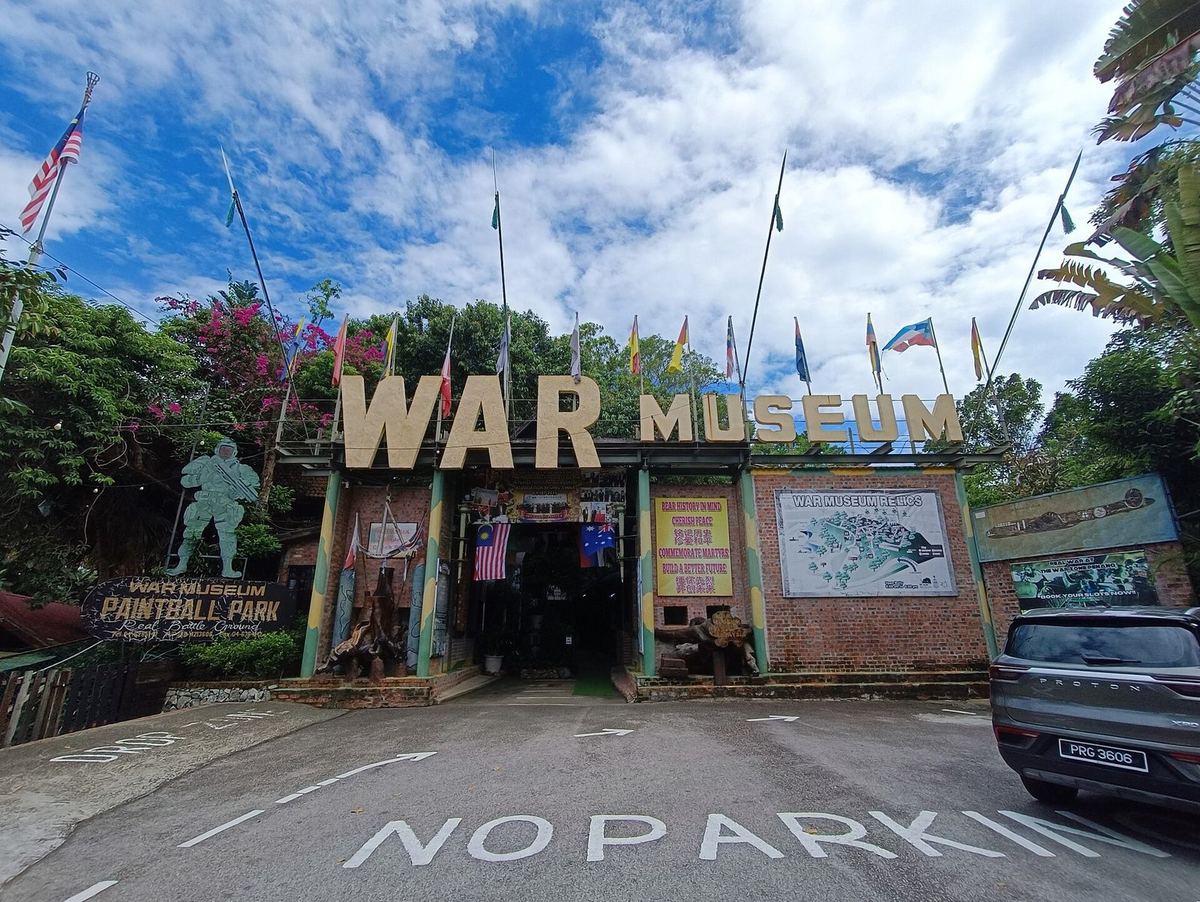
The Penang War Museum occupies a British hill fort at Batu Maung, at the south-eastern tip of Penang Island, built in the 1930s to guard the southern approaches to the island and the Strait of Malacca. Abandoned after the Second World War and swallowed by forest for decades, the site was cleared and opened as a museum in 2002. Today you can walk through about 20 acres of tunnels, ammunition stores, gun firing bays, pillboxes and barracks, much of it in the original concrete, with photographs and signboards explaining how the soldiers and later the prisoners lived here.
This guide covers the fort's history, what to see on the trail, tickets and opening hours (checked October 2026), how to get there and practical tips.
| Address | Jalan Batu Maung, Batu Maung |
|---|---|
| Details | Daily 9 am – 6 pm (last admission 5 pm) Non-Malaysians RM38 adults, RM17 children; Malaysians RM22 / RM12; under 5 free |
| Area | Batu Maung |
| Typical visit | About 2 h |
| Listed in | Penang Attractions |
| Take me here | |
| Verified | Verified October 2026 |
History of the Penang War Museum Fort
A British coastal fortress
In the 1930s, as tension with Japan grew, the British strengthened the defences of their Malayan ports. At Batu Maung, on a hill above the fishing village, the Royal Engineers and a labour force that included convicts and labourers from India blasted and dug into the rock to build a fortress facing the sea. It was designed to stop an invasion from the water, with gun positions overlooking the southern channel, underground ammunition chambers linked by tunnels, a command centre, quarters for British officers and Indian Army soldiers, a cookhouse and a network of escape tunnels. A 6-inch breech-loading gun was installed in 1941; the one on display today is a replica.
1941: the fort that never fought
The fort's guns were never tested. In December 1941 the Japanese came down the Malay Peninsula by land rather than by sea, and the British command under Lieutenant-General Arthur Percival decided not to defend Penang. The European population and garrison were evacuated on 16 December 1941 and Japanese forces arrived the following day, taking the island without a fight.
Japanese occupation
During the occupation, which lasted until 1945, the Japanese used the Batu Maung fort as an army base and a prison, and the site is associated with the interrogation and torture of prisoners. Penang also became a base for Axis submarines in the Indian Ocean, including German U-boats, which used the waters around the island. Partly because of this wartime history, the hill is known locally as Bukit Hantu ("Ghost Hill"), and the museum has a reputation for being haunted.
From jungle to museum
After the war the fort was abandoned and the forest took over. Decades later an effort to clear and restore the site began, led by the museum's founder, Datuk Johari Shafie. The Penang War Museum was officially opened on 14 October 2002 by Datuk Paduka Abdul Kadir Sheikh Fadzir, then Minister of Culture, Arts and Tourism. The restoration left most of the structures as they were found, so the museum feels more like a ruined fort than a polished gallery.
What to See at the Penang War Museum
A marked trail takes you past about 30 numbered points spread over the hillside. The main highlights are:
- The underground tunnels: reinforced tunnels connect the ammunition storage chambers, the underground command centre and logistics offices. Narrow escape tunnels and a staircase lead out of the main chambers; some sections are low and dark, so you may need to stoop or crawl.
- Ammunition hoist and shaft: the vertical shaft that lifted shells from the underground stores up to the guns.
- Gun firing bay and the 6-inch gun: the concrete emplacement with a replica of the breech-loading coastal gun installed in 1941, and views over the sea towards the southern channel.
- Pillboxes and the anti-aircraft pit: small concrete strongpoints and a gun pit for air defence.
- Barracks and quarters: the remains of the officers' quarters, the intelligence officer's quarters, the Indian Army soldiers' quarters and the cookhouse, with information boards on daily life in the fort.
- Lock-ups and displays: cells associated with the Japanese occupation and displays of wartime photographs, uniforms, weapons and ammunition remnants.
- Viewpoints: the hilltop gives wide views over the sea, the Batu Maung coast and the southern channel.
The site also hosts group activities such as paintball and team-building events, Night tours were offered in the past but have been discontinued, so plan a daytime visit.
Tickets, Opening Hours and How Long to Spend
- Hours: daily 9 am to 6 pm, last admission 5 pm.
- Non-Malaysians: RM38 adults, RM17 children.
- Malaysians: RM22 adults, RM12 children (show MyKad or MyKid).
- Under 5: free.
- Time needed: about two hours to walk the full trail at a relaxed pace.
How to Get to the Penang War Museum
- Address: Jalan Batu Maung (Jalan Muzium Perang), 11960 Batu Maung, about 16 km south of George Town.
- Grab or taxi: the easiest option, around 30 to 40 minutes from George Town depending on traffic, and only a short drive from Penang International Airport. Book your return ride before you leave, or ask staff to help, as few cars wait at the museum.
- Bus: Rapid Penang route 302 runs from George Town to Batu Maung. Get off at the Muzium Perang stop and walk about 10 minutes uphill to the entrance.
- Car: there is parking at the museum; a small parking fee has been charged in the past.
Tips for Visiting
- Wear proper shoes: most of the site is outdoors on sloping, uneven paths and steps, and some tunnels are slippery.
- Bring insect repellent, water and a hat. The fort is surrounded by forest and mosquitoes are common.
- Go in the morning, when it is cooler, or after a rain shower has passed; the tunnels can hold water after heavy rain.
- A torch or phone light helps in the darker tunnels.
- The site is not suitable for wheelchairs, and the tunnels are not ideal for anyone who dislikes tight spaces.
- Batu Maung is near the airport, so the museum works well as a stop on the way to or from a flight. The seafood restaurants in Batu Maung fishing village are close by for lunch.
Penang War Museum Location
Nearby
- Hertz (Sime Darby Rent-A-Car) — Car rental, 2.3 km away
- Avis Malaysia — Car rental, 2.3 km away
- Europcar — Car rental, 2.3 km away
- Mayflower Car Rental — Car rental, 2.3 km away
- WAHDAH — Car rental, 2.3 km away
- Ban Heang Airport Outlet — Local products, 2.3 km away
Plan a route with opening times using the Where2Go trip planner.
Frequently Asked Questions
How much is the Penang War Museum entrance fee?
Non-Malaysian adults pay RM38 and children RM17. Malaysian adults pay RM22 and children RM12. Children under 5 enter free.
What are the Penang War Museum opening hours?
The museum is open daily from 9 am to 6 pm, with last admission at 5 pm.
Who built the Penang War Museum fort?
The fort was built by the British in the 1930s. The Royal Engineers and labourers, including convicts from India, dug into the hill at Batu Maung to make the tunnels and gun positions.
Is the Penang War Museum haunted?
The hill is known locally as Bukit Hantu, or Ghost Hill, and the fort was used as a prison by the Japanese during the occupation, so it has a strong reputation for ghost stories. For most visitors it is simply a large historical site in the forest.
How do I get to the Penang War Museum by bus?
Take Rapid Penang bus 302 from George Town to Batu Maung, get off at the Muzium Perang stop and walk about 10 minutes uphill. Grab is quicker and takes around 30 to 40 minutes from George Town.
How long do you need at the Penang War Museum?
Allow about two hours to follow the trail through the tunnels, bunkers and barracks without rushing.