
Penang Botanic Gardens
Last updated: October 2026
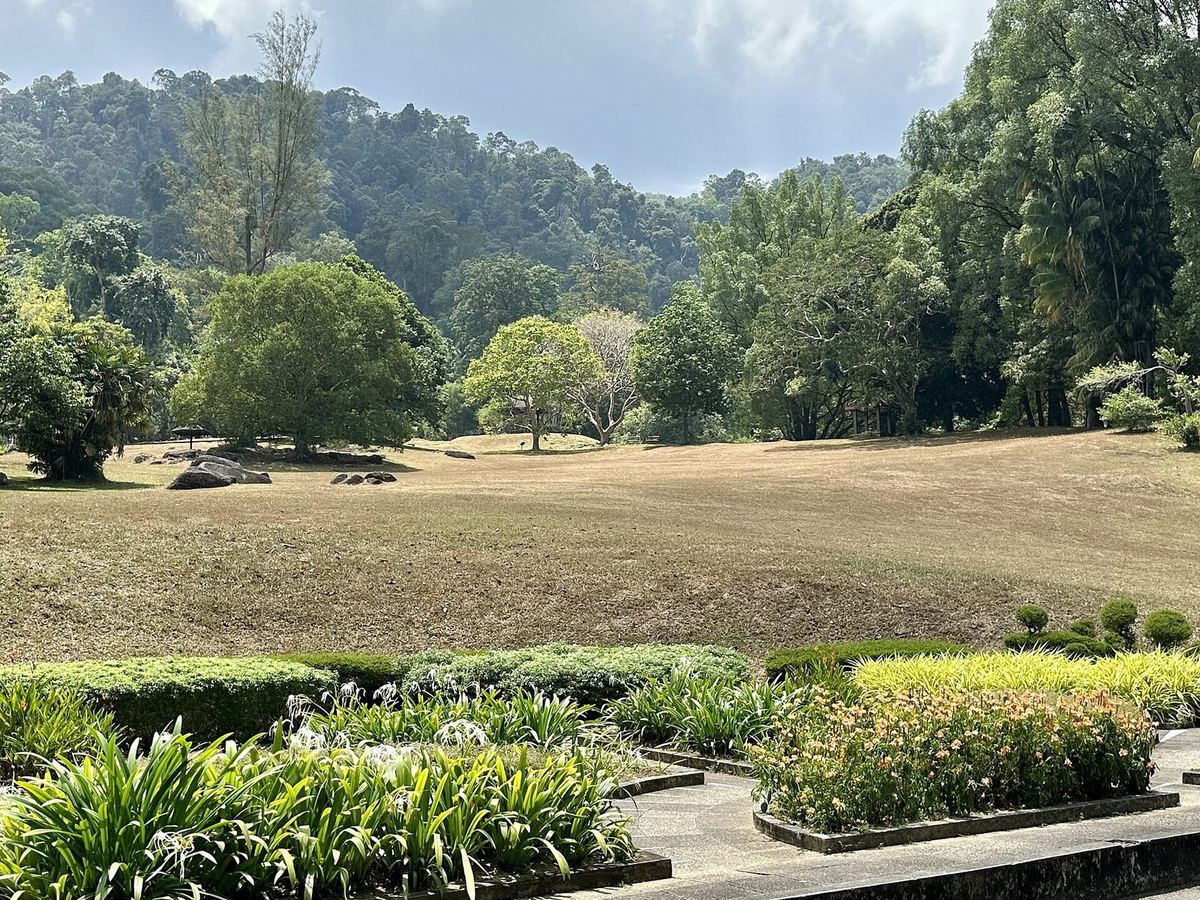
The Penang Botanic Gardens, also known as the Waterfall Gardens, fill a green valley at the foot of Penang Hill, about 15 minutes from central George Town. Founded in 1884 on the site of an old granite quarry, the gardens cover about 29 hectares of lawns, plant houses and forest edge, framed by steep jungle-covered hills and fed by the stream that runs down from the waterfall at the head of the valley. Entry is free, and the gardens are one of the most popular places on the island for an early-morning walk, a jog or a family picnic.
This guide covers the gardens' history, what to see, monkeys and wildlife, hours, the effect of the Penang Hill cable car works, transport and tips, checked in October 2026.
| Address | Jalan Kebun Bunga, George Town |
|---|---|
| Details | Daily 6:30 am – 7 pm Free |
| Area | Botanic Gardens |
| Typical visit | About 1 h 30 min |
| Listed in | Penang Attractions |
| Take me here | |
| Verified | Verified October 2026 |
History of the Penang Botanic Gardens
Earlier gardens
The present gardens were not Penang's first. Between 1794 and 1806 the East India Company ran spice gardens on the island, part of a plan to grow nutmeg, cloves and other spices to break the Dutch hold on the spice trade. A second botanical garden was set up between 1822 and 1834 following recommendations from Stamford Raffles. Neither lasted.
Charles Curtis and the Waterfall Gardens
The current gardens were founded in 1884 in the valley below the waterfall, on the site of an abandoned granite quarry. The first superintendent was Charles Curtis (1853 to 1928), an English plant collector who had worked for the Veitch nurseries of Chelsea and collected specimens in Mauritius, Madagascar, Sumatra, the Moluccas and Borneo before coming to Penang. He laid out the gardens, turned the quarry into ornamental grounds and nurseries, grew commercial plants and advised local planters, and catalogued the wild flowering plants and ferns of Penang Island. Curtis retired in 1903 and was succeeded by Walter Fox. The highest viewpoint on Penang Hill, Curtis Crest at The Habitat, is named after him.
War and independence
The gardens suffered badly in the Second World War. During the Japanese occupation, tunnels were dug near the lily ponds and used for ammunition works and storage. Restoration began in 1945, and in 1956 Cheang Kok Choy became the first Malaysian curator. Today the gardens are run by the Penang State Government as a public park and nature reserve, and since 2021 they have been part of the UNESCO Penang Hill Biosphere Reserve.
The waterfall that gives the gardens their name was also the original site of Penang's Hindu shrine to Lord Murugan, which was moved to the hill next door in the early 20th century when the waterfall became part of a protected water catchment. That temple is now the Waterfall Hilltop Temple.
What to See at the Penang Botanic Gardens
- The main loop: a paved road of about 2.2 km circles the gardens with a gentle climb, passing most of the collections. It is shaded in parts and popular with walkers and joggers.
- Plant houses: the fern house and rockery, the cactus house, the orchidarium and the Perdana plant house display collections that would not grow well in the open.
- Lily pond and aroid walkway: the lily pond is one of the most photographed corners, and the aroid walkway shows climbing and ground-dwelling plants of the arum family.
- Notable trees: look for the cannonball tree, with its heavy round fruits growing straight from the trunk, and the Pinang palm (areca palm), the tree that gave Penang its name.
- Formal and theme gardens: British-style lawns and borders are set against the jungle backdrop, along with smaller themed gardens.
- The Moon Gate: a round gateway near the entrance marks the start of the popular hiking trail up Penang Hill, and the jeep track to the summit also starts nearby.
Monkeys and wildlife
Long-tailed macaques are common and bold; they have learned that visitors carry food and may snatch bags or plastic carriers. The shyer dusky leaf monkeys, grey with white rings around their eyes, are usually seen in the trees in the quieter parts of the gardens. Black giant squirrels and many birds also live here. Feeding the animals is not allowed.
Opening Hours, Entry and How Long to Spend
- Hours: daily 6:30 am to 7 pm. Some guides give longer hours (from 5 am to 8 pm) for joggers on the main road, but plan your visit within the official times.
- Entry: free.
- Time needed: about 90 minutes for the main loop and plant houses, longer if you picnic or start the hill trail.
- Maps: trail maps are available from the gardens' office.
How to Get to the Penang Botanic Gardens
- Bus: Rapid Penang bus 10 runs from Weld Quay (the jetty) through George Town to the gardens, roughly every 45 to 60 minutes; check the current timetable.
- Grab or taxi: about 15 minutes from central George Town. Because of the Penang Hill cable car construction, part of the access road is closed and drivers may drop you about 650 metres from the gate.
- Car: during the cable car works, the car park in front of the gardens' office and some parking outside the gardens are closed. Visitors are asked to park at the City Park (Taman Bandaraya, formerly Youth Park) or at the Arulmigu Balathandayuthapani (Waterfall Hilltop) Temple car park and walk in.
The cable car, which will run from a station at the gardens to the top of Penang Hill, was 32 per cent complete in August 2026 and is expected to start operating in late 2027. The gardens remain open throughout the works.
Tips for Visiting
- Come early in the morning, when it is coolest and the light is soft; Sunday mornings are the busiest time.
- Keep food, drinks and plastic bags out of sight to avoid trouble with macaques, and do not feed them.
- Wear comfortable shoes and bring water and insect repellent, especially if you plan to start the hill trail.
- The main loop is paved, so prams can manage the flatter sections, though parts are steep.
- Combine the visit with the Waterfall Hilltop Temple next door, or hike up to Penang Hill and ride the funicular down.
- For food, there are a few snack and drink stalls near the entrance; Pulau Tikus and Air Itam have many more options a short drive away.
Penang Botanic Gardens Location
Nearby
- Arulmigu Balathandayuthapani Temple (Waterfall Hilltop Temple) — Temple, 0.7 km away
- Waterfall Hilltop Temple (Arulmigu Balathandayuthapani) — Attraction, 0.7 km away
- Nattukkottai Chettiar Temple — Temple, 1.0 km away
- New Bob Rent-A-Car & Tours — Car rental, 1.3 km away
- SNH Wellness Centre (St Nicholas' Home) — Spa & massage, 1.5 km away
- Coffee Tree (Penang White Coffee) — Local products, 1.7 km away
Plan a route with opening times using the Where2Go trip planner.
Frequently Asked Questions
Is there an entrance fee for the Penang Botanic Gardens?
No. Entry to the Penang Botanic Gardens is free.
What are the Penang Botanic Gardens opening hours?
The gardens are open daily from 6:30 am to 7 pm. Early morning is the coolest and most pleasant time to visit.
How do I get to the Penang Botanic Gardens by bus?
Rapid Penang bus 10 runs from Weld Quay through George Town to the gardens, roughly every 45 to 60 minutes.
Where can I park at the Penang Botanic Gardens during the cable car works?
The car park in front of the office is closed during construction. Park at the City Park (Taman Bandaraya) or the Waterfall Hilltop Temple car park and walk in.
Can I hike from the Botanic Gardens to Penang Hill?
Yes. The Moon Gate trail starts near the gardens and climbs through the forest to the summit; the paved jeep track is an alternative. Allow two to three hours and bring water.
When were the Penang Botanic Gardens founded?
They were founded in 1884 on a former granite quarry, with Charles Curtis as the first superintendent.