
Little India, Brickfields
Last updated: October 2026
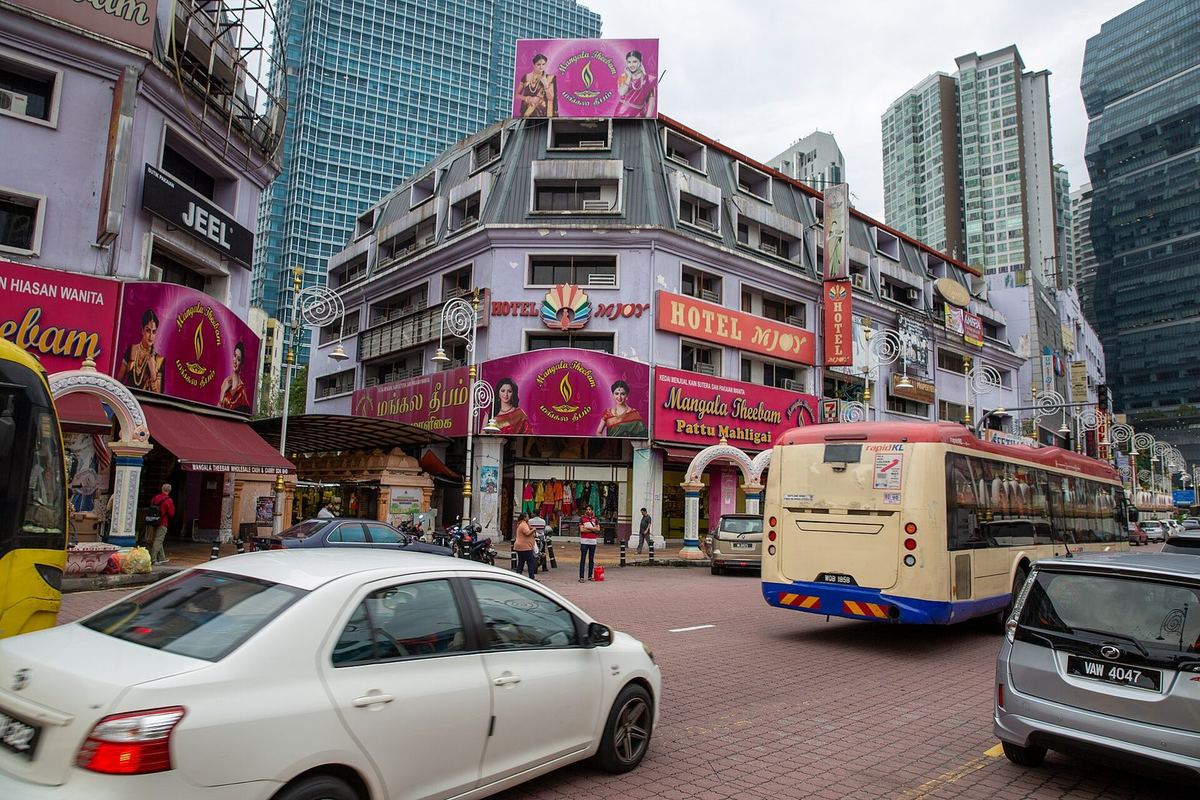
Little India in Brickfields is the stretch of Jalan Tun Sambanthan just south of KL Sentral that serves as Kuala Lumpur's official Indian quarter. Creamy-yellow arches and painted lamp posts line the road, Tamil film songs drift out of the music shops, and the pavements are crowded with sari and textile stores, gold jewellers, jasmine-garland sellers, spice shops and banana-leaf restaurants. Behind the main road are some of KL's oldest temples and churches. It is free to wander, easy to reach from KL Sentral, and at its busiest and most colourful in the weeks before Deepavali.
This guide covers the history of Brickfields and Little India, what to see, where to eat, opening times, how to get there and practical tips.
| Address | Jalan Tun Sambanthan, Brickfields |
|---|---|
| Details | Street open 24 hours; most shops about 10 am – 9 pm Free |
| Area | Brickfields |
| Typical visit | About 1 h |
| Listed in | Kuala Lumpur Attractions |
| Take me here | |
| Verified | Verified October 2026 |
History of Brickfields and Little India
In 1881 a fire and then a flood destroyed much of early Kuala Lumpur, which was built of timber and attap thatch. Frank Swettenham, then the British Resident of Selangor, ordered that new buildings be made of brick and tile. Kapitan Yap Ah Loy, the leader of the Chinese community, bought land south of the town to make bricks, and kilns later run by Yap Kwan Seng and others turned the area into the town's brickworks. The name Brickfields stuck long after the kilns closed.
The arrival of the railway shaped the next chapter. The Federated Malay States Railways set up its depot and workshops here and brought in workers from Ceylon (Sri Lanka) and South India, who settled in railway quarters around Jalan Rozario and the surrounding streets. Their families built temples, churches, schools and shops, and Brickfields became the most important Indian neighbourhood in the capital. Brickfields Road was later renamed Jalan Tun Sambanthan after Tun V. T. Sambanthan, the labour minister and president of the Malaysian Indian Congress from 1955 to 1973.
The area has always been mixed, and its places of worship show it: the Buddhist Maha Vihara (1894), the Sri Kandaswamy Kovil (1902), the Holy Rosary Church (1903), the Sam Kow Tong Chinese temple (1916) and the Zion Lutheran Church (1924) are all within a few minutes of each other.
The modern Little India dates from 2010. A two-phase, RM35 million upgrade by MRCB, begun in May 2010, widened roads, added a car park and business premises, and gave Jalan Tun Sambanthan its arches, red-brick paving, ornate street lights, a gateway arch and a fountain at the junction with Jalan Rakyat. Prime Minister Najib Razak and the visiting Indian Prime Minister Manmohan Singh officially launched it on 28 October 2010. The fountain, a two-tier cascading column above a pool of bathing elephants with raised trunks, inspired by Airavata, the elephant mount of the Hindu god Indra, was described at the launch as the tallest in the country. Since then the opening of KL Sentral's surrounding towers and the NU Sentral mall has brought more offices and hotels to the edge of the district.
What to See and Do in Little India
Jalan Tun Sambanthan
The main strip runs for several hundred metres from the fountain roundabout towards the monorail station. Browse sari and salwar kameez shops, bangle and costume-jewellery stalls, gold jewellers, Indian music and film shops, and stores selling brassware, oil lamps and puja items. Flower stalls string jasmine and marigold garlands for temple offerings and weddings; they make good photographs if you ask first.
Temples and churches
- Sri Kandaswamy Kovil (1902): on Jalan Scott, a Hindu temple dedicated to Lord Murugan (Kandaswamy), with flower-garland stalls outside its gate.
- Buddhist Maha Vihara (1894): on Jalan Berhala, a Sri Lankan Theravada temple and the starting point of the Wesak Day procession, one of the largest religious processions in the country.
- Sri Sakthi Vinayagar Temple: a temple to Lord Ganesh (Vinayagar) close to the main strip.
- Temple of Fine Arts: a cultural centre in Brickfields that teaches and stages Indian classical dance and music.
- Holy Rosary Church (1903): a Catholic church on Jalan Sultan Abdul Samad, on the northern side of the district.
Deepavali and festivals
In the weeks before Deepavali (October or November), temporary bazaars and stalls fill the side streets and car parks selling clothes, decorations, kolam powder and festive snacks, and the arches are lit up. Thaipusam, Pongal and Wesak also bring large crowds to the area's temples.
Where to Eat in Little India
Little India is one of the best places in KL for South Indian food. Banana-leaf rice (rice served on a banana leaf with vegetables, pickles, papadum and your choice of curries and fried fish or chicken) is the classic order at lunchtime. Breakfast and tea-time favourites include thosai, idli, vadai and roti canai with teh tarik. Many restaurants are Indian-Muslim (mamak) and halal, while some Hindu-run restaurants are vegetarian; look for the halal sign if it matters to you. Sweet shops sell ladoo, jalebi, murukku and other Indian sweets and snacks, especially in the run-up to Deepavali.
Opening Hours, Cost and How Long to Spend
- Hours: the street is open at all times; most shops trade from about 10 am to 9 pm, and restaurants open earlier for breakfast.
- Cost: free to walk around. Meals at local restaurants are inexpensive by KL standards.
- Time needed: about an hour for a walk and a temple visit, longer with a meal or shopping.
How to Get to Little India, Brickfields
- KL Sentral: the main rail hub (LRT, MRT via Muzium Negara, KTM Komuter, KLIA Ekspres and KL Monorail) is about a five-minute walk from the fountain. Leave via NU Sentral mall and cross to Jalan Tun Sambanthan.
- Monorail: Tun Sambanthan station sits at the southern end of the strip.
- Bus: many RapidKL buses stop around KL Sentral.
- Grab: ask for the Little India fountain at Jalan Tun Sambanthan and Jalan Rakyat. Parking is scarce; NU Sentral's car park is the simplest option.
Tips for Visiting Little India
- Go late morning or in the late afternoon and evening, when it is cooler and the shops and restaurants are busy.
- At Hindu temples, remove your shoes, dress modestly with shoulders and knees covered, and do not touch the deities or offerings. Ask before taking photographs inside.
- Eat with your right hand at banana-leaf restaurants if you want to try the local way; cutlery is always available.
- During Deepavali the pavements become very crowded; keep an eye on bags and phones.
- The district is right next to KL Sentral, so it works well before or after a train or airport transfer.
Little India, Brickfields Location
Nearby
- Buddhist Maha Vihara — Temple, 0.3 km away
- Cardiac Vascular Sentral Kuala Lumpur (CVSKL) — Hospital, 0.3 km away
- Coley — Bar, 0.4 km away
- Aloft Kuala Lumpur Sentral — Hotel, 0.5 km away
- Jalan Thambypillai Blind Massage Row — Spa & massage, 0.7 km away
Plan a route with opening times using the Where2Go trip planner.
Frequently Asked Questions
Where is Little India in Kuala Lumpur?
Kuala Lumpur's Little India is on Jalan Tun Sambanthan in Brickfields, about a five-minute walk from KL Sentral. A smaller Indian shopping area is also found around Jalan Masjid India in the city centre.
Why is it called Brickfields?
After a fire and flood in 1881, the British ordered new buildings in Kuala Lumpur to be made of brick. Kapitan Yap Ah Loy set up brick kilns on this land, and the area became known as Brickfields.
When was Little India in Brickfields launched?
The redeveloped Little India, with its arches and fountain, was launched on 28 October 2010 by Prime Minister Najib Razak and Indian Prime Minister Manmohan Singh after an RM35 million upgrade.
What is the best time to visit Little India, Brickfields?
Evenings are pleasant, but the busiest and most colourful time is the few weeks before Deepavali, when festive bazaars fill the side streets. Most shops open from about 10 am to 9 pm.
Is the food in Little India halal?
Many restaurants in Brickfields are Indian-Muslim and halal, and many others are vegetarian. Look for the halal certificate or sign at each restaurant.