
Payment Methods in Malaysia: Locals vs Tourists (2026)
Published
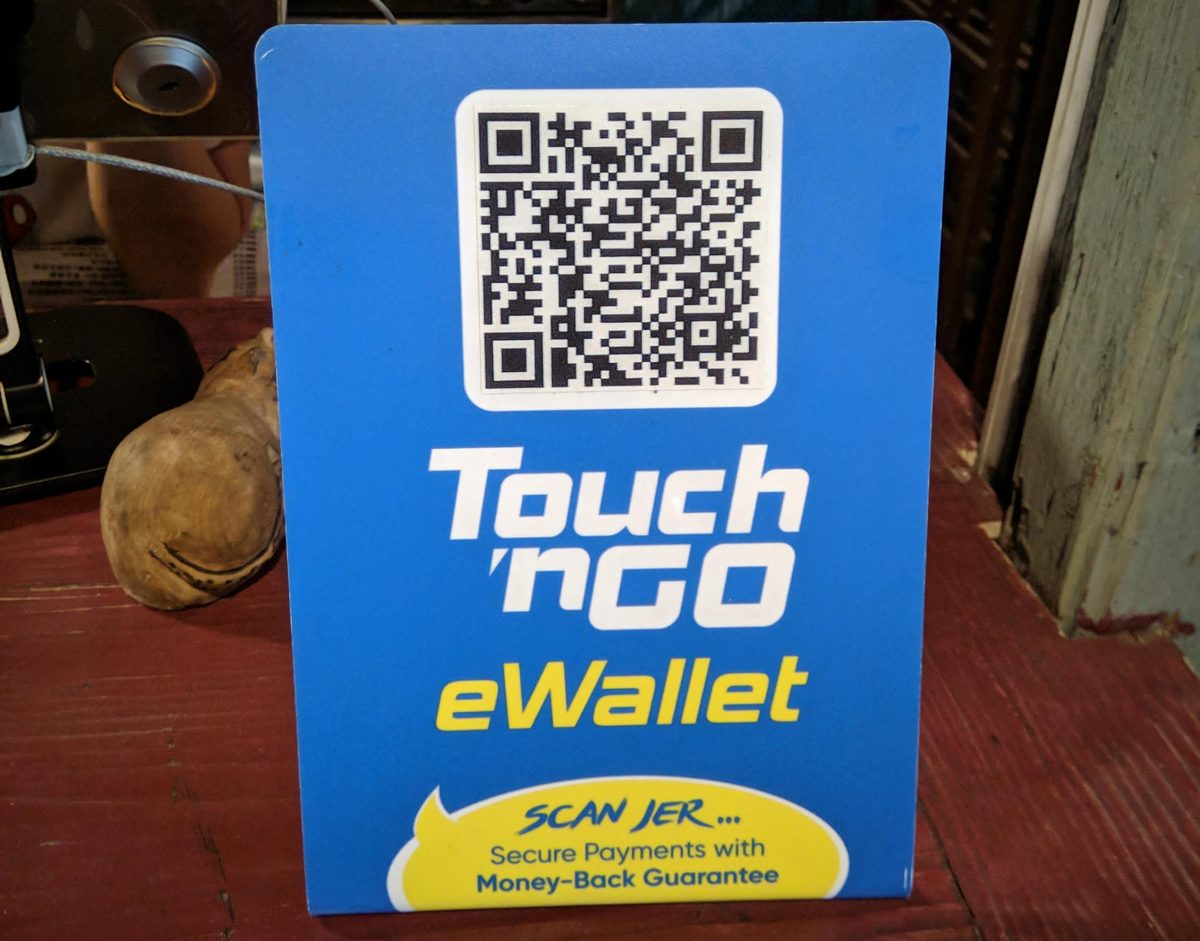
Payment methods in Malaysia have changed fast. Most locals now pay by scanning a QR code with a banking app or e-wallet, tapping a card, or using a Touch 'n Go card on the train and the highway. Cash in ringgit (RM) has not gone away, though, and some of the things visitors enjoy most, from hawker stalls to night markets, still run largely on notes and coins.
This guide splits the options into two groups: what Malaysians use day to day, and what a foreign visitor can realistically use on a short trip to Penang or Kuala Lumpur. Facts were checked in October 2026 against PayNet, Touch 'n Go, Rapid KL reporting and other sources listed at the end. Fees and app rules change often, so check before you travel.
Jump to section (10)
Payment methods in Malaysia at a glance
The table below compares every common way to pay, who can use it and where it works. "Visitors" means a tourist without a Malaysian bank account or MyKad identity card.
| Method | Locals | Foreign visitors | Where accepted | Fees and notes |
|---|---|---|---|---|
| Cash (RM) | Yes | Yes | Everywhere, essential at hawker stalls and markets | Notes RM1 to RM100; totals are rounded to the nearest 5 sen |
| Visa and Mastercard | Yes | Yes | Malls, hotels, chain restaurants, Rapid KL ticket machines | Your bank may add a foreign transaction fee; always pay in RM |
| Amex, UnionPay, JCB | Yes | Yes, with limits | Fewer merchants than Visa and Mastercard | Carry a Visa or Mastercard as a backup |
| Contactless, Apple Pay, Google Pay, Samsung Pay | Yes | Yes, if your card supports it | Card terminals that show the contactless symbol; Rapid KL ticket machines | Not yet accepted at train fare gates |
| DuitNow QR | Yes | Via participating foreign apps or a tourist e-wallet | Hawker stalls to department stores | The national QR standard run by PayNet |
| MyDebit | Yes | No | Card terminals, ATMs | Domestic debit network for Malaysian ATM cards |
| FPX online banking and JomPAY | Yes | No | Online shops, bills | Needs a Malaysian bank account |
| Touch 'n Go eWallet | Yes | Yes, tourists from eligible countries | Over 2 million merchant touchpoints, DuitNow QR | 1% fee on credit card reloads |
| Touch 'n Go card | Yes | Yes | Trains, buses, tolls, parking, some shops | Card costs RM10 with no stored value |
| Boost, GrabPay, ShopeePay, MAE | Yes | Limited; check each app | DuitNow QR merchants, own apps | Built for Malaysian residents |
| BigPay | Yes | Not designed for visitors | Wherever its card network is accepted | Check eligibility before relying on it |
| Alipay, Weixin Pay (WeChat Pay), Alipay+ wallets | No | Yes | DuitNow QR merchants (over 2.5 million locations) | Pay through your home app; exchange rate set by the app |
| Home-country QR apps (Singapore, Indonesia, Thailand, Cambodia, South Korea) | No | Yes, participating apps | DuitNow QR merchants | Depends on your bank or wallet |
| Multi-currency travel cards (e.g. Wise) | Some | Yes | Anywhere Visa or Mastercard works | Wise supports holding ringgit; check your provider's ATM fees |
| Buy now, pay later (Atome, Grab PayLater, Boost PayFlex) | Yes | Generally no | Partner shops and apps | Atome splits purchases into 3 interest-free instalments |
Payment methods for locals
Malaysians mix several of these every day. Knowing what they are helps you read the stickers on shop counters, even if you cannot use all of them yourself.
Cash in ringgit
The ringgit is issued by Bank Negara Malaysia, the central bank. Notes in common use are RM1, RM5, RM10, RM20, RM50 and RM100, and coins come in 5, 10, 20 and 50 sen. Since 2008, bill totals are rounded to the nearest 5 sen, so you will rarely see 1 sen coins. Cash is still standard at hawker stalls, markets and small shops.
DuitNow QR
DuitNow QR is Malaysia's national QR payment standard, operated by Payments Network Malaysia (PayNet), the national payments network. One printed code at a stall can be scanned by any participating banking app or e-wallet, so a hawker no longer needs a separate sticker for each app. You will see DuitNow QR signs at food courts, petrol stations, pharmacies and big retailers alike.
MyDebit
MyDebit is PayNet's domestic debit network, the system behind most Malaysian ATM cards. It supports card payments in shops, cash withdrawals and Apple Pay, and PayNet also offers "Tap On Phone" so small businesses can accept ATM cards on a phone.
FPX and JomPAY
FPX is the online banking payment button you see at checkout on Malaysian websites, from airlines to government portals. JomPAY is PayNet's bill payment system for utilities, phone bills and similar. Both need a Malaysian bank account.
Touch 'n Go card and Touch 'n Go eWallet
The Touch 'n Go card has been around since 1997. It is a stored-value contactless card for highway tolls, trains, buses, parking and some retail. It is run by Touch 'n Go Sdn Bhd, and CIMB is the bank behind the system. The separate Touch 'n Go eWallet app, run by TNG Digital, handles QR payments, bills and reloading the NFC version of the card. Card and eWallet balances are separate.
Boost
Boost is a fintech app offering scan-and-pay, bill payments, rewards and PayFlex instalments of up to 24 months. The same group runs Boost Bank, a digital bank with savings jars.
GrabPay and Grab PayLater
GrabPay is the wallet inside the Grab app, used for rides, GrabFood, groceries and payments at shops that accept it. It is regulated by Bank Negara Malaysia. A basic wallet needs a name, email, phone number and ID document, and you can upgrade it with a MyKad or passport photo. Grab PayLater lets users pay later without interest on GrabFood, GrabMart and partner merchants.
ShopeePay and MAE
ShopeePay is the wallet tied to the Shopee shopping platform. MAE is Maybank's e-wallet, linked to a Maybank account. Both work at DuitNow QR merchants and are aimed at people who live in Malaysia.
Buy now, pay later
Atome is the best-known stand-alone buy now, pay later service. It splits purchases into 3 interest-free instalments and works online and in store at partners such as ZALORA, Sephora and Agoda. Grab PayLater and Boost PayFlex offer similar options inside their own apps.
Payment methods for foreign visitors
As a tourist you cannot open most local accounts, but you do not need to. A card, some cash and one QR-capable app cover almost everything.
Visa and Mastercard
Visa and Mastercard are accepted in malls, hotels, chain restaurants, cinemas and most sit-down restaurants in Penang and Kuala Lumpur. Contactless tapping is common at these places, and Apple Pay, Google Pay and Samsung Pay work where the terminal supports contactless. When a terminal or ATM offers to charge you in your home currency, decline and pay in ringgit. Converting at the till usually gives a worse rate than your own bank.
American Express, UnionPay and JCB are accepted at fewer merchants, so do not bring one of these as your only card.
Touch 'n Go eWallet for tourists
Since 8 May 2025, Touch 'n Go eWallet has been open to tourists. The launch covered Brunei, Cambodia, Indonesia, Laos, Myanmar, the Philippines, Singapore, Thailand and Vietnam, with plans to add China, South Korea, Hong Kong, Taiwan, Japan and other markets. The country dropdown in the app is the place to check whether your country is on the list today.
- Registration: choose your country, enter your own mobile number, receive the one-time code on WhatsApp (so you need WhatsApp), set a 6-digit PIN, choose "Non-Malaysian", upload a photo of your ID and take a selfie. Approval is usually instant.
- Top-up: international credit, debit or prepaid cards, or reload PINs sold at major convenience stores and petrol stations.
- Limits and fees: wallet sizes range from RM200 for a Lite account to RM20,000 for an eKYC-verified account. Reloading by credit card costs 1%. Check the limit shown in your app after you sign up.
- Where it works: more than 2 million merchant touchpoints and anywhere that shows a DuitNow QR code.
Other Malaysian e-wallets
GrabPay's Malaysian site says the wallet can be upgraded with a passport, so a visitor may be able to use it, but your Grab account and phone number need to be set up for Malaysia. Boost, ShopeePay, MAE and BigPay are built for residents and we could not confirm a tourist sign-up route, so do not plan your trip around them. The same goes for buy now, pay later services.
Multi-currency and travel cards
Wise supports holding Malaysian ringgit and offers a debit card for spending and cash withdrawals abroad. Other multi-currency cards may also work in Malaysia; check whether yours holds MYR and what it charges for ATM withdrawals before you fly.
What does not work for visitors
FPX online banking, JomPAY and MyDebit all require a Malaysian bank account. Local "pay by bank transfer" options at small businesses usually mean DuitNow transfer, which also needs a Malaysian account or an eligible e-wallet.
Paying with apps from your home country
PayNet links DuitNow QR to QR systems in several countries. In practice this means you scan the same DuitNow QR code a local would, using your own banking app or wallet, and pay from your home account. In July 2026, PayNet's network accepted QR payments from participating apps in China, Singapore, Indonesia, Cambodia, Thailand and South Korea. Whether your particular bank or wallet takes part varies, so test it on a small purchase first.
Singapore
Singapore is one of the linked markets for paying at DuitNow QR merchants with participating Singapore banking apps. Singapore's PayNow is also linked with Malaysia's DuitNow for transfers. Check the overseas QR section of your bank's app before you travel.
Indonesia
Indonesia's QRIS and Malaysia's DuitNow QR were linked commercially on 8 May 2023, after a pilot that began in January 2022. Indonesian visitors can scan DuitNow QR codes with participating QRIS apps.
Thailand
The central banks of Thailand and Malaysia launched a QR payment link between Thai QR Payment (PromptPay) and DuitNow in June 2021. Thai visitors can pay at DuitNow QR merchants with participating Thai banking apps.
China
Visitors from mainland China can use Alipay (AlipayCN) or Weixin Pay (WeChat Pay) to scan DuitNow QR codes at more than 2.5 million merchant locations, with no extra app needed. PayNet, Alipay+ and Weixin Pay announced a joint tourist campaign in June 2025.
Cambodia, South Korea and Alipay+ wallets
Cambodia and South Korea are also among the markets whose apps can pay at DuitNow QR merchants. Alipay+ partner wallets from other countries can pay the same way. Look for your wallet's overseas or "Alipay+" scan option.
India and others
PayNet and NPCI International signed an agreement in February 2026 to enable QR payments between Malaysia and India. Check whether it is live for your UPI app before you rely on it. Visitors from other countries should plan on a card plus cash.
Where you still need cash
QR codes have spread to many stalls, but cash is still the safest way to pay at:
- Hawker centres and coffee shops. Many stalls in a kopitiam (traditional coffee shop) are separate businesses, and older ones may be cash only. See our Penang hawker food guide and Kuala Lumpur street food guide.
- Night markets (pasar malam). Small notes make buying snacks much quicker. Browse the Penang night markets and Kuala Lumpur night markets.
- Rapid Penang buses, which take cash (exact change preferred) or a Touch 'n Go card.
- Temple donations, small entry fees and attraction add-ons, such as the pagoda ticket at Kek Lok Si.
- Trishaws, some taxis, street parking and small market traders.
Carry RM1, RM5 and RM10 notes. Stallholders often struggle to break an RM100 note for a RM6 plate of noodles.
Getting cash: ATMs and money changers
Bank ATMs are easy to find in malls, train stations and airports, and they give a fair exchange rate. Your home bank may charge a foreign withdrawal fee and the ATM owner may add its own fee, so take out larger amounts less often. If the ATM offers to convert the amount into your home currency, decline.
Licensed money changers often beat airport and hotel rates. In George Town the main cluster is on Jalan Masjid Kapitan Keling (Pitt Street) in Little India; in Kuala Lumpur, Bukit Bintang and Jalan Masjid India have rows of counters. Change only a small amount at the airport. Our Penang money changers and Kuala Lumpur money changers guides list licensed counters with opening hours.
Transport payments
MRT, LRT and monorail in Kuala Lumpur
As of May 2026, you can use a credit or debit card at Rapid KL ticket machines to buy a single-journey token or reload a Touch 'n Go card, but you cannot yet tap a bank card at the fare gates. Prasarana, which runs Rapid KL, plans full open payment (cards, QR and phone wallets) at the gates, with about 30% of gates within 12 months of the contract award and full rollout within 30 months. Until then, a Touch 'n Go card is the easiest option: it costs RM10, works across the MRT, LRT and monorail, and saves queuing for tokens. See getting around Kuala Lumpur for fares.
Buses
Rapid KL buses have not taken cash since May 2019; pay with a Touch 'n Go or Rapid KL card. Rapid Penang buses accept cash (exact change preferred) or a Touch 'n Go card, and the free CAT shuttle loops around George Town. The Penang ferry between George Town and Butterworth is cashless only, taking Touch 'n Go, e-wallets or a bank card. Details are in getting around Penang.
Grab and taxis
Grab shows an upfront fare and lets you pay by card or cash. If your foreign card is declined when you add it, switch the trip to cash. Metered taxis often prefer cash, so confirm before you get in.
Tolls and parking
Highway tolls are paid electronically, with a Touch 'n Go card or an RFID tag linked to the eWallet. If you rent a car, ask the rental company how tolls are paid. Many mall car parks accept Touch 'n Go, while street parking rules vary by council; read the signboard and check whether a local parking app or coupon is needed. Use our trip planner to group sights by area and cut down on driving.
Tipping, service charge and tax
Tipping is not the norm in Malaysia and is not expected. Instead, restaurants can add a 10% service charge to the bill, usually printed on the menu. Rounding up for a helpful driver or porter is a kind gesture but optional.
Service tax is 8% on most taxable services, with a reduced 6% rate on food and beverage. A restaurant bill can therefore show both a 10% service charge and 6% service tax. Malaysia also charges foreign hotel guests a tourism tax per room per night, collected at check-in; our hotel guides list it at RM10, but check your booking.
Practical tips for paying in Malaysia
- Bring two cards from different networks, ideally a Visa and a Mastercard, and keep them separate.
- Before you fly, check whether your home banking app or wallet can scan DuitNow QR; it is the single most useful thing a visitor can have.
- If you are eligible, set up Touch 'n Go eWallet at home over Wi-Fi, since the code arrives on WhatsApp.
- Buy a Touch 'n Go card at the first MRT or LRT station you use in KL, and reload it at station machines or convenience stores.
- Keep RM50 to RM100 in small notes each day for food, markets, buses and donations.
- Always choose to pay in ringgit when a card terminal or ATM offers your home currency.
- Check the bill for service charge and service tax before adding anything extra.
- After scanning a QR code, show the stallholder the success screen; that is how they confirm payment.
Frequently Asked Questions
What are the main payment methods in Malaysia?
Cash in ringgit, Visa and Mastercard cards, DuitNow QR payments through banking apps and e-wallets such as Touch 'n Go eWallet, and the Touch 'n Go card for transport and tolls. Locals also use FPX online banking and the MyDebit network.
Can tourists use Touch 'n Go eWallet?
Yes, if your country is eligible. Since May 2025 tourists from ASEAN countries can register with a passport and their own mobile number, with the code sent on WhatsApp, and top up with a foreign card. TNG Digital plans to add more countries, so check the country list in the app.
Do I need cash in Malaysia?
Yes, some. Malls, hotels and chain restaurants take cards, but hawker stalls, night markets, Rapid Penang buses, temples and small traders often prefer or require cash. Carry small notes.
Can I pay with Alipay or WeChat Pay in Malaysia?
Yes. Alipay, Weixin Pay (WeChat Pay) and other Alipay+ partner wallets can scan DuitNow QR codes at more than 2.5 million merchant locations in Malaysia.
Can I tap my credit card on the KL MRT?
Not at the gates yet. As of May 2026, cards and phone wallets work at Rapid KL ticket machines to buy tokens or reload a Touch 'n Go card. Tap-in with bank cards is planned but not live, so a Touch 'n Go card is the easiest option.
Should I tip in Malaysia?
Tipping is not expected. Many restaurants add a 10% service charge, and food and drink bills also carry 6% service tax, so check the bill before leaving anything extra.
Sources
- TNG Digital: Touch 'n Go eWallet for international tourists
- RinggitPlus: Touch 'n Go eWallet now open to tourists from ASEAN countries
- RinggitPlus: Touch 'n Go eWallet limits and fees
- RinggitPlus: PayNet, Alipay+ and Weixin Pay team up
- The Asian Banker: RHB joins PayNet's cross-border QR network (July 2026)
- PayNet: DuitNow QR, MyDebit, JomPAY and FPX
- SoyaCincau: Prasarana open payment for MRT, LRT and buses (May 2026)
- Grab Malaysia: GrabPay
- Boost
- Atome Malaysia
- Wise Malaysia
- Kintsugi: Malaysia SST guide for 2026
- Wikipedia: Malaysian ringgit
- Wikipedia: QRIS cross-border links
- Wikipedia: Tipping customs by country